
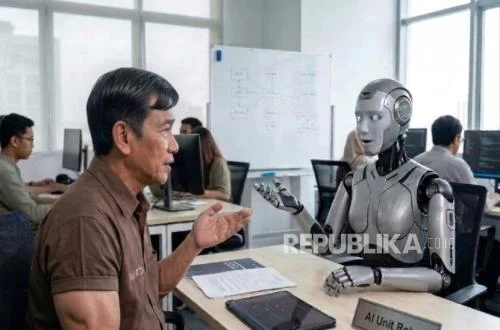
The rapid advancement of Artificial Intelligence (AI) has ignited a profound debate within the global community regarding the future of labor: is technology destined to replace human workers, or is it a catalyst for a more sophisticated era of professional evolution? As AI integration becomes a standard across diverse industries, the anxiety surrounding potential job displacement has transitioned from science fiction to a central topic of economic discourse. However, a deeper examination suggests that the narrative is not one of total replacement, but rather a fundamental transformation in how humanity conceptualizes productivity, strategy, and creative problem-solving. Understanding the mechanics of AI and its current trajectory is essential for stakeholders to navigate the anxieties of the present and capitalize on the unprecedented opportunities of the future.
The Technological Landscape: Understanding AI and Its Role in Industry
Artificial Intelligence, at its core, refers to the development of computer systems capable of performing tasks that traditionally required human intelligence. These include learning from vast datasets, recognizing complex patterns, and making autonomous decisions based on algorithmic logic. In the last decade, the transition from "Narrow AI"—designed for specific tasks—to more generative and predictive models has revolutionized sectors ranging from healthcare and finance to the creative arts.
In the professional sphere, AI’s primary value proposition lies in its ability to handle "3D" tasks: those that are dull, dirty, or dangerous. By automating repetitive, high-volume activities, AI allows organizations to achieve levels of efficiency and accuracy that are physically impossible for human workers. For instance, in customer service, AI-driven chatbots handle thousands of simultaneous inquiries with zero fatigue. In the financial sector, AI systems analyze millions of transactions in real-time to detect fraudulent patterns, a feat that would take human auditors weeks to accomplish. By reducing the margin for human error and accelerating output, AI has become an indispensable tool for modern enterprise.
A Chronological Shift: From Automation to Augmentation
The journey of AI in the workplace can be viewed through a chronological lens of technological maturity. In the early 2000s, automation was largely mechanical, confined to assembly lines and basic software scripts. By the mid-2010s, the "Big Data" era enabled machine learning models to provide descriptive analytics, telling businesses what had happened in their past operations.
Today, we are in the era of Generative AI and Prescriptive Analytics. Technology no longer just reports data; it suggests strategies and creates content. This shift marks the transition from "automation," where a machine replaces a manual task, to "augmentation," where a machine enhances a human’s cognitive capabilities. This evolution has forced a re-evaluation of the professional hierarchy, moving the human role from "doer" to "editor" and "strategist."
Supporting Data: The Economic Reality of the AI Revolution
Data from global economic forums provides a balanced perspective on the displacement vs. creation argument. According to the World Economic Forum’s (WEF) "Future of Jobs Report," while AI is expected to displace approximately 85 million jobs by 2025, it is simultaneously projected to create 97 million new roles. These new positions are expected to be more adapted to the new division of labor between humans, machines, and algorithms.
Furthermore, a study by the McKinsey Global Institute estimates that AI could deliver an additional global economic output of around $13 trillion by 2030, boosting global GDP by about 1.2% annually. This growth is driven by increased labor productivity and the consumption of AI-enhanced products and services. However, the data also highlights a significant "skills gap." While the jobs are being created, the current workforce often lacks the technical literacy—such as data analysis, AI prompting, and software management—required to fill them.
The Human Advantage: Why Total Replacement Remains Unlikely
Despite the computational prowess of AI, there are fundamental human traits that remain beyond the reach of current and foreseeable technology. Professionalism is built on a foundation of more than just data processing; it requires empathy, ethical judgment, and complex social negotiation.
- Emotional Intelligence and Empathy: In fields such as nursing, social work, and high-level leadership, the ability to understand and respond to human emotions is critical. AI can simulate empathy, but it cannot truly feel or provide the authentic human connection that is essential for trust and healing.
- Creative Innovation: While AI can generate art or text based on existing patterns, true "out-of-the-box" thinking—the kind that disrupts industries or creates entirely new genres of thought—remains a human hallmark. AI is iterative, whereas humans are capable of original synthesis.
- Ethical and Value-Based Decision Making: Decisions in law, governance, and corporate ethics often require a nuanced understanding of cultural context and moral philosophy. AI operates on logic and probability; it lacks the "moral compass" required to navigate the grey areas of human society.
Therefore, the emerging consensus among industry experts is a model of "Hybrid Intelligence," where the speed of AI is paired with the wisdom and oversight of human professionals.
Institutional Responses: The Role of Higher Education in Indonesia
As the global landscape shifts, educational institutions are being forced to pivot. In Indonesia, the push toward "Golden Indonesia 2045"—a vision of a digitally sovereign and economically prosperous nation—depends heavily on how the next generation is trained. One of the primary responders to this need is the University of Cyber Indonesia, popularly known as Cyber University.
Recognizing that the traditional educational model is insufficient for the AI era, Cyber University has positioned itself as "The First Fintech University in Indonesia." The institution has integrated AI, data science, and software development into its core curriculum, ensuring that students are not just passive users of technology but active creators and managers of it.
By fostering a curriculum rooted in industrial collaboration and practical application, Cyber University aims to produce graduates who are "AI-literate." This means they possess the technical skills to build and maintain systems, as well as the critical thinking skills to oversee the ethical implications of technology. The university’s commitment reflects a broader national strategy to ensure that the Indonesian workforce remains competitive in an increasingly automated global market.
Broader Impact and Implications: The Socio-Economic Shift
The widespread adoption of AI carries significant implications for the socio-economic structure of society. One of the primary concerns is the potential for increased wealth inequality. If the benefits of AI productivity are concentrated only among those who own the technology or possess high-level technical skills, the "digital divide" could widen.
To mitigate this, governments and private sectors are being urged to invest in massive "reskilling" and "upskilling" initiatives. The goal is to transition workers from declining sectors (such as manual data entry or basic manufacturing) into growth sectors (such as renewable energy management, AI ethics auditing, and the care economy).
Furthermore, the "gig economy" is expected to evolve. AI tools are enabling freelancers and small business owners to operate with the efficiency of large corporations. A single graphic designer using AI can now produce the volume of work that previously required a whole agency, effectively democratizing the means of production.
Analysis: Navigating the Transition
The integration of AI into the workforce is an inevitability, not an option. For businesses, the challenge lies in ethical implementation—ensuring that AI is used to empower employees rather than simply slash overhead costs. For individuals, the challenge is adaptability. The concept of a "job for life" is being replaced by a model of "lifelong learning," where professionals must continuously update their skill sets to remain relevant.
The analysis of current trends suggests that the most successful professionals of the next decade will not be those who try to compete with AI, but those who learn to "orchestrate" it. Just as the introduction of the computer did not eliminate the office worker but changed the tools they used, AI will redefine the professional toolkit.
Conclusion: Embracing the Augmented Future
In summary, while the rise of Artificial Intelligence presents a significant disruption to traditional employment models, it does not signal the end of human labor. Instead, it marks the beginning of a more efficient, creative, and strategic era of work. The transition will undoubtedly be challenging, requiring proactive intervention from educational institutions like Cyber University and strategic policy-making from governments.
By focusing on the unique strengths of the human spirit—creativity, empathy, and ethical leadership—and combining them with the analytical power of AI, society can unlock new levels of prosperity. The question is no longer whether AI will replace humans, but how humans will use AI to redefine what is possible. Staying relevant in this new era requires a commitment to innovation, a willingness to adapt, and a deep understanding of the symbiotic relationship between man and machine. In the final analysis, AI is a tool created by humans, for humans, and its ultimate impact will be determined by how wisely we choose to wield it.