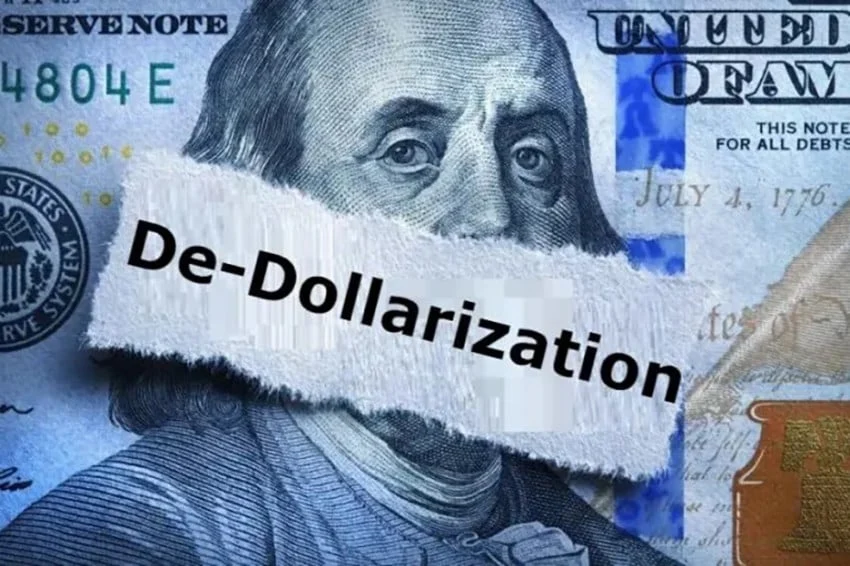
Indonesia has achieved a significant milestone in its strategic initiative to reduce dependence on the United States dollar, recording a massive surge in Local Currency Transactions (LCT) throughout 2025. This movement, often referred to as dedollarization, has seen the value of transactions settled in local currencies reach USD 25.6 billion, a figure that represents a twofold increase compared to the previous year. When converted at the prevailing exchange rate of Rp16,984 per USD, this volume translates to approximately Rp434.8 trillion, marking a historic shift in the nation’s monetary policy and international trade settlement architecture.
The Coordinating Minister for Economic Affairs, Airlangga Hartarto, highlighted that this achievement serves as a robust foundation for Indonesia’s macroeconomic stability heading into 2026. By facilitating trade and investment through local currencies, the Indonesian government and Bank Indonesia (BI) aim to insulate the domestic economy from the volatility of the global financial market, which is often dictated by the fluctuations of the U.S. Federal Reserve’s policies. The transition toward LCT is not merely a technical adjustment in payment systems but a strategic move toward enhancing national economic sovereignty.
The Evolution of Local Currency Transactions in Indonesia
The journey toward the USD 25.6 billion milestone in 2025 did not happen in a vacuum. It is the result of nearly a decade of incremental policy shifts and bilateral negotiations. The framework, which began as Local Currency Settlement (LCS), was initially launched to simplify trade between Indonesia and its closest neighbors. Over time, the scope was expanded from simple trade settlements to include direct investments and retail payments, leading to its rebranding as Local Currency Transactions (LCT).
In 2024, the transaction value stood at roughly half of the 2025 figures. The rapid acceleration seen over the last twelve months can be attributed to the aggressive expansion of partner networks and the technical integration of payment systems. Indonesia currently maintains active LCT frameworks with several of its largest trading partners, including Malaysia, Thailand, Japan, China, and South Korea. These nations have not only agreed to use their respective local currencies for large-scale corporate trade but have also integrated digital payment systems, allowing for seamless cross-border retail transactions.
Minister Airlangga Hartarto emphasized that the inclusion of major economies like China and South Korea has been a game-changer. As China remains Indonesia’s largest trading partner, the ability to settle transactions in Rupiah and Yuan (Renminbi) significantly reduces the cost of conversion and the risk of exchange rate losses for Indonesian exporters and importers.
The Role of QRIS in Cross-Border Integration
A pivotal factor in the 2025 surge was the widespread adoption of the Quick Response Code Indonesian Standard (QRIS) for international payments. By 2025, the integration of QRIS with the national payment systems of Malaysia, Thailand, and Singapore reached a high level of maturity, while pilot programs with Japan and South Korea began yielding substantial volumes.
This digital integration allows Indonesian tourists and small-to-medium enterprises (SMEs) to conduct transactions abroad using their domestic mobile banking or e-wallet apps, with the exchange rate calculated directly between the Rupiah and the partner currency. This bypasses the traditional "triangulation" through the U.S. dollar, which usually incurs multiple fees and unfavorable spreads. The convenience of QRIS has democratized the dedollarization process, moving it from the boardrooms of multinational corporations to the hands of individual consumers and small business owners.
According to government data, the retail segment of LCT via QRIS saw an exponential growth rate in 2025, particularly in the tourism sectors of Bali and Riau Islands, where foreign visitors from partner countries can now pay for services in their own local currencies without needing to carry physical U.S. dollars or undergo expensive currency exchanges at banks.
Strengthening the National Economy for 2026
The surge to USD 25.6 billion provides a cushion for the Indonesian economy as it prepares for the uncertainties of 2026. Ferry Irawan, the Deputy for Coordination of State-Owned Enterprises (SOE) Development at the Coordinating Ministry for Economic Affairs, noted that the trend of LCT usage is showing consistent improvement across all metrics: value, participation, and market adoption.
The involvement of State-Owned Enterprises (BUMN) has been crucial in this transition. Large SOEs in the energy, mining, and manufacturing sectors have been encouraged to lead by example, settling their international contracts in local currencies whenever possible. This top-down approach has ensured a steady volume of transactions that provides liquidity to the local currency markets in partner countries.
Furthermore, the government has established a National Task Force for Local Currency Transactions. This body is responsible for monitoring the implementation of LCT and identifying bottlenecks in the system. The task force’s reports indicate that the "bid-ask" spreads for Rupiah against the Malaysian Ringgit or the Thai Baht have narrowed significantly, making LCT more cost-effective than traditional USD-based settlements.
Chronology of Major Dedollarization Milestones
To understand the magnitude of the 2025 figures, one must look at the timeline of Indonesia’s dedollarization efforts:
- 2017-2018: Bank Indonesia signs the first LCS agreements with the central banks of Thailand (Bank of Thailand) and Malaysia (Bank Negara Malaysia). The initial focus is strictly on bilateral trade.
- 2020-2021: Japan and China join the framework. This marks the entry of the world’s second and third-largest economies into Indonesia’s local currency ecosystem. The framework is expanded to include direct investment.
- 2022-2023: The "Regional Payment Connectivity" (RPC) initiative is signed during Indonesia’s G20 Presidency, involving five ASEAN central banks. South Korea signs a Memorandum of Understanding (MoU) to start LCT implementation.
- 2024: Transaction volumes reach approximately USD 12-14 billion. The system is rebranded from LCS to LCT to reflect a broader range of financial activities.
- 2025: Transactions double to USD 25.6 billion. QRIS becomes a standard for cross-border retail in five countries, and the LCT framework becomes a primary tool for managing external economic shocks.
Economic Implications and Strategic Analysis
The shift away from the U.S. dollar has several profound implications for Indonesia’s financial health. First and foremost is the reduction of "exchange rate risk." When an Indonesian company imports machinery from Japan and pays in U.S. dollars, it is vulnerable to the fluctuations of two different currency pairs: IDR/USD and JPY/USD. By using the IDR/JPY direct pair, the company eliminates one layer of volatility.
Secondly, dedollarization helps in maintaining the stability of the Rupiah. When a large portion of trade is settled in USD, there is a constant and high demand for dollars in the domestic market. During times of global uncertainty, this demand often spikes, leading to a rapid depreciation of the Rupiah. By shifting USD 25.6 billion worth of demand to local currencies, Bank Indonesia can better manage the Rupiah’s exchange rate with lower intervention costs.
Thirdly, the LCT framework fosters deeper regional integration. As Indonesia, Malaysia, Thailand, and other Asian neighbors trade more in their own currencies, their financial markets become more intertwined. This creates a "buffer zone" that protects the region from Western-centric financial crises.
Official Responses and Market Reactions
The business community has generally welcomed the expansion of LCT. The Indonesian Chamber of Commerce and Industry (KADIN) has stated that the reduction in transaction costs—estimated at 1% to 2% per transaction—significantly improves the competitiveness of Indonesian products abroad. Small exporters, who previously struggled with the complexities of dollar-denominated letters of credit, now find it easier to deal directly in the currency of their buyers.
Market analysts suggest that the doubling of LCT volume in 2025 is a sign of growing trust in the Rupiah and the central bank’s management. Financial institutions have also adapted, with more Indonesian banks offering specialized accounts in Yuan, Baht, and Won, complete with competitive hedging instruments.
However, challenges remain. Ferry Irawan pointed out that while the trend is positive, there is a need for continuous education for market participants. Many small-scale traders are still accustomed to using the USD as a benchmark for pricing. Transitioning the mindset of the market to think in terms of direct local currency pairs is a long-term project that requires ongoing government support.
Looking Toward the Future: The 2026 Outlook
As Indonesia enters 2026, the goal is to further diversify the list of LCT partners. Negotiations are reportedly underway with several Middle Eastern countries and other members of the BRICS+ bloc. If Indonesia can successfully integrate the Rupiah into trade with major oil-producing nations or other emerging economies in the Global South, the USD 25.6 billion figure could potentially be surpassed within the next two years.
The government’s commitment to dedollarization is also seen as a move toward a more "multipolar" financial world. By reducing the dominance of a single currency, Indonesia is positioning itself as a leader in the movement for a more balanced and equitable global financial architecture.
In conclusion, the surge in Local Currency Transactions to USD 25.6 billion in 2025 is a landmark achievement for Indonesia. It reflects a successful synergy between monetary policy, technological innovation in payment systems, and diplomatic efforts in the international arena. As the nation moves into 2026, the focus will remain on sustaining this momentum, ensuring that the Rupiah remains a strong and stable medium for international exchange, and further insulating the Indonesian people from the unpredictability of global currency markets.