Jakarta, Indonesia – Her Majesty Queen Máxima of the Netherlands recently concluded a pivotal working visit to Indonesia, spanning from Monday, November 24, to Thursday, November 27, 2025. The visit underscored a focused mission on advancing financial inclusion and promoting financial health for development, conducted in her esteemed capacity as the United Nations Secretary-General’s Special Advocate (UNSGSA) for Inclusive Finance for Development. This significant engagement saw the Queen traversing key regions, from the industrial heartlands of West Java to the cultural and entrepreneurial hubs of Central Java and the bustling capital city, Jakarta, engaging with a diverse array of stakeholders dedicated to fostering economic empowerment.
This most recent journey marked Queen Máxima’s fifth visit to the Indonesian archipelago, reaffirming her consistent dedication to the nation’s financial development landscape. Her previous engagements as UNSGSA took place in 2012, 2016, and 2018, each building upon efforts to integrate more Indonesians into the formal financial system. Beyond her role as the UN Special Advocate, Queen Máxima has also visited Indonesia in her capacity as Queen of the Netherlands, accompanying King Willem-Alexander during a state visit in 2020, highlighting the multifaceted relationship between the two nations. Born on May 17, 1971, Queen Máxima married King Willem-Alexander in Amsterdam in 2002, embarking on a life of public service that now prominently features her global advocacy for financial inclusion.
The Mandate of the UNSGSA: A Global Imperative for Development
Queen Máxima’s role as UNSGSA, a position she has held since 2009, is critical in the global push for sustainable development. Her mandate involves advocating for financial systems that are accessible, affordable, and beneficial for all, especially the underserved and vulnerable populations. Financial inclusion is recognized as a powerful enabler for achieving many of the Sustainable Development Goals (SDGs), including poverty eradication (SDG 1), zero hunger (SDG 2), gender equality (SDG 5), and decent work and economic growth (SDG 8). By facilitating access to savings, credit, insurance, and payment services, individuals and small businesses can better manage risks, invest in their futures, and improve their livelihoods, ultimately fostering more resilient economies and equitable societies.
Indonesia, with its vast population of over 280 million people spread across thousands of islands, presents both immense opportunities and significant challenges for financial inclusion. While significant progress has been made in recent years, a substantial portion of the population, particularly in rural areas and among women and micro, small, and medium enterprises (MSMEs), still lacks adequate access to formal financial services. The Indonesian government, through initiatives like the National Strategy for Financial Inclusion (SNKI), has demonstrated a strong commitment to closing this gap, making the country a crucial partner in the UNSGSA’s global agenda. Queen Máxima’s visits serve not only to assess progress and identify bottlenecks but also to galvanize political will, foster public-private partnerships, and share best practices derived from global experiences.
A Detailed Itinerary: Engaging Across Sectors
The three-day working visit was meticulously planned to cover a broad spectrum of financial inclusion initiatives, from grassroots community engagement to high-level policy discussions, reflecting a comprehensive approach to addressing the challenges and opportunities in Indonesia.
Tuesday, November 25: Focus on MSMEs, Workers, and Women’s Empowerment
Queen Máxima commenced her intensive itinerary in Central Java, a region renowned for its vibrant traditional industries and burgeoning small businesses. Her first stop was a garment factory in Sragen Regency. This visit provided a firsthand look at how formal financial services, such as digital wage payments, micro-savings schemes, and health insurance plans, can directly impact the financial well-being of industrial workers, many of whom belong to low- and middle-income households. Discussions likely revolved around the role of employers in facilitating access to these services and the potential for greater financial literacy programs within workplaces. The Queen observed how reliable and transparent financial mechanisms can enhance employee satisfaction, productivity, and overall economic stability for families.
Following her engagement in Sragen, Queen Máxima traveled to Solo (Surakarta), a city celebrated for its rich cultural heritage, particularly its batik industry. Here, she visited Kampung Batik Laweyan, a historic batik village. This visit focused on the financial health of MSMEs, particularly the challenges faced by traditional artisans and women entrepreneurs in accessing capital, managing finances, and expanding their market reach. The discussions highlighted the potential of digital payment platforms and tailored micro-finance products to empower these businesses, enabling them to invest in production, innovate designs, and reach wider customer bases, both domestically and internationally. The intricate relationship between cultural preservation and economic viability was a key theme, demonstrating how financial inclusion can sustain traditional crafts.
Later that day, Queen Máxima attended a significant event hosted by Women’s World Banking at the majestic Pura Mangkunegaran in Solo. This platform brought together a diverse group, including young entrepreneurs, university students, and seasoned business owners, for interactive dialogues on their experiences with financial products and services. The Queen actively engaged in conversations, listening to personal stories about navigating the financial landscape, from utilizing digital wallets and online lending platforms to seeking advice on financial planning and investment. The event aimed to gather direct feedback from end-users, identify unmet needs, and understand the impact of existing financial tools on different demographics, particularly women and youth who are often at the forefront of digital adoption and entrepreneurial innovation. The insights gleaned from these discussions are invaluable for informing policy recommendations and product development.
Wednesday, November 26: Strengthening Partnerships and Innovative Solutions
The second day of the visit shifted its focus towards institutional collaborations and innovative financial solutions, primarily in Jakarta and its surrounding areas. Queen Máxima began her day at a local United Nations office, where she participated in a roundtable discussion with various development organizations. This session served as a crucial forum for fostering synergy and coordination among different stakeholders, including UN agencies, non-governmental organizations, and government bodies, all working towards common goals of financial inclusion and sustainable development in Indonesia. Topics likely included data sharing, policy harmonization, capacity building, and strategies for reaching the most vulnerable populations more effectively through integrated programs.
Subsequently, the Queen visited the International Finance Corporation (IFC), a member of the World Bank Group. The discussions at IFC centered on the development of loans and investment strategies that contribute directly to economic growth and improved financial health. This included exploring innovative financing mechanisms for small and medium-sized enterprises (SMEs), green finance initiatives that support sustainable development, and affordable housing finance solutions. The IFC’s role in mobilizing private capital for development projects was a key talking point, emphasizing the importance of private sector engagement in scaling up financial inclusion efforts.
A highlight of the day was Queen Máxima’s visit to the Gran Harmoni Cibitung subsidized housing complex in Bekasi Regency, West Java. This complex provides low-emission homes for low- and middle-income communities, demonstrating a commitment to both affordable housing and environmental sustainability. The Queen personally visited a resident’s home, engaging in an intimate conversation with first-time homebuyers. This interaction shed light on the challenges and aspirations of individuals acquiring their first property. A particularly innovative aspect observed was a waste bank initiative, which allows residents to use sorted waste as a form of payment for their home installments. This groundbreaking scheme, pioneered by institutions like BTN (Bank Tabungan Negara), highlights how creative financial solutions can address multiple development challenges simultaneously – affordable housing, environmental management, and financial literacy. The Queen also observed the emotional process of dozens of prospective homeowners signing their purchase agreements, symbolizing their entry into formal homeownership and financial stability.
Concluding her busy Wednesday, Queen Máxima visited Deloitte Indonesia. This engagement focused on the critical role employers play in contributing to the financial health of their employees and clients. Discussions with corporate leaders explored various strategies, such as implementing financial literacy programs for staff, offering comprehensive employee benefits, and providing access to financial advisory services. This interaction underscored the growing recognition that employee financial well-being is not just a personal matter but a crucial component of corporate social responsibility and sustainable business practices, leading to a more engaged and productive workforce.
Thursday, November 27: Policy Dialogue and Presidential Engagement
The final day of Queen Máxima’s visit was dedicated to high-level policy dialogue and diplomatic engagement. Her morning agenda included participation in a financial literacy agenda alongside key Indonesian financial authorities: the Financial Services Authority (OJK), Bank Indonesia (BI), and the Ministry of Finance (Kemenkeu RI). This collaborative session aimed to review the progress of national financial literacy programs, discuss regulatory frameworks, and identify areas for further enhancement. OJK’s role in consumer protection and market stability, BI’s influence on payment systems and monetary policy, and Kemenkeu’s fiscal strategies for social welfare were all critical components of the discussion. The collective efforts of these institutions are vital for creating an enabling environment where financial products are not only accessible but also understood and utilized effectively by the public.
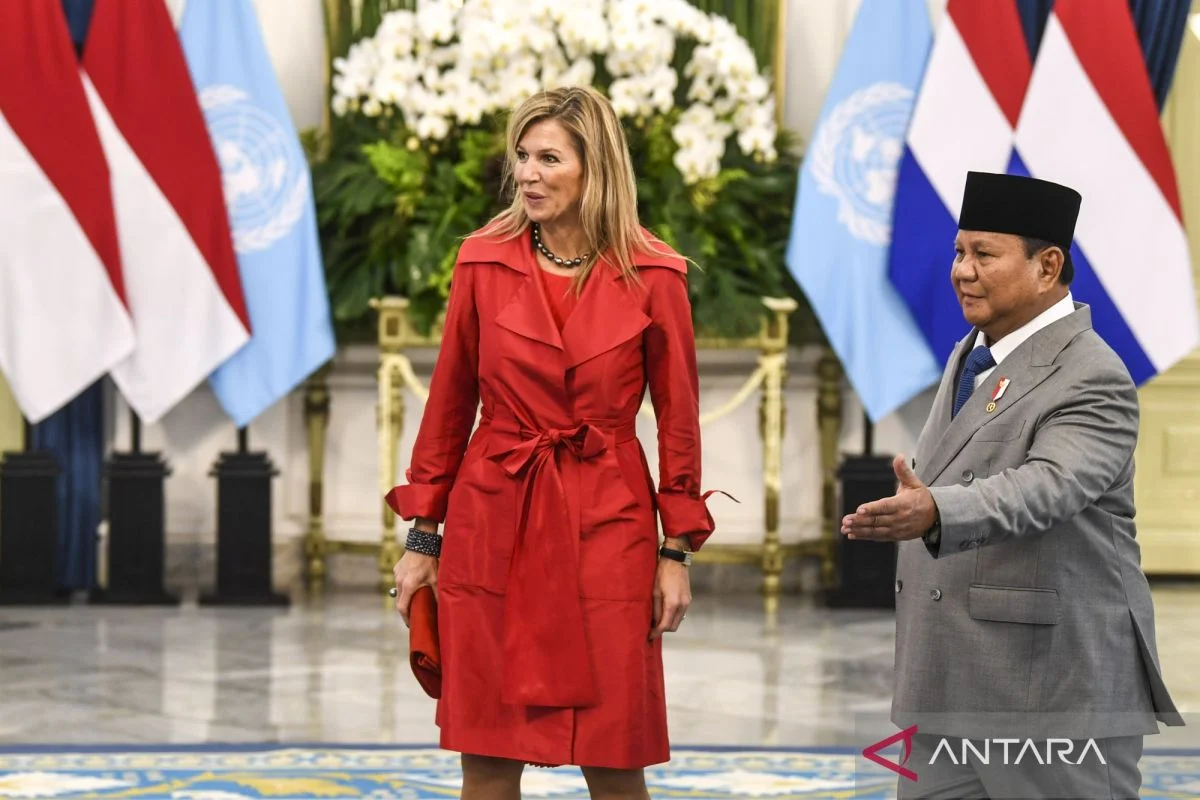
The pinnacle of her visit was a meeting with President of Indonesia, Prabowo Subianto, at the Istana Merdeka in Jakarta. This significant encounter provided Queen Máxima with the opportunity to convey her findings, impressions, and key recommendations from her extensive engagements across the country. The discussions, which included a private meeting and a luncheon, likely covered the broad spectrum of financial inclusion initiatives in Indonesia, the impact of her visit, and avenues for continued collaboration between the UN, the Netherlands, and Indonesia in advancing these crucial development goals. Her insights would offer a global perspective on Indonesia’s progress and potential in fostering an inclusive financial ecosystem.
Implications and Future Outlook
Queen Máxima’s consistent engagement with Indonesia, particularly in her capacity as UNSGSA, sends a powerful signal of international support for the nation’s financial inclusion agenda. Her visits serve to galvanize both governmental and private sector commitment, facilitate knowledge exchange, and highlight innovative solutions that can be scaled up. The focus on vulnerable groups such as women, MSMEs, and low-income workers underscores a commitment to equitable growth and leaving no one behind in the pursuit of sustainable development.
The observations and recommendations emerging from this visit are expected to reinforce Indonesia’s existing National Strategy for Financial Inclusion, potentially leading to new policy initiatives, enhanced regulatory frameworks, and greater public-private partnerships. The emphasis on digital transformation, as evidenced by discussions on digital payments and innovative lending models, points towards a future where technology plays an even more central role in broadening financial access. Furthermore, the innovative waste-for-mortgage program observed in Bekasi could serve as a model for other developing nations grappling with similar challenges of affordable housing and environmental sustainability.
Ultimately, Queen Máxima’s work as UNSGSA aims to ensure that financial services are not merely available but are also utilized effectively to build resilience, foster entrepreneurship, and contribute to the overall economic well-being of individuals and communities. Her latest visit to Indonesia reinforces the enduring partnership and shared vision for a more financially inclusive and prosperous future for all Indonesians. The long-term impact of these sustained efforts will be measured in the tangible improvements in people’s lives, reflecting the profound link between financial inclusion and human development.