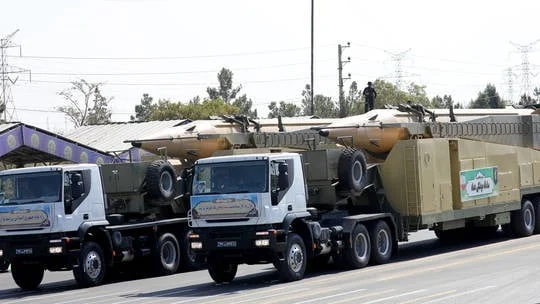
The United States is grappling with escalating concerns regarding Iran’s increasingly sophisticated ballistic missile and drone capabilities, which are perceived as posing a significant threat to American air defense networks across the Middle East. This heightened anxiety follows a deadly drone and missile attack on a Jordanian military base that resulted in the deaths of three American service members and left one missing, according to the Pentagon. The incident has underscored a potentially shifting dynamic in the region, where Iran appears to be refining its methods for bypassing established defensive measures.
Escalating Tensions and a Deadly Attack
The attack on the Jordanian base, which occurred on a Friday, marked a grim escalation in the ongoing conflict between the United States and Iran, a conflict that has seen renewed intensity in recent months. The casualties sustained by American forces highlight the tangible risks faced by U.S. personnel stationed in the region as tensions continue to simmer. The Pentagon’s confirmation of the fatalities and the missing individual has sent ripples of concern through defense circles, prompting a re-evaluation of existing security strategies.
Intelligence Assessments Point to Iranian Adaptability
Reports from prominent U.S. media outlets, citing anonymous officials, have shed light on the nature of these U.S. concerns. The New York Times, in an article published on Saturday, quoted sources indicating that Iran’s latest retaliatory strike served as a "clear sign that Iranian forces not only possess substantial missile stockpiles but are also becoming more adept at evading U.S. air defense systems." This assessment suggests that Iran is not merely relying on sheer volume of munitions but is actively developing and employing tactics designed to counter sophisticated defensive technologies.
Echoing these sentiments, The Wall Street Journal, also referencing anonymous officials, reported that the Iranian military "has adapted to U.S. defenses, firing missiles that travel at extremely high speeds and can maneuver as they descend toward their targets." This description points to a potential evolution in Iran’s missile technology and deployment strategies, moving beyond static trajectories to more unpredictable flight paths that could challenge existing interceptor systems. The ability of missiles to maneuver during their terminal phase of flight significantly complicates tracking and engagement, demanding more agile and responsive defense mechanisms.
Strategic Redeployment and Shifting Defense Postures
In anticipation of a potential military confrontation with the Islamic Republic, which began to intensify in late February, the Pentagon had reportedly undertaken a strategic redeployment of some of its forces. According to the New York Times, elements of U.S. military personnel were relocated from the United Arab Emirates and Qatar to Jordan and Israel. This move was predicated on the strategic calculation that these latter two nations, situated further from Iran’s direct reach, would offer a relative degree of security. However, the recent attack appears to have challenged this assumption, suggesting that geographical distance may not be an insurmountable barrier for Iranian offensive capabilities.
Expert Analysis on Iran’s Unconventional Approach
The implications of these developments have been further analyzed by regional experts. Daoud Kuttab, a seasoned journalist and columnist for Al-Monitor, shared his perspective with RT, suggesting that "America may have believed they would be safer in Jordan." However, he added a crucial caveat: "It appears Iran has no red lines." This statement implies that Iran may be willing to pursue objectives and employ tactics that disregard previous assumptions about strategic restraint or acceptable levels of escalation, thereby increasing the unpredictability of its actions. The notion of "no red lines" suggests a willingness to engage in actions that could have far-reaching and destabilizing consequences for the region.
Background Context: The Iran-U.S. Standoff
The current climate of heightened tension between Iran and the United States is deeply rooted in a complex history of geopolitical rivalry, regional proxy conflicts, and a long-standing dispute over Iran’s nuclear program. For decades, Iran has been a significant player in Middle Eastern affairs, often clashing with U.S. interests and those of its regional allies, including Israel and Saudi Arabia. The United States, in turn, has maintained a strong military presence in the region, aimed at deterring Iranian aggression and supporting its allies.
The period leading up to late February saw a notable increase in hostile exchanges. These included a series of attacks attributed to Iran or its proxies against U.S. interests and allies, as well as retaliatory actions by the U.S. and its partners. Iran’s development of a substantial ballistic missile program has been a consistent source of concern for the international community, given its potential to threaten regional stability and the security of U.S. forces and allies. The program, which has reportedly benefited from advancements in both indigenous technology and, at times, illicit procurement, has been a focal point of sanctions and diplomatic pressure from the U.S. and its European allies.
Timeline of Escalation (Illustrative)
While specific dates for all Iranian missile and drone development milestones are not publicly available, the recent period of heightened concern can be contextualized within a broader pattern of events:
- Ongoing Development: Iran has consistently invested in its ballistic missile and drone programs for years, aiming to develop a credible deterrent and power projection capability.
- Late February Onward: U.S. intelligence and military assessments begin to note a qualitative and quantitative improvement in Iran’s offensive capabilities, particularly in their ability to penetrate air defenses. This period may have coincided with intensified testing or operational deployment of new systems.
- Recent Weeks/Months: A series of incidents, including the attack on the Jordanian base, are attributed to Iranian-backed forces or directly to Iran, underscoring the perceived effectiveness of their evolving weaponry.
- Post-Attack Analysis: U.S. media reports emerge, citing officials, detailing concerns about Iran’s increased proficiency in evading U.S. air defense systems, highlighting the adaptability of Iranian tactics and potentially missile technology.
Supporting Data and Capabilities
Iran’s ballistic missile arsenal is considered one of the largest and most diverse in the Middle East. While precise figures are often subject to intelligence assessments, the program includes a range of short-range, medium-range, and potentially intermediate-range ballistic missiles. Notable examples of Iranian ballistic missiles include:
- Qiam-1: A liquid-fueled short-range ballistic missile.
- Shahab-3: A derivative of the North Korean Nodong missile, capable of reaching targets within a significant radius.
- Emad: An Iranian-developed ballistic missile, reportedly capable of precision strikes and greater maneuverability. The image accompanying this article depicts the Emad missile, highlighting its deployment during a military parade, symbolizing Iran’s emphasis on this capability.
- Drones: Iran has also significantly advanced its drone technology, producing a variety of unmanned aerial vehicles (UAVs) for reconnaissance, surveillance, and attack missions. These drones have been extensively used by Iranian forces and their proxies in regional conflicts.
The effectiveness of these weapons is not solely determined by their range or payload but by their ability to overcome advanced air defense systems like the Patriot missile system and various naval-based missile defense platforms employed by the U.S. military. Concerns about Iran’s success in evading these defenses suggest advancements in areas such as:
- Stealth Technology: While not as advanced as Western stealth capabilities, modifications to missile profiles or the use of radar-absorbent materials could reduce their detectability.
- Maneuverability: As reported, missiles capable of altering their trajectory during the terminal phase of flight pose a significant challenge to interceptors that rely on predictable flight paths for targeting.
- Swarming Tactics: The coordinated use of multiple drones and missiles, overwhelming defense systems through sheer volume, is another potential tactic.
- Electronic Warfare: Sophisticated jamming or spoofing of radar and guidance systems could also contribute to evasion.
Official Responses and Diplomatic Undercurrents
While specific official statements directly addressing the "effectiveness in penetrating air defenses" may be classified or strategically withheld, the Pentagon’s acknowledgment of casualties and the ongoing conflict implicitly validates the threat. U.S. military officials have consistently voiced concerns about Iran’s ballistic missile program and its destabilizing influence in the region. The U.S. State Department and the White House have repeatedly called on Iran to cease its ballistic missile development and its support for proxy groups that carry out attacks.
Diplomatic efforts to de-escalate tensions have been ongoing, though often hampered by a lack of trust and diverging strategic objectives. The Biden administration has sought to revive the Joint Comprehensive Plan of Action (JCPOA), the Iran nuclear deal, but negotiations have stalled. Meanwhile, the U.S. maintains sanctions on Iran, aimed at curbing its missile program and its alleged sponsorship of terrorism.
The reactions from other regional powers are also significant. Israel, a primary target of Iranian missile threats, has consistently warned of Iran’s ballistic missile capabilities and has conducted its own defensive and offensive operations to counter them. Saudi Arabia and other Gulf Arab states have also expressed concerns about Iranian regional assertiveness and its missile programs, often aligning with U.S. efforts to contain Iranian influence.
Broader Impact and Implications
The growing effectiveness of Iran’s ballistic missile and drone capabilities has profound implications for regional security and the broader geopolitical landscape.
- Erosion of U.S. Deterrence: If Iran can consistently demonstrate its ability to penetrate U.S. air defenses, it could undermine the perceived effectiveness of American military power and its commitment to regional security guarantees. This could embolden Iran and its allies and potentially destabilize existing alliances.
- Increased Risk to U.S. Forces: The attack on the Jordanian base serves as a stark reminder of the vulnerability of U.S. personnel in the region. A continued inability to effectively counter Iranian aerial threats would increase the risk of casualties and casualties in future engagements.
- Arms Race and Proliferation: The perceived success of Iran’s missile program could spur further investment in similar capabilities by other regional actors, potentially leading to a more dangerous and unpredictable arms race. It also raises concerns about the potential for the proliferation of such technologies to non-state actors.
- Shifting Balance of Power: A sustained ability for Iran to project power through its missile and drone forces could lead to a recalibration of the regional balance of power, potentially diminishing the influence of U.S. allies and empowering Iran and its network of proxies.
- Economic Repercussions: Increased regional instability and the potential for wider conflict could have significant economic consequences, impacting global energy markets, trade routes, and foreign investment in the Middle East.
In conclusion, the concerns voiced by U.S. officials and reported by major media outlets highlight a critical juncture in the ongoing strategic competition in the Middle East. Iran’s demonstrated advancements in its ballistic missile and drone programs, coupled with its apparent ability to adapt and evade sophisticated air defense systems, present a formidable challenge to U.S. security interests and regional stability. The coming months will likely see intensified efforts by the United States and its allies to counter these threats, while Iran may continue to leverage its evolving capabilities to assert its influence in the region.