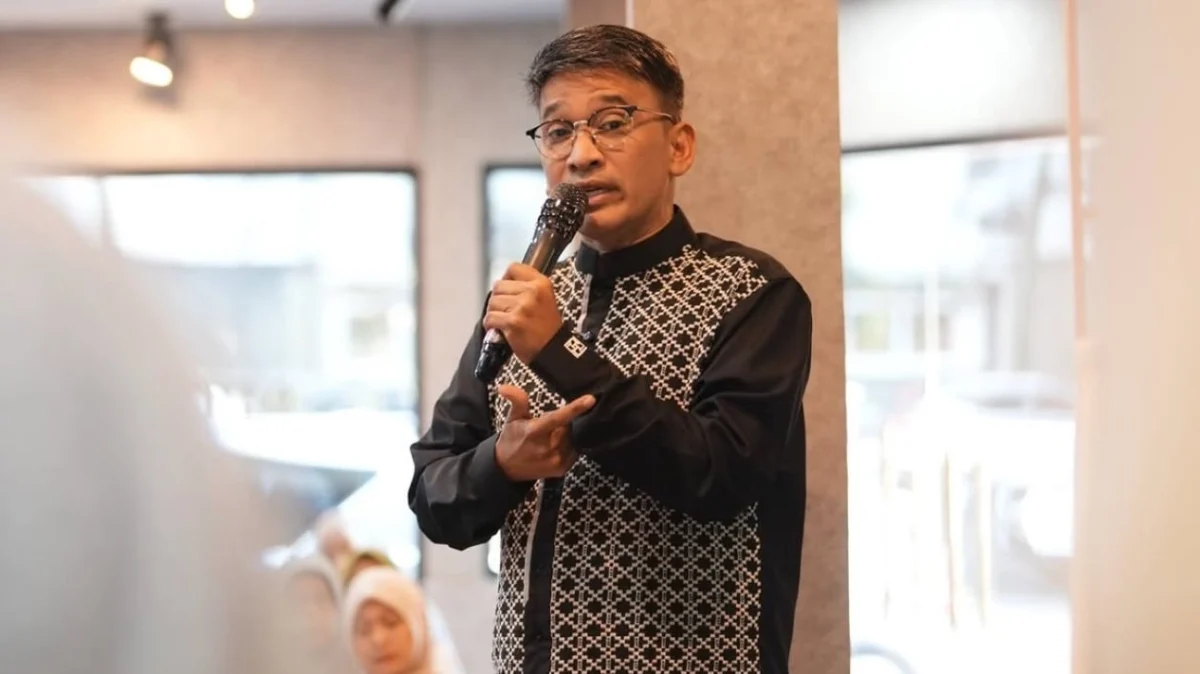
The landscape of celebrity parenting and public perception shifted this weekend when television personality Ruben Onsu addressed a sensitive moment involving his daughter, Thania, and a family associate, Giorgio Antonio. The incident, which occurred during a dinner gathering, sparked a significant discourse on social media regarding the necessity of physical boundaries and the role of adults in fostering independence in children. This public commentary arrives at a volatile time for the Onsu family, as Ruben and his estranged wife, Sarwendah, remain embroiled in a highly publicized legal dispute over child custody.
The Incident and Public Commentary
The controversy began on September 12, 2026, when Ruben Onsu utilized his personal Instagram platform to express dissatisfaction with a specific interaction captured during a meal. The imagery showed Thania being held on the lap of Giorgio Antonio. Ruben’s critique was pointed, emphasizing that his daughter is at an age where she is fully capable of sitting independently, particularly alongside her sister.
"The joy of an uncle eating with my children is understood, but there is no need for her to be on his lap. Nia can sit by herself next to her sister. Do not blame the child’s preference; it is the adults who must teach them," Ruben stated in his post.
This critique immediately invited a wave of scrutiny from netizens, many of whom began to dissect the dynamics of the household. The conversation quickly moved beyond the specific incident and toward broader questions regarding parental supervision. One commenter remarked, "It is baffling that this is allowed. Sarwendah should be teaching her about boundaries; surely she understands the necessity of this." Other observers noted the developmental appropriateness of the physical contact, suggesting that while such displays of affection might be acceptable for a toddler, they become inappropriate as a child matures, echoing Ruben’s sentiment that independence should be a prioritized lesson in the developmental phase.
Contextualizing the Legal Strain
The heightened sensitivity surrounding this incident cannot be decoupled from the ongoing legal proceedings between Ruben Onsu and Sarwendah. The couple, who have long been a staple of Indonesian entertainment, are currently navigating a complex divorce and child custody process.
The legal friction has been marked by several high-profile developments, including recent mediation attempts. As reported by legal representatives earlier in September 2026, the mediation process has been arduous, touching on sensitive issues such as health assessments and the welfare of the children involved. The fact that Ruben chose to air his grievances regarding the care of his daughter in such a public forum suggests a potential breakdown in communication or a fundamental disagreement on the standards of care being provided in the children’s current environment.

Developmental Psychology and Physical Boundaries
From a developmental perspective, the discussion raised by Ruben touches upon the critical age of autonomy. Experts in child development often emphasize that as children transition from toddlerhood to school age, the encouragement of independent physical space is essential for fostering self-reliance and body autonomy.
When a child is consistently held by adults during meals or social events, it may inadvertently hinder their ability to navigate social spaces independently. While cultural nuances in Indonesia often emphasize close physical touch as a sign of affection, there is an increasing shift among urban, public-facing families to balance this with the modern understanding of "personal space." Ruben’s insistence on "teaching boundaries" reflects a conservative approach to child-rearing that prioritizes social conditioning over the comfort of casual physical proximity.
The Impact of Celebrity Parenting in the Digital Age
The public nature of this critique serves as a case study for the pressures faced by celebrity families. In the era of social media, parenting choices are no longer private matters. They are subject to the "court of public opinion," where followers feel entitled to judge the competency of parents based on curated snapshots.
For the Onsu family, this pressure is amplified. Every post, like, or comment from either parent is analyzed by the media and the public for signs of instability or hidden agendas regarding their custody battle. The involvement of a third party, such as Giorgio Antonio, in the controversy further complicates the narrative, as it forces external figures into the center of a private family disagreement.
Official Responses and Legal Implications
While neither Sarwendah nor Giorgio Antonio has released a formal, detailed rebuttal to Ruben’s specific Instagram post, the atmosphere surrounding the legal team suggests that any public remark is handled with extreme caution. Minola Sebayang, the legal counsel representing Ruben Onsu, has previously maintained that all actions taken by the parties are intended to protect the interests of the children.
However, legal experts note that public criticisms regarding child-rearing can be leveraged in custody hearings. If one parent argues that the other is failing to enforce appropriate boundaries or is exposing the children to environments that the other deems improper, it can influence judicial perceptions of "parental fitness." The court’s primary concern is always the "best interest of the child," and the public ventilation of these concerns, while perhaps cathartic for the parent, carries significant strategic weight in court.
Timeline of Recent Developments
- Early 2026: Initial reports emerge regarding the cooling relationship between Ruben Onsu and Sarwendah.
- August 2026: Formal filing of the custody and divorce petitions enters a more aggressive phase of mediation.
- September 10, 2026: Media reports detail the complexities of the mediation process, with legal teams confirming discussions over health and child welfare.
- September 12, 2026: Ruben Onsu posts his critique regarding the interaction between Thania and Giorgio Antonio, triggering a viral response.
- Post-September 12, 2026: The incident continues to trend as a focal point for debates on boundaries in the context of the larger divorce case.
Societal Implications: The Shift in Child-Rearing Norms
The debate sparked by this incident highlights a broader trend in Indonesian society. Traditionally, in many communal or extended-family settings, children are frequently held or carried by various adults. However, as families become more nuclear and individualistic, the definition of what constitutes a "proper" interaction between a child and an adult non-parent is evolving.
Ruben’s public stance serves to reinforce a stricter, more guarded approach to child protection. By labeling the act as one that requires "teaching" rather than "nurturing," he shifts the narrative from affection to discipline. This resonates with a segment of the population that is increasingly concerned about the safety and emotional development of children in an environment where, as the divorce unfolds, the children are exposed to multiple, sometimes conflicting, caregiving styles.
Analysis: Navigating Public Perception vs. Private Reality
The core of the issue lies in the intersection of personal grievance and the public sphere. Ruben Onsu is a master of communication, having built a career on his public persona. By choosing to address this through Instagram, he effectively bypassed the traditional press to speak directly to his followers, ensuring that his perspective on the incident was the first to be heard.
However, this tactic also invites the risk of backlash. As seen in the comments section, some users interpreted his post not as an act of protective parenting, but as a potential sign of hostility toward the other parties involved. The nuance of his message—that adults must be the ones to facilitate independence—was largely overshadowed by the underlying tension of his marital separation.
Conclusion
As the legal battle between Ruben Onsu and Sarwendah continues, the public is likely to see more of these instances where small, domestic interactions are elevated to the level of public controversy. The case of Thania and the dinner-table interaction is a microcosm of the larger, more complex struggle for control and influence within a fracturing family unit.
Moving forward, the primary concern for all parties—and the public observing them—remains the psychological well-being of the children involved. Whether the emphasis on boundaries is a genuine attempt to foster independence or a manifestation of the ongoing legal strain, the incident serves as a poignant reminder that in the lives of high-profile families, the boundaries between the private domestic sphere and the public arena have all but dissolved. The resolution of the broader custody battle will ultimately be decided in court, but for now, the debate over how children should be raised remains a central theme in the unfolding narrative of the Onsu family.