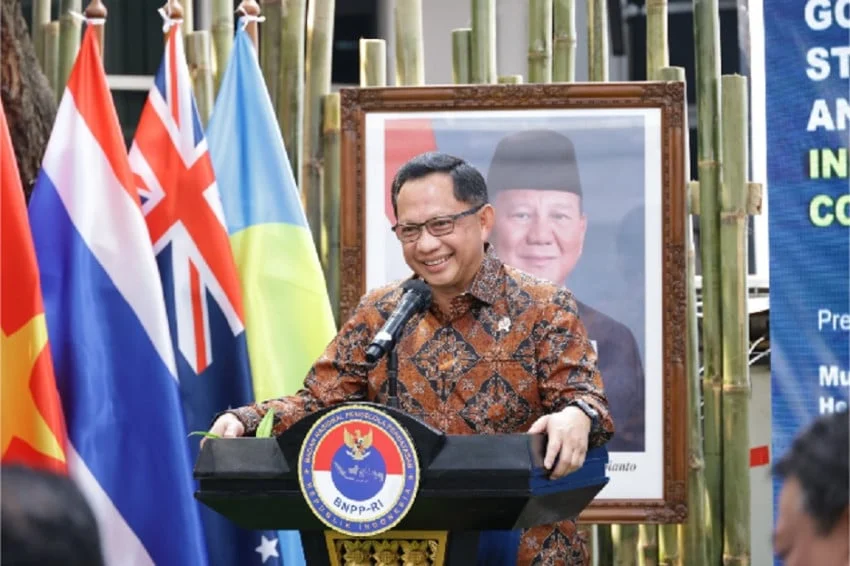
The National Border Management Agency (BNPP) of the Republic of Indonesia convened a strategic diplomatic assembly on Wednesday, September 16, 2026, at the agency’s permanent secretariat in Jakarta. Presided over by the Minister of Home Affairs, Muhammad Tito Karnavian, who serves as the head of BNPP, the event—branded as the "Indonesia Border Partnership Coffee Morning"—served as a high-level platform for deliberating the complex dynamics of regional security, economic integration, and cross-border cooperation. With the theme "Strengthening Cooperation in Managing Our Border to Promote Prosperity," the forum emphasized a paradigm shift in border governance: moving from a purely security-centric approach toward a model that prioritizes economic prosperity and sustainable development for border communities.
The Strategic Imperative of Border Diplomacy
Indonesia’s geography presents one of the most complex border management challenges in the world. As an archipelagic nation, Indonesia shares land borders with three nations—Malaysia, Papua New Guinea, and Timor-Leste—and maritime borders with seven others: Singapore, Australia, the Philippines, Vietnam, Thailand, India, and Palau. This geographic reality necessitates a multi-layered diplomatic strategy.
Minister Tito Karnavian noted during the session that the modern border is no longer merely a line on a map but a "front porch" for national development. For Indonesia, which possesses thousands of islands and extensive Exclusive Economic Zones (EEZ), the management of these boundaries is inherently linked to sovereignty and the protection of national assets. By fostering direct, informal, yet high-level communication channels with diplomatic representatives from neighboring states, the BNPP aims to minimize friction points such as illegal border crossings, resource extraction disputes, and trans-border crime, while simultaneously creating legal corridors for regional trade.
Historical Context and Chronology of Border Development
The establishment of the BNPP in 2010 marked a significant departure from previous, fragmented approaches to border management, where responsibilities were spread across various ministries and agencies. Over the last decade, the agency has undergone several phases of transformation to adapt to the changing regional security architecture.
- 2010: Formal establishment of BNPP via Law No. 43 of 2008, consolidating border management under a centralized authority.
- 2015–2019: The "Nawa Cita" era, which focused on building border infrastructure, including the construction of Integrated Cross-Border Posts (PLBN) to standardize services.
- 2020–2023: The integration of digital surveillance technologies and the implementation of COVID-19 pandemic-era border control protocols, which highlighted the need for synchronized health and security procedures.
- 2024–2026: Current focus on "Border Prosperity," emphasizing regional economic hubs and the formalization of local trade routes.
The recent coffee morning follows the government’s broader directive to finalize the "Integrated Border Management Design," an ambitious policy framework aimed at aligning provincial development programs with national security priorities.
Economic and Demographic Implications
The prosperity of border regions is a cornerstone of Indonesia’s national stability. Statistics from the Central Statistics Agency (BPS) and internal BNPP reports indicate that regions bordering Malaysia and Papua New Guinea have historically lagged in infrastructure and social services compared to inland areas. However, the development of modern PLBNs has begun to shift this trend.
The economic implication of "Strengthening Cooperation" is twofold. First, it involves the formalization of traditional trade. Many border communities rely on cross-border transactions that often fall outside formal tax and regulatory frameworks. By harmonizing customs and immigration procedures with neighboring countries, the Indonesian government seeks to turn these informal markets into legal, taxable, and manageable economic zones. Second, the collaboration aims to attract foreign investment. When borders are stable and regulated, they become gateways for infrastructure development, including telecommunications, logistics, and power grids, which benefit both sides of the boundary.
Official Perspectives and Multilateral Synergy
While the event was led by Minister Tito Karnavian, the implications of the forum reach far beyond the Ministry of Home Affairs. Representatives from the Ministry of Foreign Affairs, the Indonesian Armed Forces (TNI), and the National Police (Polri) were present, underscoring the inter-agency nature of border governance.
In his address, Minister Karnavian highlighted that "prosperity is the best security." He argued that poverty in border regions is the primary driver of illegal activities. By promoting joint development projects with neighboring countries, the BNPP intends to address the root causes of regional instability. Official responses from neighboring diplomatic missions, although held in closed sessions, have generally echoed the sentiment that synchronized border management is essential to combat non-traditional threats, such as human trafficking and illicit drug flows, which remain significant concerns in the Southeast Asian region.
Analytical Outlook: Challenges Ahead
Despite the optimistic tone of the meeting, several challenges remain. The primary obstacle is the disparity in development levels between Indonesia and some of its neighbors. For instance, the economic infrastructure on the Malaysian side of the Kalimantan border is significantly more advanced than on the Indonesian side. Bridging this gap requires sustained capital investment and a commitment to long-term bilateral agreements.
Furthermore, the maritime borders remain a point of contention. While land borders are physically demarcated, maritime boundaries involve complex negotiations regarding the United Nations Convention on the Law of the Sea (UNCLOS). The BNPP’s strategy of "partnership" suggests that Indonesia is looking to leverage soft power and economic incentives to resolve maritime disputes, rather than relying solely on the presence of naval assets.
Long-term Strategic Goals
The "Strengthening Cooperation" initiative is expected to result in several concrete outcomes by the end of 2027:
- Digital Synchronization: The integration of border control databases between Indonesia and key partners to facilitate faster, more secure trade and travel.
- Joint Task Forces: The expansion of cross-border law enforcement cooperation to address transnational crime more effectively.
- Special Economic Zones (SEZs): The creation of "Border Economic Zones" where specific trade regulations are relaxed to encourage investment and job creation for local populations.
As the meeting concluded, the consensus among the attendees was clear: the era of the "closed border" is being replaced by the era of the "connected border." For Indonesia, this is not merely a policy preference but a strategic necessity. By positioning itself as a proactive partner in regional management, Jakarta aims to secure its sovereignty while ensuring that its peripheral regions become vibrant centers of economic growth.
The BNPP, under the leadership of Tito Karnavian, has signaled that the coming years will involve more frequent, sector-specific dialogues. These meetings will likely shift from broad policy discussions to granular technical negotiations, focusing on everything from shared environmental regulations in border watersheds to the standardization of vocational training for border-region youth.
In summary, the Indonesia Border Partnership Coffee Morning on September 16, 2026, serves as a testament to the evolving nature of the Indonesian state. By treating border management as a dynamic diplomatic and economic endeavor, the government is signaling its intention to play a more integrated role in the prosperity of the Indo-Pacific region. The success of this policy will ultimately be measured by the socio-economic indicators of the people living on the front lines of the archipelago—the citizens who bridge the gap between Indonesia and its neighbors every day.