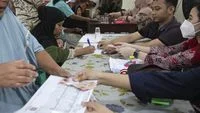
The Indonesian government has officially initiated a nationwide suspension of social assistance programs, commonly known as bansos, for beneficiaries whose accounts have been flagged for suspected involvement in online gambling, widely referred to in the country as judol. This decisive administrative action represents a major intersection of two critical national priorities: the aggressive eradication of illegal online gambling operations and the stringent targeting of state welfare budgets to ensure they reach genuinely vulnerable populations. While the policy aims to preserve the integrity of public funds and prevent state subsidies from being funneled into illicit digital wagering activities, it has also raised immediate concerns regarding administrative accuracy, false positives, and the potential temporary deprivation of vital financial aid for innocent citizens.
To mitigate the risk of wrongful exclusion, the Ministry of Social Affairs, in close coordination with other relevant state institutions, has instituted a formal grievance and clarification mechanism. This allows individuals who believe their benefits have been unjustly suspended to contest the decision, update their status, and have their social assistance reinstated following verification. The implementation of this policy highlights the complexities of modernizing state welfare distribution through data integration, particularly when relying on automated financial tracking and cross-agency data matching to police beneficiary behavior.
Background Context and Policy Genesis
The integration of welfare distribution oversight with anti-gambling surveillance is a relatively recent development born out of escalating national concern over the proliferation of online gambling platforms in Indonesia. Over the past several years, online gambling has surged into a pervasive socioeconomic crisis affecting millions of citizens across various demographic strata, draining household savings, driving individuals into severe debt, and contributing to rising domestic and financial crimes. In response, the Indonesian government established a dedicated anti-online gambling task force, bringing together law enforcement agencies, the Ministry of Communication and Digital Affairs, financial intelligence units, and social welfare authorities to clamp down on the ecosystem supporting digital betting.
As part of this comprehensive crackdown, authorities turned their attention to the misuse of state funds. Reports and preliminary intelligence suggested that a portion of government assistance funds—designed to alleviate poverty, support educational needs, and provide nutritional security for low-income families—was occasionally being diverted into online gambling accounts or digital wallets linked to betting sites. To combat this leakage, policymakers mandated data-matching protocols between national welfare recipient databases and financial transaction monitoring systems, setting the stage for the automated flagging and subsequent suspension of suspect accounts receiving state subsidies.
Chronology of Data Matching and Suspension Implementation
The enforcement of the suspension policy relies heavily on advanced financial intelligence and inter-agency data sharing. The primary mechanism driving the identification process is the cross-referencing of the Integrated Social Welfare Data managed by the Ministry of Social Affairs with transaction analytics provided by the Indonesian Financial Transaction Reports and Analysis Center, known locally as PPATK.
The chronological rollout of this verification and suspension protocol follows a specific operational pathway:
- Financial Intelligence Analysis: PPATK monitors suspicious financial flows, including inbound and outbound transactions connected to known online gambling servers, illegal offshore platforms, and flagged digital wallet accounts.
- Data Cross-Matching: Transaction identifiers, bank account numbers, and digital wallet identities associated with flagged financial activities are cross-referenced against the registry of registered social assistance beneficiaries.
- Administrative Suspension: When a match or strong indicator of association is identified between a welfare recipient and a flagged account, the system provisionally tags the record as "indicated for online gambling." Consequently, the disbursement of subsequent bansos tranches—such as the Family Hope Program or basic food assistance—is temporarily halted pending further investigation.
- Notification and Appeal Window: Flagged individuals are notified of the suspension through administrative channels or local social welfare workers, opening a designated window for clarification, appeal, or dispute resolution.
The Official Clarification and Dispute Resolution Mechanism
Recognizing that automated financial surveillance systems are susceptible to errors—such as accounts being compromised, shared family devices, outdated registry information, or mistaken identity—the government has stressed that an "indicated" status does not constitute a final legal proof of guilt. To ensure that genuinely needy families are not permanently penalized due to systemic or clerical inaccuracies, the Ministry of Social Affairs has established clear, multi-tiered channels for public recourse.
Citizens who discover that their social assistance has been suspended under suspicion of online gambling involvement can pursue two primary avenues of clarification: digital self-service via official applications and direct administrative reporting through local government offices.
1. Digital Recourse via the Cek Bansos Application
Beneficiaries equipped with smartphones and internet access can utilize the official Cek Bansos application provided by the Ministry of Social Affairs. The platform features an integrated "Proposal-Objection" or Usul-Sanggah module. Through this feature, users can review their registered status, submit electronic challenges against erroneous suspensions, and update their personal and financial data to reflect accurate, legitimate household conditions.
2. Local Administrative Verification at Village and District Offices
For individuals lacking digital access or requiring face-to-face verification, the government mandates a community-level reporting structure. Beneficiaries can visit their local village office, sub-district administration office, or the municipal Social Affairs Office to formally contest the suspension.
During these visits, citizens must present official identification and address any discrepancies regarding the bank accounts or digital wallets linked to their names. If an investigation reveals that a registered account or digital wallet was indeed utilized for online gambling transactions—whether by the beneficiary or another household member sharing access—specific corrective measures must be undertaken before any consideration of reinstating welfare rights can begin.
Remediation Protocol for Confirmed Financial Links to Gambling
In cases where the review confirms that a linked account or digital wallet was genuinely tied to online gambling activities, the state enforces a strict remediation protocol. Affected individuals cannot simply request a reinstatement of funds without first rectifying the underlying compliance issue.
The mandatory steps for remediation include:
- Immediate Account Closure: The beneficiary must formally close the specific bank account or digital wallet that was flagged for online gambling transactions.
- Issuance of a Sworn Statement: The individual is required to draft and sign a formal statement letter bearing a legal stamp, explicitly declaring their commitment to permanently cease all online gambling activities. This document must contain comprehensive personal identification details, including the full legal name, National Identity Number, Family Card number, residential address, and specific details regarding the closed financial accounts or digital wallets.
- Documentation Submission: The signed statement letter, along with official proof of account closure issued by the relevant financial institution or payment service provider, must be handed over to local social welfare officers.
- System Update via SIKS-NG: Local authorities upload the submitted documents and verification proof into the New Integrated Social Welfare Information System, known as SIKS-NG, to update the beneficiary’s compliance status and clear the administrative block.
Verification of Status and Broader Socioeconomic Implications
To maintain transparency throughout the suspension and appeals process, the government continues to provide public access tools. Citizens can independently verify their social assistance status at any time by visiting the official Ministry of Social Affairs portal and entering their National Identity Number. If data mismatches, unauthorized suspensions, or outdated household profiles are discovered during this check, formal updates can be initiated immediately through the aforementioned municipal channels or digital applications.
The broader implications of this policy extend far beyond immediate administrative adjustments. From a macroeconomic and social policy perspective, leveraging welfare databases to enforce behavioral compliance creates a powerful deterrent against the misuse of public funds. It aligns social protection programs with national moral and legal imperatives, signaling that state support is contingent upon responsible financial stewardship at the household level.
At the same time, policy analysts and civil society organizations emphasize the necessity of maintaining a delicate balance between rigorous anti-fraud enforcement and administrative due process. Because social assistance often represents the sole financial lifeline for Indonesia’s most impoverished demographics, prolonged administrative suspensions resulting from false positives can inflict severe hardship on vulnerable families. Consequently, the efficiency, accessibility, and transparency of the clarification mechanisms will remain critical determinants of the policy’s overall success, ensuring that state welfare continues to protect the needy while holding illicit digital vices firmly at bay.