The Center of Economic and Law Studies (Celios), a prominent Indonesian economic think tank, has released the findings of its latest comprehensive performance evaluation regarding members of the national cabinet under the administration of President Prabowo Subianto. Among the primary takeaways of the newly published assessment is the performance index of Minister of Energy and Mineral Resources (ESDM) Bahlil Lahadalia, who received the lowest evaluation scores from both general public respondents and participating subject matter experts. The findings have ignited fresh discussions regarding the operational efficacy of key ministries, particularly those governing natural resources, human rights, food coordination, tourism, and culture.
Methodology and Scope of the Celios Evaluation
The comprehensive performance evaluation conducted by Celios was designed to gauge public sentiment and expert consensus regarding the administrative output, policy execution, and overall competency of cabinet ministers during their tenure. The data collection phase spanned from October 2 to October 17, 2025, capturing a critical window of governance under the current administration.
To ensure a diverse and representative sample, the organization engaged 1,338 respondents comprising individuals from rural settlements, suburban peripheries, and major urban centers across the archipelago. The digital outreach methodology utilized targeted advertisements across prominent social media platforms, specifically Meta-owned Facebook and Instagram, enabling researchers to reach a broad demographic spectrum of citizens. In tandem with the public polling, Celios incorporated an expert judgment framework, inviting specialists, academics, and policy analysts to evaluate ministerial performance through specialized metrics.
Key Findings: Minister Bahlil Lahadalia Scores Lowest
According to the tabulated results released on Tuesday, October 21, 2025, Minister of Energy and Mineral Resources Bahlil Lahadalia emerged at the bottom of the ministerial performance rankings. In the public perception category, Bahlil recorded a net negative score of –1320. Concurrently, the evaluation conducted through the expert judgment framework yielded a parallel negative assessment, placing his score at –151.

The low ranking of the Ministry of Energy and Mineral Resources reflects mounting public scrutiny and expert debate surrounding strategic issues in the energy sector. These challenges historically encompass a wide array of complex regulatory and socio-economic dynamics, ranging from the equitable distribution of subsidized fuels and electricity tariffs to the acceleration of the national energy transition, mining governance, and mineral downstreaming policies. While these sectors remain pivotal to Indonesia’s macroeconomic growth, they frequently draw intense public attention due to implementation hurdles and persistent distribution challenges.
Beyond the energy portfolio, the survey highlighted several other high-profile ministerial positions that received low evaluations from the surveyed public and experts. Minister of Human Rights Natalius Pigai registered the second-lowest performance score in the assessment, coming in at –346. He was followed closely by Coordinating Minister for Food Zulkifli Hasan, who recorded a score of –253. Further down the list, Minister of Tourism Widiyanti Putri Wardhana garnered a score of –180, while Minister of Culture Fadli Zon recorded a score of –170. The inclusion of these strategic ministries underscores a widespread public demand for enhanced policy delivery and transparent governance across various administrative sectors.
Ministerial Response and Official Reaction
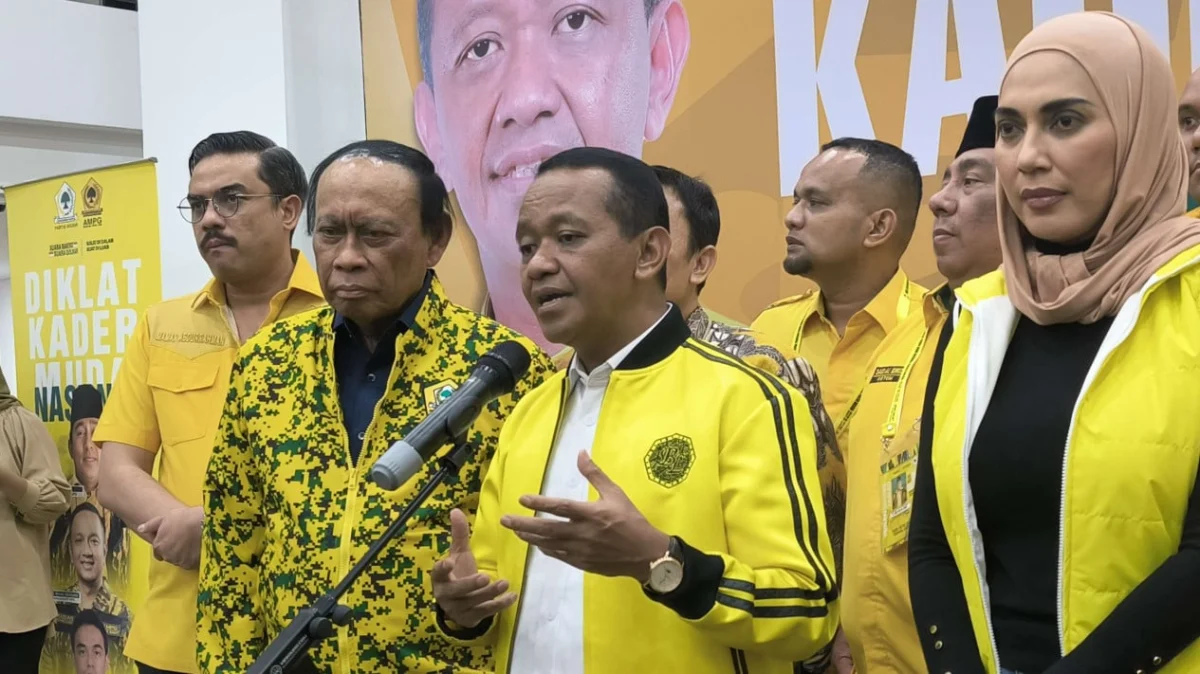
Confronted with the survey results during a public appearance at the Golkar Party Central Leadership Board (DPP) office in Jakarta on Tuesday, October 21, 2025, Bahlil Lahadalia responded with composure. When asked by reporters for his reaction to being ranked as the lowest-performing minister by Celios, Bahlil stated that he had not yet thoroughly examined the published report.
"I haven’t read it yet; let me read it first," Bahlil remarked to the press corps.
Despite lacking immediate familiarity with the specific data points and methodological metrics of the study, the Minister of Energy and Mineral Resources asserted that his administrative tenure and institutional output over the past year within President Prabowo Subianto’s cabinet have remained stable and productive. "Everything is fine, everything is fine," he added, downplaying the negative implications of the index scores.

Representatives from the other ministries identified in the lower tiers of the Celios evaluation have yet to issue formal, comprehensive statements addressing the specific statistical findings, though various government spokespersons have consistently emphasized ongoing structural reforms and long-term targets aimed at improving public service delivery.
Broader Economic and Political Implications
The publication of the Celios survey serves as a vital barometer of public satisfaction and institutional accountability. In emerging democracies like Indonesia, independent think tanks and policy research organizations play a critical role in bridging the gap between executive governance and civilian feedback. Negative performance metrics, while subjective and reflective of public perception at a specific point in time, often prompt internal evaluations within state institutions and political coalitions.
For Bahlil Lahadalia—who also serves as the General Chairperson of the Golkar Party, one of the primary pillars of the ruling governmental coalition—maintaining favorable public perception is crucial. Energy governance directly impacts the purchasing power of citizens, industrial competitiveness, and fiscal sustainability, particularly given ongoing debates surrounding national energy subsidies. Recent policy discussions led by the Ministry of Energy and Mineral Resources have frequently centered on optimizing the distribution of subsidized fuels—such as Pertalite and Solar—to ensure that state fiscal support reaches targeted demographics rather than affluent vehicle owners, a topic that frequently generates intense public discourse.
Similarly, the inclusion of coordinating and sectoral ministries in the lower performance brackets highlights the multifaceted hurdles facing the current administration. From food security and agrarian coordination to cultural preservation and human rights advocacy, the public increasingly demands tangible, measurable outcomes that address daily socioeconomic realities.
Conclusion and Outlook
The Celios performance evaluation of October 2025 provides a snapshot of the complex relationship between government policy execution and public reception in Indonesia. While cabinet officials such as Bahlil Lahadalia maintain that administrative operations are proceeding smoothly, independent findings signal that significant portions of the populace and expert communities perceive distinct areas requiring urgent policy correction. As the administration of President Prabowo Subianto progresses, the feedback generated by such independent assessments will likely serve as a constructive catalyst for administrative refinement, enhanced transparency, and greater responsiveness to the needs of the Indonesian public.