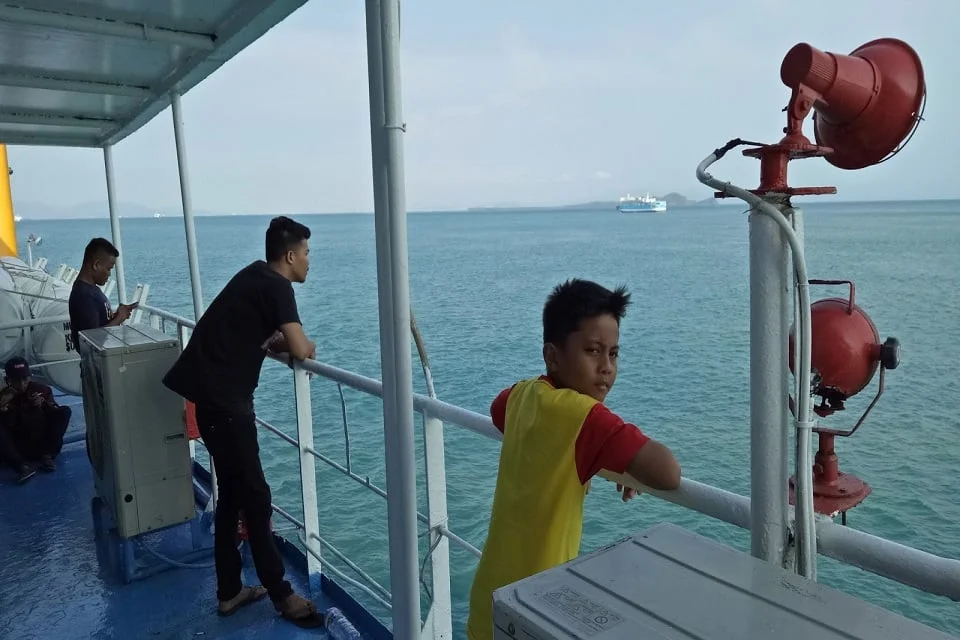
Maritime travel remains one of the most significant modes of transportation for global trade, tourism, and human mobility, yet it inherently carries risks associated with the unpredictable nature of the oceans. Beyond the critical importance of adhering to international safety protocols and ensuring the structural integrity of vessels, many Muslims incorporate spiritual practices into their travel preparations. This integration of technical preparation and spiritual reliance, known as tawakal, serves as a foundational element of the Islamic approach to safety. By examining historical narratives, specifically the account of Prophet Nuh (Noah) as recorded in the Quran, believers find a template for maintaining mindfulness of the Divine while navigating the high seas.
The practice of reciting specific prayers upon embarking on a sea voyage is deeply rooted in the concept that human effort, while necessary, is not the sole determinant of safety. In professional maritime sectors, safety management systems—such as the International Safety Management (ISM) Code—provide the technical framework for preventing accidents. From a theological perspective, the act of prayer serves as a psychological and spiritual anchor, reinforcing the recognition that while captains and crew are responsible for navigation, the ultimate protection lies within the sovereignty of Allah.
Historical Context and the Quranic Narrative
The narrative of Prophet Nuh is perhaps the most significant maritime story in Islamic tradition. When the great flood descended as a divine decree, Nuh was commanded to construct an ark to preserve the righteous and the various species of animals. The Quranic verses detailing this event emphasize the intersection of physical labor—the building of the ship—and spiritual devotion.
Surah Hud, verse 41, provides the specific invocation used during this monumental voyage: "And he said, ‘Board it, in the name of Allah is its course and its anchorage. Indeed, my Lord is Forgiving and Merciful.’" (QS Hud: 41). This verse is not merely a historical footnote; it serves as a prescriptive guideline for all subsequent generations of believers. It highlights that the act of "boarding" must be accompanied by the recognition of the Divine name. By invoking Allah during both the "course" (majreha) and the "anchorage" (mursaha), the traveler acknowledges that the transition from motion to stillness, and every moment in between, is under divine oversight.
The Role of Tawakal in Modern Maritime Safety
In the modern era, the maritime industry has seen significant advancements in safety technology, including Satellite Automatic Identification Systems (AIS), weather forecasting precision, and improved hull materials. However, human error remains a leading cause of maritime accidents. According to reports from the International Maritime Organization (IMO), human factors contribute to approximately 75% to 96% of marine casualties.
The Islamic concept of tawakal—often misinterpreted as passive resignation—actually functions as a balanced approach that requires maximum human effort followed by surrender to the outcomes. In a professional context, this translates to the rigorous inspection of lifeboats, navigation equipment, and emergency communication tools, followed by a prayer for safety. It is a dual-layered approach to risk management: the technical mitigation of external hazards and the internal stabilization of the human spirit.
Chronology of Spiritual Practice in Islamic Travel
The tradition of reciting specific prayers upon embarking on a vessel has been documented in various Hadith collections, further solidifying its place in daily practice.
- The Prophetic Era: Various narrations attribute specific invocations to the Prophet Muhammad SAW, emphasizing that safety is not an inherent human right but a divine blessing.
- The Era of the Companions: Ali ibn Abi Talib (RA) reported that the Prophet SAW taught a specific supplication for those boarding ships: "Bismillaahil Malikir Rahmaanirrahim, Bismillaahi majreha wa mursaha innahu laghafururrahim."
- Institutionalization: Over centuries, these prayers were codified in various manuals of adab (etiquette) for travel, bridging the gap between sacred texts and daily maritime routines.
Technical Data and Safety Implications
To understand the necessity of this spiritual discipline, one must look at the objective risks of sea travel. According to the Allianz Safety and Shipping Review, despite improvements in global safety standards, the maritime industry still experiences dozens of total vessel losses annually due to foundering, fire, and collision. The psychological stress associated with sea travel—especially during inclement weather—is significant.
Scholars of Islamic psychology argue that the recitation of these prayers serves as a cognitive behavioral tool. By focusing on the attributes of Allah (The Sovereign, The Most Merciful, The Most Forgiving), the traveler shifts their mindset from fear of the ocean’s unpredictability to a state of calm. This reduction in anxiety can, in itself, lead to better decision-making under pressure, as a calm individual is more likely to follow emergency procedures accurately than one in a state of panic.
Official Responses and Communal Perspectives
Religious leaders and scholars have consistently emphasized that spiritual practice should never be viewed as a substitute for safety regulations. In various sermons and scholarly publications, there is a clear consensus: the neglect of safety equipment—such as failing to provide sufficient life jackets or ignoring weather warnings—is considered a failure of the religious duty to protect life (hifz al-nafs).
"One cannot simply pray for safety while ignoring the maintenance of the vessel," notes a common sentiment among contemporary Islamic scholars. The prayer is an extension of the effort, not a replacement for it. This perspective is vital for the maritime industry, where safety culture is a priority. It promotes a holistic view of the traveler, where the body is protected by technology and the heart is protected by faith.
Broader Impact and Implications
The integration of these traditions into the lives of modern travelers has broader implications for how religious communities interact with technology and risk.
- Psychological Resilience: The practice fosters a sense of resilience. In a world where the future is often uncertain, the habit of starting a journey with a prayer creates a sense of agency and comfort.
- Safety Culture: By framing safety as a religious duty, the community reinforces the importance of following secular safety laws. If a person views their life as an amanah (trust from God), they are more likely to respect the rules of the sea, as they are essentially rules that preserve that trust.
- Cultural Continuity: Maintaining these traditions allows for a link between historical Islamic identity and the modern, globalized world. It demonstrates that religious values are not confined to mosques but are applicable to all aspects of human life, including transport and logistics.
Analyzing the Synergy of Faith and Physics
When analyzing the intersection of maritime physics and spiritual invocation, one observes that the prayer acts as an acknowledgment of the limits of human science. No matter how advanced a vessel’s sensors may be, the ocean remains a force of nature that cannot be fully controlled by human engineering. This humility is the core of the prayer.
Furthermore, the specific mention of "forgiving and merciful" in the prayer—as seen in the Hadith of Ali (RA)—points to an essential aspect of the Islamic worldview: the admission of human fallibility. Whether in navigation errors or maintenance oversights, the traveler acknowledges that they are in need of divine mercy.
Conclusion: A Holistic Approach to Travel
In conclusion, the practice of reciting prayers when boarding a ship is a multi-faceted tradition that addresses the technical, psychological, and spiritual needs of the traveler. It encourages a proactive approach to safety through the lens of divine reliance. By following the example of Prophet Nuh and the guidance of the Prophet Muhammad SAW, the modern traveler is reminded that they are never truly alone, even in the vastness of the ocean.
While the modern maritime industry relies on advanced telemetry, radar, and international law to ensure the safe passage of goods and people, the incorporation of faith-based practices remains a significant component of the human experience. It serves as a reminder that behind every navigation chart and safety protocol, the ultimate assurance of security is a matter of profound faith. As global trade continues to expand and sea travel remains essential, the marriage of rigorous physical safety standards and the comfort of spiritual reflection will continue to define the journey for millions of people worldwide. Whether for the professional mariner or the casual traveler, the act of invoking the Divine before embarking serves as the final, most essential, piece of equipment in any maritime journey.