JAKARTA — The Indonesian government, in coordination with the legislature, has officially agreed to establish a structured testing mechanism for the recruitment and career progression of educators holding the status of part-time Government Employees with Work Agreements (PPPK), as well as those transitioning toward full-time Civil Servant (PNS) status. The policy encompasses a broad spectrum of the educational workforce, explicitly incorporating state madrasah educators and public kindergarten (TK) teachers into the transitional framework.
The agreement was reached during a high-level closed-door meeting between cabinet ministers and the leadership of the House of Representatives (DPR) at the Parliamentary Complex in Senayan, Central Jakarta. The decision represents a direct policy response to mounting aspirations from teacher associations and labor unions advocating for structural parity, job security, and clear career pathways for hundreds of thousands of contractual educators operating within the national public education system.
Minister of Home Affairs Tito Karnavian outlined the operational framework following the parliamentary session, emphasizing that the evaluation process is designed to be inclusive while safeguarding the current employment status of existing educators.
Chronology of Policy Development and Parliamentary Consultation
The discourse surrounding the professional status of non-civil-servant teachers has evolved significantly over the past several years. Historically, the mass recruitment of PPPK teachers was initiated to address severe regional shortages of educators and to resolve the ambiguous legal and financial status of hundreds of thousands of honorary teachers (guru honorer) who had served for decades with minimal compensation.
However, the segmentation of the workforce into full-time PPPK, part-time PPPK, and traditional honorary categories created systemic disparities in remuneration, social security, and professional prestige. Throughout 2024 and 2025, teacher organizations intensified lobbying efforts, demanding that part-time contracts be upgraded to full-time positions and that qualified PPPK personnel be granted a direct pathway to convert into PNS status—the traditional gold standard of public employment in Indonesia.
The culmination of these negotiations materialized on Thursday, September 17, 2026, during the consultative meeting at the DPR complex. Lawmakers and executive branch officials reviewed fiscal capacities, administrative burdens, and educational quality standards before arriving at the consensus to introduce a standardized testing and evaluation protocol.
According to the implementation roadmap discussed during the session, the formal transition process is slated to commence systematically in 2027. This timeline provides relevant ministries—particularly the Ministry of Primary and Secondary Education (Kemendikdasmen) and the Ministry of State Apparatus Utilization and Bureaucratic Reform (KemenPAN-RB)—sufficient runway to formulate technical guidelines, assessment rubrics, and budgetary allocations.
Mechanics of the Evaluation and Testing Framework
Addressing concerns regarding job security during the parliamentary debriefing, Minister Tito Karnavian clarified the stakes of the upcoming evaluation examinations. The administration aims to balance meritocratic standards with social protection.
"The conclusion is that they will be given the opportunity to participate in a form of testing mechanism, and subsequently, upon passing, they will be absorbed as permanent personnel under the Ministry of Primary and Secondary Education," Tito stated following the meeting.
Crucially, the government has instituted a safety net for candidates who fail to achieve the passing threshold during the assessment phase. Tito explicitly guaranteed that unsuccessful candidates would not face termination, mass layoffs, or administrative furloughing.
"If they do not pass, their current employment status will be maintained. There will be no dismissals or placing them on unpaid leave—absolutely not," he affirmed.
This assurance addresses a primary anxiety among the teaching corps, who feared that performance evaluations or competency tests could be utilized as mechanisms for workforce reduction. Instead, the testing structure is conceptualized as an upward mobility filter rather than a retention hurdle, allowing educators to retain their current part-time or full-time PPPK standing while offering repeated opportunities for future advancement.
Inclusion of Madrasah and Kindergarten Educators
A notable dimension of the newly agreed policy is the explicit inclusion of madrasah negeri (state-run Islamic schools) and kindergarten (TK) educators. Historically, public policy discussions regarding teacher recruitment have heavily favored general primary and secondary school teachers under local government jurisdiction, frequently leaving religious-based state education institutions and early childhood educators navigating separate, often convoluted administrative pathways.
By incorporating state madrasah teachers into the 2027 transition framework, the central government is acknowledging the integrated nature of the national education system, which operates under the dual purview of the Ministry of Education and the Ministry of Religious Affairs. Similarly, the inclusion of public kindergarten teachers addresses long-standing grievances regarding the underappreciation of early childhood education, which serves as the foundational bedrock of cognitive and social development.
Contextual Data and Workforce Demographics
To understand the magnitude of this policy shift, one must examine the broader statistical landscape of Indonesia’s educational ecosystem. Indonesia currently employs over three million teachers distributed across public and private institutions. Within the public sector, the decentralization of education management to regional governments has historically resulted in budgeting imbalances, delayed salary disbursements, and uneven distribution of teaching talent.
The introduction of the PPPK scheme was originally intended to absorb more than one million honorary teachers. However, fiscal constraints at the regional level led many local governments to categorize educators as part-time PPPK, offering reduced compensation packages and limited long-term benefits compared to their full-time counterparts.
Data from education watchdogs indicate that non-permanent and contractual teachers still comprise a significant percentage of the active teaching force in remote and underdeveloped regions. The transition of these educators into full Ministry of Primary and Secondary Education oversight—contingent on passing the newly established examinations—is expected to centralize career management, standardize compensation baselines, and improve overall data accuracy regarding national teacher competency.
Implications for Educational Quality and Bureaucratic Reform
The decision to implement a testing mechanism for career advancement carries profound implications for the quality of education in Indonesia. While teacher welfare and job security are vital policy drivers, educational analysts have consistently emphasized the necessity of maintaining rigorous professional standards.
- Standardization of Competency: By subjecting candidates to a centralized evaluation managed under the Ministry of Primary and Secondary Education, the government can better enforce baseline pedagogical proficiencies, subject-matter mastery, and administrative capabilities.
- Fiscal and Administrative Restructuring: Absorbing large cohorts of part-time PPPK into full-time PNS or permanent ministerial employee tracks requires meticulous fiscal planning. The phased approach starting in 2027 is designed to prevent budgetary shocks to both national and regional treasuries.
- Morale and Professional Motivation: The guarantee that unsuccessful candidates will retain their jobs removes the paralyzing fear of unemployment, fostering a more stable psychological environment for educators to focus on classroom instruction rather than administrative anxieties. Simultaneously, the prospect of achieving PNS status serves as a powerful incentive for continuous professional development.
Stakeholder Responses and Future Outlook
Teacher associations have expressed cautious optimism regarding the parliamentary consensus. While representatives have welcomed the government’s commitment to avoiding layoffs and creating a clear pathway to PNS status, labor advocates stress that the transparency and fairness of the testing mechanism will be critical.
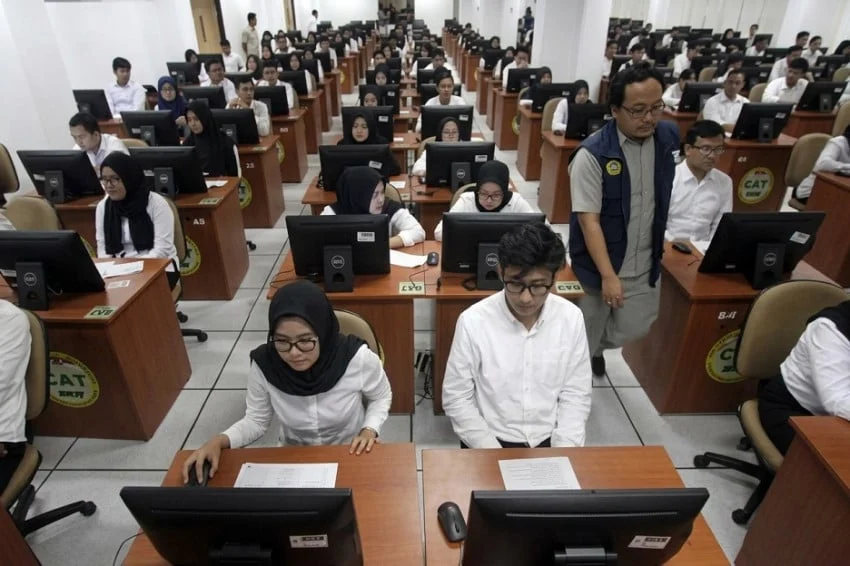
Union leaders have emphasized that the upcoming technical regulations—to be drafted jointly by KemenPAN-RB, Kemendikdasmen, and the Ministry of Home Affairs—must accommodate the realities of older educators who may possess extensive classroom experience but face challenges with standardized digital testing formats. Ensuring accessible preparation programs and fair scoring rubrics will determine whether the transition process achieves its intended objective of uplifting the entire teaching profession.
As the government prepares for the official rollout in 2027, inter-ministerial coordination teams are expected to finalize the technical blueprints, quota distributions, and assessment criteria in the coming months. The successful execution of this policy will not only reshape the employment landscape for hundreds of thousands of educators but will also serve as a definitive milestone in Indonesia’s ongoing bureaucratic and educational reform agenda.