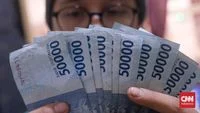
The Indonesian government has officially established the financial stipend framework for participants of the MagangHub 2026 initiative through the issuance of the Ministry of Manpower Decree (Kepmenaker) Number 252 of 2026. This definitive regulatory update dictates that the monetary allowances provided to participants of the Graduate Internship Program 2026 are not uniform, but rather scale dynamically in accordance with the prevailing Provincial Minimum Wage (UMP) or Regency/City Minimum Wage (UMK) of the specific administrative region where the internship takes place.
The publication of Kepmenaker No. 252/2026 represents a critical administrative development in the country’s ongoing strategy to bridge the gap between higher education outcomes and industrial workforce demands. By legally tying the stipend values to local economic indicators, the policy aims to ensure a standard of living for interns that reflects local living costs. Consequently, participants placed in major metropolitan hubs will receive significantly different compensation packages compared to those stationed in smaller regencies, introducing a localized economic approach to national workforce development programs.
Legislative Background and Chronology of the Policy
The establishment of the MagangHub 2026 financial guidelines is the culmination of a rigorous policy refinement process led by the Ministry of Manpower. The regulatory timeline leading up to the current framework highlights the government’s efforts to optimize the national apprenticeship ecosystem:
- Early Policy Iterations (January – February 2026): The Ministry introduced foundational frameworks for the 2026 graduate internship cycle to accommodate growing anxieties regarding graduate employability and economic security during workforce entry.
- Initial Decree Implementation (Early 2026): The government previously enacted Kepmenaker Number 65 of 2026 to serve as the initial regulatory benchmark for the year’s internship programs. However, rapid economic adjustments and regional wage reviews necessitated a more comprehensive and responsive legal instrument.
- Promulgation of Kepmenaker No. 252/2026 (September 14, 2026): Formally signed and enacted on September 14, 2026, this latest decree officially supersedes and revokes the preceding Kepmenaker No. 65/2026. The new decree provides an exhaustive, localized breakdown of stipend allocations tailored specifically to the 2026 economic metrics of every participating district and municipality.
This legislative evolution underscores the Ministry’s responsiveness to regional economic discrepancies, ensuring that labor policies remain synchronized with shifting regional wage determinations across the archipelago.
Detailed Breakdown of Stipend Values Across Key Regions
Under the provisions of Kepmenaker Number 252 of 2026, the financial support distributed to MagangHub 2026 participants varies substantially by geography. Because the calculation is anchored to local UMP and UMK standards, the program avoids a rigid one-size-fits-all model, recognizing the vastly different costs of living across Indonesia’s diverse provinces.
For participants assigned to the special capital region of DKI Jakarta, the monthly stipend is established at Rp5,729,876. Given Jakarta’s status as the nation’s primary economic and corporate center, this rate represents one of the highest baseline allowances within the program.
A comparative analysis of neighboring and regional areas highlights the geographic variance mandated by the decree:
- DKI Jakarta: Rp5,729,876 per month
- Kota Bekasi (West Java): Rp5,999,443 per month
- Kota Bandung (West Java): Rp4,737,678 per month
These figures illustrate that even within neighboring provinces or industrial corridors, the specific municipal wage determinations dictate the final financial package. Participants placed in Bekasi, for instance, receive a marginally higher monthly allowance than those in Jakarta due to specific local sectoral wage adjustments integrated into the 2026 UMK calculations, whereas Bandung reflects its respective regional economic index.
Disbursement Mechanism and Program Duration
To ensure proper financial governance and sustained support for interns, the Ministry of Manpower has outlined strict parameters regarding the frequency and duration of the stipend disbursements.
The financial assistance is distributed on a recurring monthly basis for the duration of the program, rather than as a single lump-sum payment at the onset or conclusion of the internship. The maximum duration for which this government-backed stipend can be received is capped at six consecutive months per participant.
For example, a graduate securing a placement within the DKI Jakarta administrative area who completes the full six-month term will accumulate a total financial support package of Rp34,379,256, calculated from the monthly baseline of Rp5,729,876. Authorities emphasize that this total sum is an accumulation of monthly disbursements contingent upon active participation and compliance with program milestones, ensuring accountability and steady financial flow for the interns throughout their tenure.
Official Perspectives and Institutional Rationale
While specific direct commentary from corporate partners and government officials regarding Kepmenaker 252/2026 continues to unfold, representatives from manpower policy circles have consistently defended the regional wage-indexing approach.
From an institutional standpoint, anchoring internship stipends to local minimum wage standards prevents market distortion and alleviates the financial burden on young professionals relocating for work. Economists and labor analysts have pointed out that unpaid or underpaid internships often act as a barrier to entry for talented graduates from lower-income families who cannot afford to relocate to major cities without financial backing. By guaranteeing a regulated monthly allowance tied to local economic realities, the MagangHub 2026 program aims to democratize access to high-tier corporate and governmental training placements.
Furthermore, industry associations have largely welcomed the structured guidelines, noting that clear legal clarity regarding financial responsibilities helps both host institutions and participants manage expectations. Employers participating in the MagangHub ecosystem are provided with a transparent framework that aligns state support with institutional objectives, fostering a more predictable environment for human resource planning.
Broader Economic Implications and Future Outlook
The implementation of Kepmenaker Number 252 of 2026 carries several profound implications for Indonesia’s labor market, educational institutions, and corporate sectors as the nation strives toward its long-term economic development goals.
Mitigating Youth Unemployment and Underemployment
Indonesia continues to grapple with structural challenges concerning graduate employability. By institutionalizing a reliable financial safety net through MagangHub 2026, the government incentivizes active participation in professional upskilling programs. Graduates are more likely to commit fully to rigorous six-month capacity-building initiatives when basic living expenses are adequately offset by standardized stipends.
Regional Economic Alignment
Tying stipends directly to UMP and UMK metrics reinforces the enforcement of regional wage policies. It ensures that state-backed or state-sanctioned programs do not inadvertently undermine local wage standards. This creates a harmonious economic environment where institutional training remuneration moves in tandem with broader macroeconomic indicators.
Challenges in Corporate Compliance and Implementation
Despite the clear regulatory framework, analysts note that successful execution depends heavily on rigorous monitoring by the Ministry of Manpower. Ensuring that all participating entities—ranging from state-owned enterprises to private multinational corporations—strictly adhere to the mandated monthly disbursement schedules without administrative delays remains a critical operational hurdle.
As the MagangHub 2026 program progresses through its operational cycle, the Ministry of Manpower is expected to conduct periodic evaluations of the stipend framework. These reviews will help determine whether adjustments are necessary for subsequent program phases, ensuring that the initiative remains resilient against inflationary pressures and evolving labor market dynamics. For graduates navigating the 2026 job market, understanding these regional distinctions remains essential for strategic career planning and placement selection across the country.