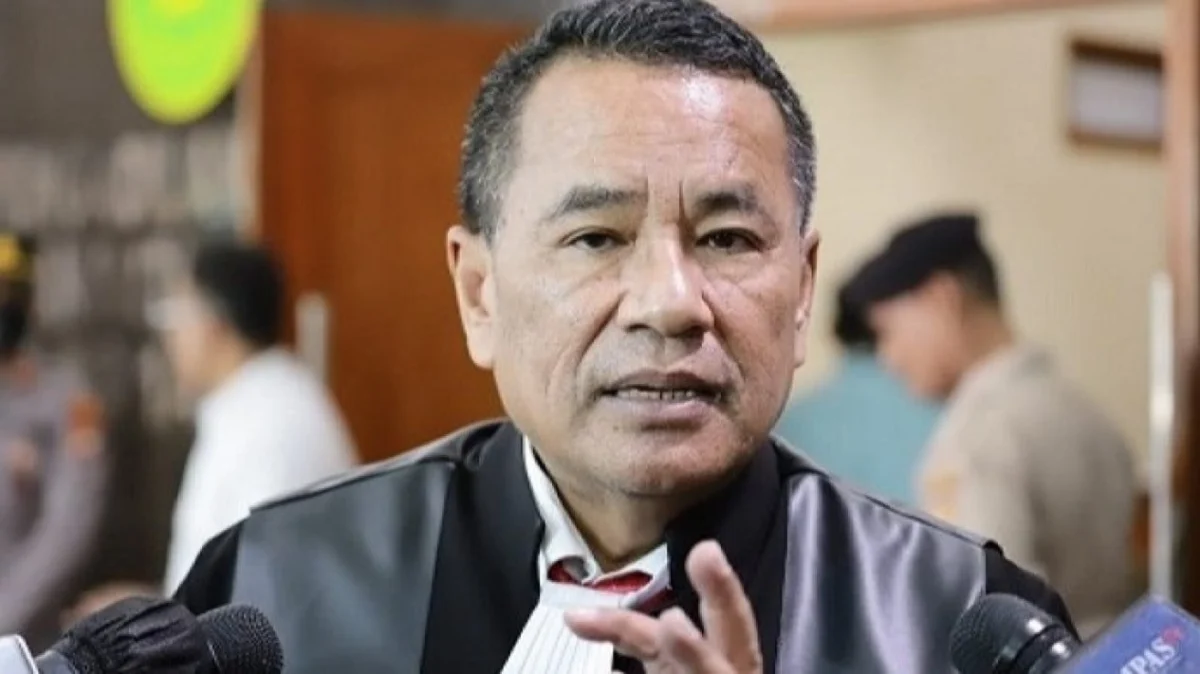
Jakarta, Indonesia – July 23, 2026 – Renowned Indonesian lawyer Hotman Paris Hutapea has once again ignited public discourse following his candid disclosure about a purportedly widespread practice within the legal profession concerning the determination of lawyer fees. In a recent statement, Hutapea openly explained that the honoraria listed on invoices presented to clients do not always exclusively represent legal service fees. Instead, he claims, these figures can encompass additional components, commonly referred to as "field expenses" or "lobbying fees."
This revelation has garnered significant public attention, as it directly addresses the alleged mechanisms often employed in legal representation, particularly when handling high-profile or substantial cases. Hutapea’s admission has propelled his name back into public conversations, particularly amidst a backdrop of recent controversies that have also drawn him into the spotlight.
Hotman Paris asserted that the practice of inflating lawyer fees, a phenomenon often termed "mark-up," is not an unfamiliar concept within the legal fraternity. "To be honest, we lawyers, it’s a common secret that if a client cannot provide cash, we tend to mark up the fees," Hutapea stated, as quoted from a YouTube video by Deddy Corbuzier, on Thursday, July 23, 2026.
He proceeded to illustrate the alleged scheme. According to his explanation, the amount stated as the lawyer’s fee on an invoice can significantly exceed the actual value of the legal services rendered. "Lawyer’s fee is 1 billion [rupiah], we mark it up to 5 billion. 4 billion is for field expenses. Lobbying costs," he elaborated.
Furthermore, Hutapea suggested that this practice, in his view, is a commonly understood arrangement, especially when dealing with international clients. "It’s no longer a secret among lawyers, especially foreigners who prefer it this way," Hotman Paris commented. He also clarified that while the invoice would still detail the entire sum as a "Lawyer’s Fee," a portion of these funds would be allocated to other necessities. "But it’s written on the invoice as ‘Lawyer’s Fee,’ when in reality, the actual fee is 1 billion, and the 4 billion is for lobbying. That’s the standard operating procedure for lawyers," he continued.
The immediate aftermath of Hutapea’s statements has elicited a spectrum of public reactions. Some have expressed surprise, particularly concerning the implications for transparency in legal fee structures. Others have raised questions about the ethical considerations and practical implementation of such practices within the Indonesian advocate community.
The Broader Context: Transparency and Trust in Legal Services
Hutapea’s comments arrive at a critical juncture where discussions surrounding legal ethics, client trust, and the financial aspects of legal representation are increasingly prevalent. The legal profession, by its very nature, operates on a foundation of trust and fiduciary duty. When prominent figures within the profession openly discuss practices that appear to circumvent clear fee structures, it inevitably raises questions about accountability and the potential for client exploitation.
In Indonesia, the legal profession is governed by specific regulations, including the Advocate Law (Undang-Undang Advokat), which mandates ethical conduct and professional responsibility. While the law provides a framework for professional practice, the intricacies of fee negotiation and billing can sometimes be subject to interpretation and, as Hutapea suggests, potentially to practices that blur the lines of conventional billing.
The concept of "field expenses" or "advancement costs" is not inherently problematic. These typically cover legitimate expenses incurred by a law firm on behalf of a client, such as travel, accommodation, research, or expert witness fees. However, the assertion that a significant portion of an invoiced "lawyer’s fee" is earmarked for "lobbying" introduces a layer of concern. The term "lobbying" itself can carry varied connotations, and its inclusion in a client invoice as part of a lawyer’s compensation requires careful scrutiny, particularly regarding its legality and ethical permissibility in various jurisdictions and under specific professional codes of conduct.
Historical Precedents and Industry Norms
While Hutapea frames his statements as revealing a "common secret," it is important to note that discussions around fee structures in professional services are not unique to the legal field. Various industries grapple with the balance between transparent pricing and the need to account for diverse operational costs. However, the legal profession’s unique position, often dealing with sensitive matters and significant financial stakes for clients, places a heightened expectation of ethical probity and transparency.
The potential for fee markups, whether for legitimate operational expenses or more opaque "lobbying" efforts, can lead to several issues:
- Client Dissatisfaction: Clients may feel misled or overcharged if they discover that a substantial portion of their payment did not directly cover legal advice or representation.
- Ethical Violations: Depending on the nature of the "lobbying" and the disclosure to the client, such practices could potentially violate professional conduct rules, especially if they involve undue influence or are not properly accounted for.
- Damage to Reputation: Public revelations of such practices can erode public trust in the legal profession as a whole, potentially making clients more hesitant to engage legal services or more suspicious of fee arrangements.
Reactions and Potential Implications
The impact of Hutapea’s statements is likely to be multifaceted. On one hand, it could spur a broader conversation within the Indonesian legal community about the need for greater transparency and standardized ethical guidelines for fee determination. Professional bodies, such as the Indonesian Advocates Association (PERADI), may face increased pressure to address these concerns and potentially review existing regulations or ethical codes.
On the other hand, the public’s reaction highlights a societal demand for clarity and fairness in all professional dealings. For clients, especially those less familiar with the legal landscape, Hutapea’s disclosure serves as a cautionary tale, emphasizing the importance of thoroughly understanding fee agreements and asking pertinent questions.
The "Lobbying" Factor: A Complex Area
The specific mention of "lobbying" is particularly noteworthy. In many legal systems, direct lobbying efforts, especially those involving government officials or policymakers, are subject to strict regulations and disclosure requirements. If the "lobbying fees" mentioned by Hutapea refer to legitimate, disclosed, and lawful activities undertaken to influence public policy or secure favorable outcomes for clients, then the issue might be one of clear communication rather than outright impropriety. However, if "lobbying" is used as a euphemism for other, less transparent activities, it raises more serious ethical and potentially legal questions.
Timeline of Events and Public Scrutiny
This revelation by Hotman Paris Hutapea is not occurring in a vacuum. It emerges at a time when his public profile is already elevated due to other ongoing matters. The article notes that Hutapea’s statements gained further traction due to his involvement in a case concerning the former Junior Attorney General for Special Crimes (Jampidsus), Febrie Adriansyah. This confluence of high-profile legal discussions and personal involvement in prominent cases amplifies the scrutiny on his pronouncements.
The timeline of Hutapea’s remarks, as reported on July 23, 2026, places them within a period of significant public interest in his professional activities. The reference to a YouTube interview with Deddy Corbuzier indicates a deliberate choice to disseminate this information through a widely accessible platform, suggesting an intent to reach a broad audience.
Data and Supporting Information (Inferred and Contextual)
While specific data on the prevalence of fee markups in Indonesian legal practices is not readily available in the provided text, the following contextual data points are relevant:
- Average Lawyer Fees in Indonesia: Legal fees in Indonesia can vary drastically based on the lawyer’s experience, reputation, the complexity of the case, and the jurisdiction. For high-profile corporate cases or criminal defense, fees can range from tens of millions to billions of Indonesian Rupiah.
- Client Demographics: International clients, as mentioned by Hutapea, often operate within different legal and business cultures and may have different expectations regarding fee structures and the scope of legal services.
- Regulatory Bodies: PERADI (Indonesian Advocates Association) is the primary professional organization for advocates in Indonesia, responsible for setting ethical standards and overseeing professional conduct. The Indonesian Advocates Law (UU No. 18 Tahun 2003) outlines the rights and obligations of advocates.
Official Responses (Inferred)
As of the reporting date, there have been no direct official responses from PERADI or other legal regulatory bodies specifically addressing Hotman Paris Hutapea’s statements. However, it is reasonable to infer that such disclosures, particularly from a prominent figure, would likely prompt internal discussions or a review of existing ethical guidelines within these organizations. In the absence of an immediate official statement, the legal community and the public will likely await further clarification or potential action.
Broader Impact and Implications
The implications of Hutapea’s candor extend beyond individual client-attorney relationships. It has the potential to:
- Increase Client Vigilance: Clients may become more discerning and proactive in negotiating and understanding their legal fee agreements.
- Prompt Regulatory Review: Professional bodies might be compelled to re-examine and clarify ethical guidelines concerning fee structures, transparency, and the definition of permissible additional charges.
- Influence Public Perception: The public’s perception of the legal profession’s integrity could be affected, necessitating efforts by legal professionals to reaffirm their commitment to ethical practices and transparency.
- Spark Legislative Discussion: In the long term, such public discussions could even contribute to debates about legislative reforms aimed at enhancing transparency and accountability in legal fee arrangements.
In conclusion, Hotman Paris Hutapea’s recent statements have opened a Pandora’s Box of discussions regarding the often-opaque world of lawyer fees. While he presents these practices as "common secrets," their public acknowledgment by a figure of his stature serves as a significant catalyst for greater transparency, ethical introspection, and enhanced client protection within the Indonesian legal landscape. The ongoing debate underscores the critical need for clear communication, robust ethical frameworks, and unwavering accountability in the provision of legal services.