The Indonesian Ministry of Social Affairs has streamlined the process for citizens to verify their eligibility for government-funded social safety nets through the Data Tunggal Sosial dan Ekonomi Nasional (DTSEN), a comprehensive national database designed to ensure that social assistance is distributed with high precision. As of July 2026, the government has integrated advanced digital verification methods, allowing individuals to use their National Identity Number (NIK) to determine their specific "decile" or welfare ranking. This decile ranking is the primary metric used by the state to categorize households based on their socio-economic status, directly influencing whether a family qualifies for programs such as the Program Keluarga Harapan (PKH), Bantuan Pangan Non Tunai (BPNT), or the PBI-JK health insurance subsidies.
Understanding the Decile Classification in DTSEN
The DTSEN system operates on a decile-based ranking, which divides the Indonesian population into ten equal groups, each representing 10 percent of the total number of households. This classification is not static; it is a dynamic reflection of the nation’s economic landscape, updated periodically through rigorous field surveys and data synchronization.
Decile 1 represents the lowest 10 percent of households in terms of economic welfare, often categorized as being in extreme poverty. Conversely, Decile 10 represents the wealthiest 10 percent of the population. For the purpose of social assistance (Bansos), the government typically focuses on Deciles 1 through 4. Households falling within Decile 1 and 2 are usually the primary targets for unconditional cash transfers and intensive family hope programs. Decile 3 and 4 are often classified as "vulnerable" or "near-poor," making them eligible for food assistance and health subsidies.
The transition to DTSEN from the previous Integrated Social Welfare Data (DTKS) represents a significant leap in Indonesia’s digital governance. By consolidating various data streams—including population registries, tax records, and asset ownership—the government aims to eliminate "inclusion and exclusion errors," where wealthy individuals accidentally receive aid while the truly needy are overlooked.
Step-by-Step Verification via the Official Portal
To ensure transparency, the Ministry of Social Affairs (Kemensos) has made the DTSEN database accessible to the public. Citizens no longer need to visit local government offices for initial inquiries; the process can be completed via a smartphone or computer. The primary method for checking one’s status is through the official "Cek Bansos" website.
To begin the search, users must navigate to cekbansos.kemensos.go.id. The interface requires specific geographical data to narrow down the search parameters. Users must select their province, district or city, sub-district, and finally their specific village or "kelurahan." Following the geographical selection, the user must input their full name exactly as it appears on their Resident Identity Card (KTP).
A critical step in this process is the "CAPTCHA" verification, a security measure designed to prevent automated bots from scraping sensitive data. Once the code is entered and the "Cari Data" (Search Data) button is clicked, the system queries the DTSEN servers. If the individual is registered, the screen will display their welfare status, the types of assistance they are currently receiving, and their current decile ranking.
Utilizing the Cek Bansos Mobile Application
For a more comprehensive experience, the Ministry of Social Affairs has promoted the use of the "Cek Bansos" mobile application, available on major app stores. Unlike the website, which offers a quick search, the application requires a formal registration process but provides deeper insights into one’s social welfare profile.
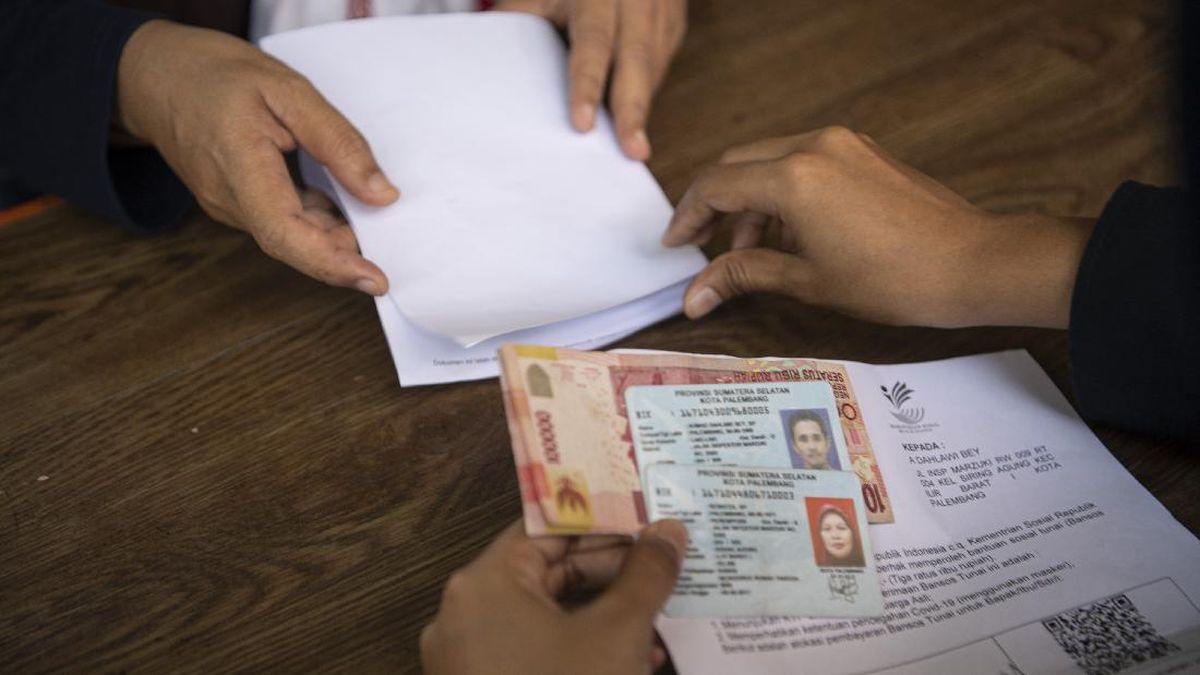
The registration process for the app involves uploading a photo of the user’s KTP and a "selfie" while holding the ID card. This stringent verification is necessary because the app allows users to access the "Usul-Sanggah" (Propose-Dispute) feature. This feature empowers citizens to participate in the data-cleaning process. If a user observes that a neighbor—who is clearly wealthy—is listed as a recipient of aid, they can submit a "dispute" notification. Conversely, if a deserving family is missing from the list, a "proposal" can be submitted directly through the app.
Once an account is verified by Kemensos—a process that typically takes 24 to 48 hours—the user can view their family’s detailed decile status. This data is crucial for families planning their household budgets, as it provides a clear indication of whether they can rely on government subsidies for the coming fiscal quarter.
The Strategic Importance of DTSEN in National Poverty Alleviation
The implementation of DTSEN in 2026 is part of a broader "Single Identity Number" (SIN) initiative. By linking the NIK to socio-economic data, the government can track the effectiveness of its poverty reduction programs in real-time. According to data from the Central Bureau of Statistics (BPS), the integration of DTSEN has already contributed to a 1.5% reduction in administrative overlap compared to the 2023-2024 period.
Economic analysts suggest that the decile system provides a more nuanced view of poverty than a simple "poor vs. non-poor" binary. By identifying the "near-poor" in Deciles 3 and 4, the government can deploy preventive measures, such as vocational training or micro-loans, to ensure these families do not slip into deeper poverty during economic downturns.
Furthermore, the DTSEN database is now used by other ministries. The Ministry of Education uses it to distribute the Indonesia Smart Program (PIP) scholarships, and the Ministry of Energy and Mineral Resources utilizes it to target electricity and LPG subsidies. This cross-ministerial reliance makes the accuracy of one’s NIK and decile status more important than ever before.
Addressing Data Inconsistencies and the "Musdes" Process
Despite the technological advancements, data discrepancies remain a challenge. Changes in a family’s economic status—such as the loss of a breadwinner, a sudden medical emergency, or conversely, a significant increase in income—may not be immediately reflected in the digital database.
When a citizen finds that their decile ranking does not match their actual economic reality, the government provides a formal recourse mechanism known as the "Musyawarah Desa" or "Muskel" (Village/Community Meeting). This is a localized, democratic process where community leaders, social workers, and local officials gather to verify and update the list of needy residents.
The results of these meetings are then uploaded into the Social Information System (SIKS-NG), which feeds directly into the DTSEN. This "bottom-up" approach ensures that while the system is digitally driven, it remains grounded in the lived realities of the community. Ministry officials have reiterated that the digital check is the first step, but the village-level verification remains the "gold standard" for data accuracy.
Technical Challenges and User Support
As with any large-scale digital infrastructure, users may encounter technical hurdles. One common issue is the "NIK Not Found" error. This typically occurs if a citizen has not updated their biometric data at the Civil Registry Office (Disdukcapil) or if there is a synchronization delay between the Ministry of Home Affairs and the Ministry of Social Affairs. In such cases, citizens are advised to visit their local Disdukcapil office to ensure their NIK is "active" and correctly linked to their family card (Kartu Keluarga).
Server congestion is another frequent issue, particularly during the first week of a new month when social assistance disbursements are typically announced. To mitigate this, the Ministry has upgraded its cloud infrastructure to handle up to 10 million hits per hour. However, users are still encouraged to perform checks during off-peak hours, such as early morning or late evening, to ensure a smoother experience.
For those who are not tech-savvy, the government has deployed "Pendamping PKH" (Social Assistants) in every sub-district. These facilitators are equipped with tablets and are tasked with helping the elderly and those in remote areas check their status and navigate the DTSEN system.
Implications for the Future of Social Safety Nets
The move toward a NIK-based decile check signals a future where social assistance is increasingly automated and personalized. Looking ahead toward 2030, the government envisions a system where "Bansos" is triggered automatically based on economic indicators. For example, if a worker’s NIK is flagged in the national labor database as having been laid off, the DTSEN could theoretically adjust their decile ranking instantly, triggering immediate temporary support.
This level of integration, however, raises valid concerns regarding data privacy. The Ministry of Social Affairs has addressed these concerns by implementing end-to-end encryption and strict access protocols. Only authorized social workers and the individuals themselves (via verified accounts) can view the detailed socio-economic breakdowns associated with a specific NIK.
In conclusion, the ability to check one’s DTSEN decile using a NIK is more than just a matter of convenience; it is a fundamental tool for civic engagement and social justice. By making this data accessible, the Indonesian government is fostering a culture of accountability. It empowers the poor to claim their rights and allows the broader public to ensure that national resources are being used effectively to lift the most vulnerable members of society out of poverty. As the system continues to evolve, the NIK will remain the key that unlocks a more equitable distribution of the nation’s wealth.