
Jakarta, VIVA – On Tuesday, October 21, 2025, prominent political observer Agung Baskoro articulated a critical assessment of President Prabowo Subianto’s nascent administration, suggesting it remains excessively centered around a single figure. Baskoro contended that this "Superman management" style significantly curtails the effectiveness of key governmental roles, including that of the Vice President, coordinating ministers (Menko), and other cabinet members, hindering their capacity to contribute optimally to national governance. His remarks, made during the "Apa Kabar Indonesia Malam" program on tvOne, underscore growing concerns within political circles regarding the distribution of authority and the implementation of a cohesive governmental strategy.
"Indeed, my primary concern is the transition from ‘Superman management’ – which appears to be highly Prabowo-centric – towards a ‘super team’ approach," Baskoro stated. "How can the cabinet effectively address a multitude of issues and respond to them competently if the leadership style remains so centralized?" This pointed critique comes as the administration approaches its initial milestones, prompting a closer examination of its operational dynamics and policy execution.
The Underutilized Vice Presidency and Coordinating Ministers
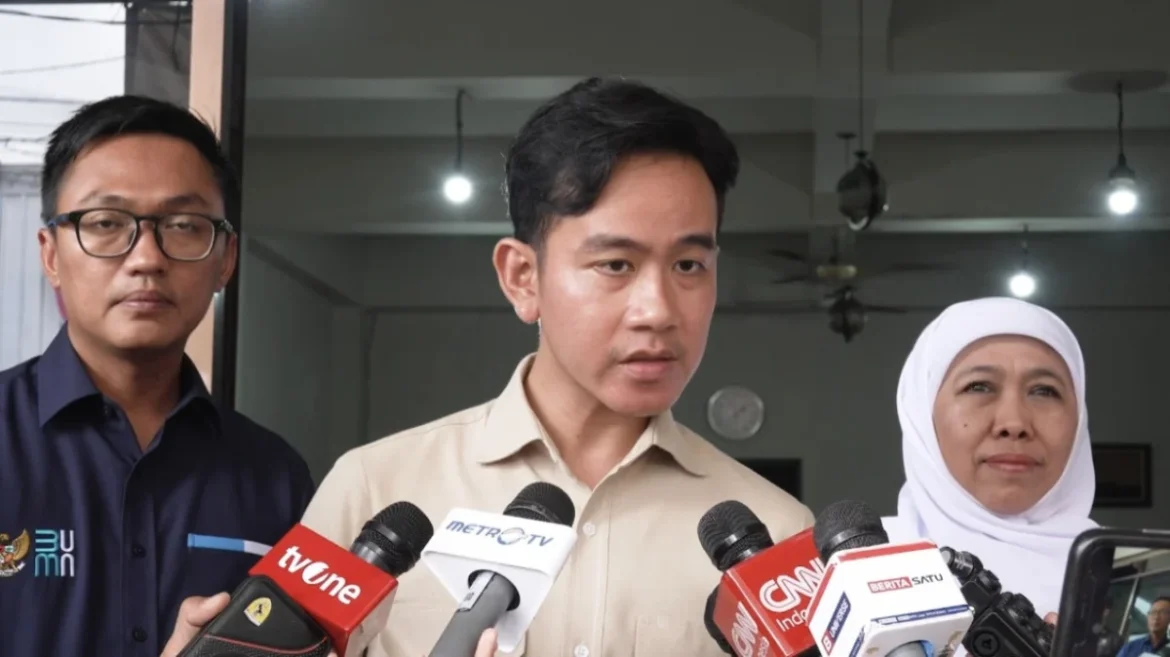
Baskoro elaborated on his observations, specifically highlighting the perceived role of Vice President Gibran Rakabuming Raka, whom he described as "between present and absent." This assessment points to a broader issue where the Vice President’s office, despite its constitutional significance, has yet to demonstrate a consistently substantive and visible role in addressing national challenges. Similarly, the coordinating ministers, designed to synergize policies across various sectors, are seen as largely symbolic, struggling to assert their intended influence in resolving complex governmental issues.
"How can the cabinet effectively manage numerous problems and respond adequately when the Vice President appears to be ‘between present and absent’?" Baskoro reiterated, emphasizing the critical need for a fully empowered and engaged leadership team. He further warned against the perpetuation of this centralized pattern, arguing that it risks rendering the Vice President, coordinating ministers, and other cabinet members "useless" if the President consistently takes the lead in resolving every issue. "It often seems that President Prabowo is the one extinguishing every fire. This pattern, in my view, must not continue, as it will inevitably diminish the utility of the Vice President, the coordinating ministers, and indeed, other ministers if it persists," he cautioned.
The Imperative for a ‘Super Team’ Approach
Agung Baskoro’s analysis strongly advocates for a fundamental shift in the government’s operational paradigm, urging President Prabowo to transition from a "Superman" management style to a "super team" model. This transformation, he explained, necessitates a significant reinforcement of coordination mechanisms among the Vice President, the coordinating ministers, and individual ministry heads. Such a collaborative framework would ensure that the considerable burden of leadership and problem-solving is not solely concentrated on the President but is distributed effectively across a capable and empowered cabinet.
This proposed shift aligns with principles of good governance, which emphasize delegation, accountability, and collective responsibility. In a country as diverse and complex as Indonesia, with its myriad social, economic, and political challenges, a truly collaborative cabinet is indispensable for effective policy formulation, implementation, and oversight. The "super team" concept envisions a government where each member, from the Vice President down to individual ministers, is given the autonomy and resources to lead their respective areas, contributing proactively to the administration’s overarching goals.
Challenges in Public Communication and Trust
Beyond internal operational dynamics, Baskoro also underscored the critical need for improvements in the government’s public communication strategy. While acknowledging existing efforts by bodies such as the Presidential Staff Office (KSP), the Agency for Public Information and Communication (Bakom), and the Bureau of Public Relations and Protocol (BKP), he stressed the necessity of establishing clearer communication guidelines. Such guidelines would ensure that all government officials speak with a unified voice, thereby preventing instances of "slip of tongue" or "acak kadut" (disorganized) statements that could erode public trust.
"To avoid frequent ‘slips of the tongue’ and ensure coherent communication, it is crucial to establish clear guidelines. If left unaddressed, inconsistent communication could diminish public confidence and negatively impact perceptions among international stakeholders," Baskoro articulated. Effective public communication is not merely about conveying information; it is about building and maintaining trust, managing expectations, and projecting an image of competence and stability, both domestically and internationally. A unified communication front is particularly vital in navigating complex policy discussions and responding to national crises, where clarity and consistency are paramount.
Economic Headwinds and Program Effectiveness
A significant challenge identified by Baskoro for the current administration is ensuring that its large-scale programs genuinely benefit all layers of society, particularly in the economic sphere. He highlighted the persistent "kontraksi ekonomi" (economic slowdown or contraction) as a clear indicator that the President’s economic team must enhance its focus and solidarity. This implies a need for a more coherent and impactful economic strategy that can effectively stimulate growth, alleviate poverty, and address unemployment.
Baskoro specifically referenced two stimulus packages implemented by the government within the past year, noting that their necessity underscored the need for the President’s economic team to be "truly concerned" and avoid over-reliance on a single point of influence, possibly alluding to a "Purbaya Effect" – a term likely referring to the significant influence of specific economic advisors or a particular set of economic policies. While the specific nature of this "Purbaya Effect" remains subject to interpretation, it suggests a concern about concentrated decision-making within the economic portfolio, potentially at the expense of broader consultation and diverse perspectives.
Background and Context: The Prabowo-Gibran Administration
The Prabowo-Gibran administration, inaugurated in late 2024, came into power following a highly contested election, with significant public expectations for economic stability, job creation, and continued infrastructure development. President Prabowo, a seasoned political figure, brought with him a reputation for strong leadership, while Vice President Gibran Rakabuming Raka, the eldest son of former President Joko Widodo, represented a new generation of political leadership and was expected to play a crucial role in youth engagement and digital transformation initiatives.
The Indonesian presidential system grants significant executive power to the president, who serves as both head of state and head of government. This structure often leads to strong presidential figures, a characteristic seen in previous administrations. However, the system also provides for a vice president and a cabinet, whose collective strength is vital for effective governance. The current administration inherited a complex economic landscape, marked by global uncertainties, inflationary pressures, and the ongoing recovery from the COVID-19 pandemic. Key policy priorities include fostering sustainable economic growth, strengthening national defense, improving human capital, and continuing social welfare programs.
Timeline of Observations and Government Initiatives
Since its inauguration, the Prabowo-Gibran administration has been actively working to consolidate its cabinet and outline its policy agenda. The initial months typically involve a period of adjustment, where new ministers and officials settle into their roles, and the government begins to roll out its signature programs.
- Late 2024: Inauguration of President Prabowo Subianto and Vice President Gibran Rakabuming Raka. Formation of the new cabinet, comprising a mix of experienced politicians and technocrats.
- Early 2025: Initial policy announcements focusing on economic stability, food security, and defense modernization. Vice President Gibran begins engagements, often related to youth development, innovation, and local economic initiatives.
- Mid-2025: Implementation of initial stimulus packages aimed at bolstering economic activity and supporting vulnerable populations. Public discourse begins to emerge regarding the visibility and roles of various cabinet members.
- October 21, 2025: Agung Baskoro makes his public statement, reflecting a growing sentiment among some political observers regarding the perceived centralization of power and the underutilization of key governmental roles. This observation follows several months of the administration’s operation, allowing for initial patterns and tendencies to become apparent.
Supporting Data and Economic Performance
The concerns raised by Baskoro regarding economic performance are pertinent in the context of Indonesia’s recent economic trajectory. While Indonesia has generally demonstrated resilience, global economic headwinds have presented persistent challenges.
- GDP Growth: Indonesia’s GDP growth, while robust compared to many developing nations, has faced pressure from global economic slowdowns and commodity price fluctuations. In the preceding quarters, growth figures hovered around 5%, with aspirations for higher, more inclusive growth rates. The "kontraksi ekonomi" mentioned by Baskoro might refer to specific sectors experiencing slowdowns or a general sentiment of cautious economic activity despite headline growth figures.
- Inflation: Managing inflation has been a continuous challenge, influenced by global supply chain disruptions and domestic demand. The central bank and the government have implemented various measures to stabilize prices, particularly for essential goods.
- Investment: Attracting foreign and domestic investment remains a key priority. A stable political environment and a perception of efficient governance are crucial factors for investor confidence. Unclear communication or perceived inefficiencies in governance could deter potential investments.
- Stimulus Packages: The implementation of two stimulus packages within a year suggests the government’s proactive efforts to inject liquidity and support economic activity. However, their perceived effectiveness in broadly impacting society, as Baskoro notes, is under scrutiny. This often points to challenges in targeting, distribution, and overall economic multipliers.
Official Responses and Implications
While direct, immediate responses to Baskoro’s specific remarks were not provided in the original content, it is logical to infer potential reactions from the administration, consistent with past government communication strategies.
- Presidential Staff Office (KSP) / Government Spokespersons: Would likely acknowledge the importance of teamwork and collective governance. They might emphasize that the President is deeply committed to empowering his cabinet and that all ministers, including the Vice President, are actively involved in policy formulation and implementation. They would likely point to ongoing coordination meetings, specific task forces, and the overall results achieved by the administration as evidence of a collaborative approach. The KSP might also highlight the President’s role in providing strategic direction and resolving high-level issues, which is distinct from micromanagement.
- Vice President’s Office: Would likely reiterate the Vice President’s dedication to supporting the President’s agenda. They might detail specific portfolios or initiatives Gibran Rakabuming Raka is leading, such as programs related to youth entrepreneurship, digital economy acceleration, or regional development projects. This would serve to counter the perception of being "between present and absent" by showcasing concrete contributions.
Broader Impact and Implications
Agung Baskoro’s critique, while focused on the internal workings of the government, carries broader implications for Indonesia’s governance, public trust, and international standing.
- Governance Efficiency and Policy Implementation: A highly centralized leadership style can, paradoxically, slow down policy implementation. If every significant decision or problem requires presidential intervention, it can create bottlenecks, delay responses, and overstretch the President’s capacity. Empowering ministers and coordinating bodies allows for more agile and specialized responses to sector-specific challenges.
- Public Trust and Accountability: When the public perceives a lack of collective leadership or an underutilized Vice President and cabinet, it can erode trust in the government’s overall capacity to manage the nation’s affairs. A unified and visibly active cabinet instills confidence and demonstrates a commitment to broad-based competence. Furthermore, a distributed leadership enhances accountability, as specific ministers can be held responsible for their respective domains.
- International Perception: For international investors, partners, and diplomatic entities, a cohesive and well-coordinated government signals stability and predictability. A perception of centralized power, if interpreted as a lack of robust institutional capacity or delegation, could potentially raise questions about the long-term sustainability and effectiveness of governance. Clear communication and a visible "super team" can project an image of a modern, efficient state.
- Political Stability and Coalition Management: The Prabowo-Gibran administration is built upon a broad coalition of political parties. Ensuring that all cabinet members, often representing different political factions, feel empowered and are seen as contributing meaningfully is crucial for maintaining coalition unity and political stability. An imbalanced distribution of influence could create internal tensions.
- Long-term Institutional Development: Fostering a "super team" approach is not just about immediate efficiency but also about strengthening Indonesia’s democratic institutions. It encourages the development of strong ministerial leadership, robust inter-agency coordination, and a culture of collective problem-solving, which are vital for sustained national development and resilience.
In conclusion, Agung Baskoro’s observations serve as a timely reminder for the Prabowo-Gibran administration to critically assess its internal operational dynamics. The call to transition from "Superman management" to a "super team" model underscores a fundamental principle of modern governance: that the complexity of national challenges demands a collective, coordinated, and empowered leadership. Addressing these concerns, particularly by enhancing the roles of the Vice President and coordinating ministers, strengthening public communication, and ensuring economic programs have broad societal impact, will be crucial for the administration to solidify public trust and achieve its ambitious national development goals. The path forward necessitates a deliberate effort to foster greater collaboration, delegation, and unified action across all levels of government.