
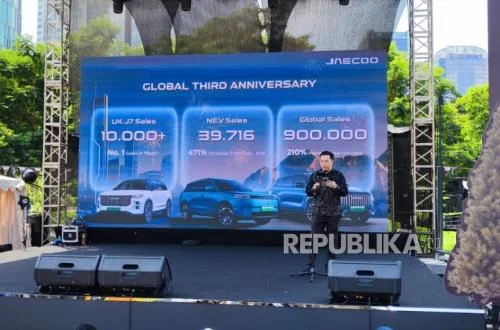
Jakarta, Indonesia – In a remarkable display of market penetration and consumer acceptance, Chinese automotive brand Jaecoo has ascended to become the leading electric vehicle (EV) manufacturer in Indonesia during the first quarter of 2026. The brand’s flagship model, the J5 EV, has been the primary catalyst for this impressive performance, outperforming established competitors and signaling a significant shift in the nation’s burgeoning EV landscape. From January to March 2026, Jaecoo recorded a total sales volume of 7,827 units, a figure that notably surpassed the 7,333 units sold by its closest rival, BYD Atto 1, during the same period. This achievement underscores a growing confidence in electrified mobility among Indonesian consumers.
The momentum generated in the initial months of 2026 builds upon Jaecoo’s cumulative sales since its inception in the Indonesian market. The brand has already surpassed the 12,000-unit sales mark, a testament to its rapid integration and appeal within the archipelago. This sustained growth trajectory indicates that Jaecoo is not merely experiencing a fleeting surge but is establishing a firm foothold in a competitive automotive sector increasingly prioritizing sustainable transportation solutions.
A Swift Ascent: Jaecoo’s Market Entry and Growth Trajectory
Jaecoo’s foray into the Indonesian market was strategically timed, coinciding with the government’s amplified push towards electric mobility and a growing environmental consciousness among the populace. While specific launch dates for the J5 EV and other models are not detailed in the original report, the current sales figures suggest a well-executed market entry strategy, likely involving targeted marketing campaigns, competitive pricing, and a product offering that resonates with local consumer preferences.
The period of January to March 2026 represents a critical benchmark for Jaecoo’s performance. The acquisition of the top EV sales spot during this quarter is particularly significant given the presence of established global and emerging EV players in Indonesia. The substantial lead over BYD Atto 1, a model from a manufacturer with a strong global reputation in the EV space, highlights the J5 EV’s immediate impact and consumer appeal. This early success provides a strong foundation for Jaecoo’s long-term ambitions in the Indonesian market.
The J5 EV: A Star Performer Driving Sales Momentum
The exceptional performance of the J5 EV is central to Jaecoo’s current market leadership. Jim Ma, Business Unit Director of Jaecoo Indonesia, attributed the brand’s success to the increasing trust consumers place in their electrified products. "This demonstrates the growing customer interest and strong recognition of new energy vehicles," Ma stated in recent remarks to the media. The J5 EV, in particular, has emerged as the best-selling EV model in Indonesia, a remarkable feat for a relatively new entrant.
The target for the J5 EV’s sales volume is set to exceed 13,000 units by the end of April 2026, a projection that, if met, would further solidify its dominance and Jaecoo’s overall market position. This aggressive yet achievable target suggests confidence in sustained demand and potentially in the brand’s ability to manage production and supply chain challenges effectively.
Addressing Demand: Jaecoo’s Commitment to Localized Production
To sustain this impressive sales momentum and meet the escalating demand, Jaecoo is actively strengthening its production capabilities within Indonesia. The brand currently operates two assembly facilities in the country. This commitment to local assembly is a crucial strategic move for several reasons. Firstly, it can potentially lead to reduced import duties and taxes, making the vehicles more competitively priced for Indonesian consumers. Secondly, it signifies a long-term investment in the Indonesian economy, fostering local employment and contributing to the development of the automotive manufacturing sector.
The establishment of domestic assembly plants also allows for greater flexibility in responding to market demands and potentially customizing vehicles to better suit local preferences. In the rapidly evolving EV market, agility in production and supply chain management is a significant competitive advantage. By building a local manufacturing presence, Jaecoo positions itself as a committed long-term player rather than a transient exporter.
Broader Implications for the Indonesian EV Market
Jaecoo’s ascendance has significant implications for the broader Indonesian EV market. The brand’s success challenges the established order and introduces a new dynamic of competition. This increased competition is generally beneficial for consumers, as it can lead to:
- Enhanced Product Offerings: To vie for market share, other manufacturers may be compelled to introduce more advanced features, improved performance, or more diverse models.
- Price Reductions: Increased competition can drive down prices, making EVs more accessible to a wider segment of the Indonesian population.
- Faster Infrastructure Development: As EV sales grow, there will be greater impetus for the government and private sector to accelerate the development of charging infrastructure, battery recycling facilities, and other essential support systems.
- Technological Advancement: The influx of new players and technologies can foster innovation and accelerate the adoption of cutting-edge EV solutions.
The Indonesian government has set ambitious targets for EV adoption as part of its commitment to reducing carbon emissions and fostering a greener economy. Jaecoo’s success aligns perfectly with these national objectives, potentially accelerating the transition away from internal combustion engine vehicles. The brand’s performance can also serve as an indicator for other international automakers considering entering or expanding their presence in the Indonesian EV market.
Analysis of Consumer Trust and Brand Perception
Jim Ma’s statement regarding "increasing consumer trust" in electrified products is a critical observation. This trust is not built overnight. It is a result of a combination of factors, including product reliability, perceived value for money, post-sales service, and the overall brand narrative. Jaecoo’s ability to cultivate this trust so rapidly suggests that their marketing, product quality, and customer engagement strategies have been particularly effective in the Indonesian context.
The fact that the J5 EV has become the best-selling EV model implies that it has successfully addressed key consumer concerns, such as range anxiety, charging accessibility, and affordability, while also offering compelling features and design. Understanding the specific attributes that have resonated with Indonesian buyers – whether it be its battery technology, driving dynamics, interior comfort, or technological integration – will be crucial for ongoing market analysis.
Looking Ahead: Sustaining the Momentum
While the Q1 2026 performance is a resounding success for Jaecoo, the challenge lies in sustaining this momentum. The automotive market is dynamic, and consumer preferences can shift rapidly. Factors that will influence Jaecoo’s future success include:
- Product Diversification: Expanding the model lineup beyond the J5 EV to cater to different market segments and price points will be essential for long-term growth.
- After-Sales Service Network: A robust and reliable after-sales service network, including maintenance, repairs, and spare parts availability, is paramount for customer satisfaction and brand loyalty in any automotive market, especially for new technologies like EVs.
- Charging Infrastructure Partnerships: Collaborating with charging infrastructure providers or investing in proprietary charging solutions can alleviate consumer concerns about charging accessibility.
- Brand Building and Community Engagement: Continued investment in brand building activities and fostering a sense of community among Jaecoo owners will be vital for long-term market penetration.
- Adaptation to Regulatory Changes: Staying abreast of evolving government regulations, incentives, and environmental standards will be crucial for navigating the market successfully.
Jaecoo’s remarkable performance in the first quarter of 2026 has undoubtedly placed it at the forefront of Indonesia’s electric vehicle revolution. The success of the J5 EV, coupled with the brand’s commitment to local production, sets a strong precedent and signals an exciting future for electrified mobility in the archipelago. As the market continues to mature, all eyes will be on Jaecoo to see if it can maintain its leadership position and shape the future of automotive transportation in Indonesia.