

The Indonesian government is currently considering a significant policy shift that would centralize the distribution of Minyakita, the state-subsidized cooking oil brand, under the direct control of State-Owned Enterprises (BUMN) in the food sector. Minister of Agriculture Andi Amran Sulaiman, who also serves as the Head of the National Food Agency (Bapanas), has formally proposed that entities such as Perum Bulog and ID Food take a lead role in the supply chain to resolve persistent supply shortages and stabilize market prices. This move signifies a potential departure from the current Domestic Market Obligation (DMO) scheme, where private producers handle a significant portion of distribution, and points toward a more interventionist approach to ensuring food security for the nation’s most vulnerable populations.
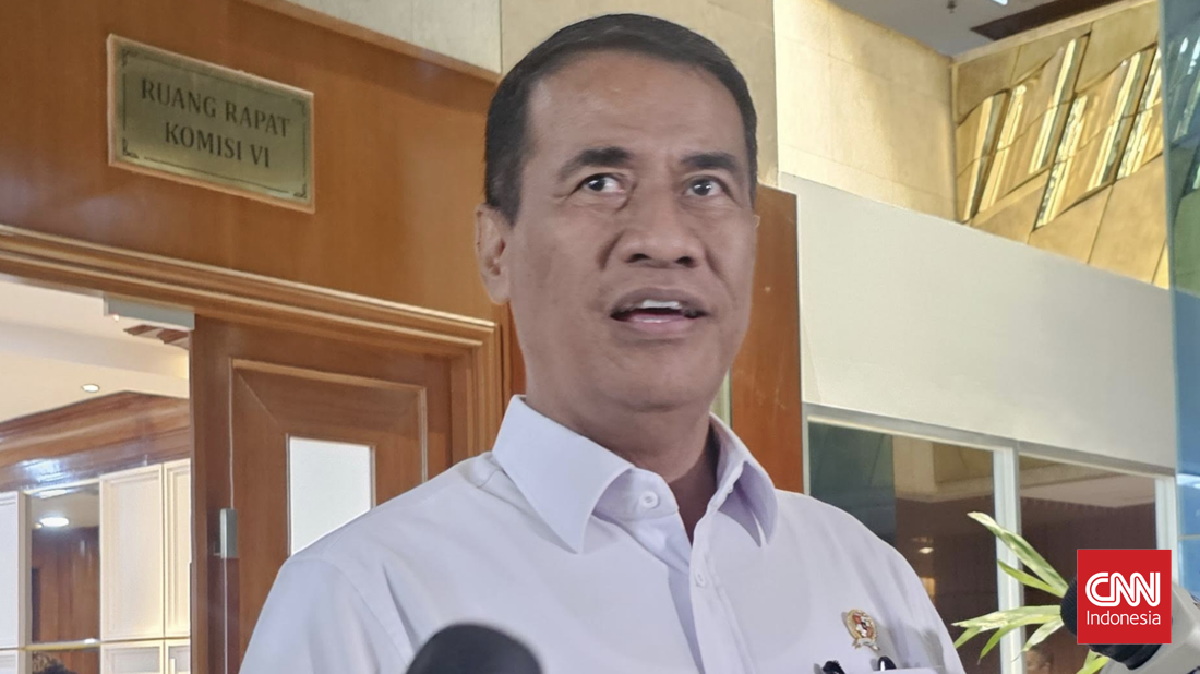
During a strategic meeting held at his office in South Jakarta, Minister Amran Sulaiman emphasized that the current distribution model has faced challenges in maintaining consistent availability at the grassroots level. He revealed that he has already begun high-level coordination with the Minister of Trade, Budi Santoso, to discuss increasing the quota of Minyakita distributed through BUMN. Under the existing framework, only a minimum of 35 percent of Minyakita is required to be channeled through state-owned entities. However, the government is now weighing the possibility of increasing this figure to 65 percent, or even as high as 100 percent, depending on the evolving market situation.
Strengthening State Control for Price Stability
The rationale behind this proposed centralization is rooted in the government’s desire for tighter oversight. Minister Amran argued that by placing the distribution responsibility squarely on the shoulders of BUMN, the government can exert more direct control over the movement of goods and the final price paid by consumers. In the current fragmented market, where numerous private distributors and middlemen are involved, monitoring every link in the chain is a logistical nightmare. By contrast, BUMN can be held directly accountable for any price spikes or localized shortages.
"I want the distribution to be through BUMN so it is easier to control," Minister Amran stated. "If there is a price increase, the BUMN will be held responsible." He drew a parallel to the government’s recent strategy regarding frozen beef imports. In that sector, the government increased the import assignments given to state-owned enterprises while reducing the reliance on private importers. This shift was designed to ensure that the government has a "buffer" stock that can be released into the market during periods of high demand, such as during religious holidays, to prevent predatory pricing.
The Minister’s stance is clear: when the private sector fails to maintain price stability for essential commodities, the state must step in. He noted that if a BUMN fails to stabilize prices despite having the mandate, the leadership can be replaced or reprimanded, a level of direct administrative control that is impossible to apply to private corporations.
The Rise and Challenges of Minyakita
To understand the weight of this proposal, one must look at the history and purpose of Minyakita. Launched in July 2022 by the then-Minister of Trade, the Minyakita brand was conceived as a solution to the cooking oil crisis that gripped Indonesia earlier that year. At the time, global crude palm oil (CPO) prices were skyrocketing, leading many domestic producers to prioritize exports over the domestic market, resulting in severe shortages and record-high prices for local consumers.
Minyakita was designed to be a simple-packaged alternative to "curah" (bulk) cooking oil, which was often criticized for being unhygienic and difficult to distribute efficiently. By providing a standardized, government-regulated brand with a fixed Highest Retail Price (HET), the government aimed to ensure that low-income households could access affordable cooking oil.
However, since its inception, Minyakita has been plagued by issues of "scarcity in the midst of plenty." While Indonesia is the world’s largest producer of palm oil, the subsidized brand frequently disappears from traditional market shelves, only to reappear at prices significantly higher than the HET. Traders often complain about long lead times from distributors and "tying" practices, where they are forced to buy other unpopular products just to get a small allocation of Minyakita.
Current Market Data and Economic Pressure
The urgency of Minister Amran’s proposal is underscored by recent data from the Market and Basic Necessities Monitoring System (SP2KP). As of mid-2024, the national average price of Minyakita has climbed to approximately Rp15,961 per liter. This figure represents a clear breach of the established Highest Retail Price (HET), which currently stands at Rp15,700 per liter. In some remote regions outside of Java, prices have been reported as high as Rp17,000 to Rp18,000 per liter.
This price discrepancy is not an isolated incident. Both bulk cooking oil and premium packaged oils have also seen upward trends. The inflation of cooking oil prices is particularly sensitive in Indonesia, where it is a primary staple for both households and the massive micro-enterprise sector, including "warungs" (small stalls) and street food vendors.
Minister of Trade Budi Santoso confirmed that the Ministry is reviewing the 35 percent DMO floor. The government’s goal is to ensure that the "Domestic Market Obligation" actually translates to "Domestic Market Availability." Currently, the distribution of Minyakita through BUMN is split among several entities, including Perum Bulog, ID Food (the state-owned food holding company), and PT Agrinas Palma Nusantara. Despite their involvement, these entities have often struggled with limited working capital and the logistical burden of competing with established private distribution networks.
Chronology of Distribution Shifts
The evolution of the Minyakita distribution policy can be mapped through several key stages:
- July 2022: Minyakita is launched. Distribution is primarily driven by private producers as a way to fulfill their DMO requirements to gain export permits.
- Early 2023: Supply shocks occur as CPO prices fluctuate. The government begins to tighten DMO ratios, requiring companies to sell more locally before they can export.
- Late 2023: Reports of Minyakita "hoarding" and price gouging become frequent. The government increases the HET from Rp14,000 to Rp15,700 to account for rising production costs.
- Early 2024: Distribution bottlenecks persist. Minister Amran Sulaiman proposes a "BUMN-first" approach to bypass inefficient private distribution channels.
- April 2024: Formal discussions begin between the Ministry of Agriculture and the Ministry of Trade to potentially increase BUMN’s distribution share to 100 percent.
Reactions from Stakeholders and the Private Sector
The proposal to grant BUMN a monopoly or a dominant share of distribution has met with a mix of cautious optimism and concern. From the perspective of traditional market traders, the move is welcomed if it guarantees a steady supply. Many small-scale vendors have expressed frustration over the inconsistent delivery of Minyakita, which forces them to sell at higher prices just to maintain a margin.
However, the private sector, particularly large-scale palm oil refineries and distributors, may view this as a form of market distortion. There are concerns that BUMN may not have the logistical infrastructure—such as fleets of delivery trucks and localized warehouses—to match the efficiency of the private sector. Furthermore, if BUMN is required to buy at a certain price and sell at the HET, the government may need to provide significant subsidies or "PMN" (State Capital Injection) to cover potential operational losses.
Minister Amran has dismissed these concerns, stating that the private sector will still be involved in the production phase. "It’s not a problem if businessmen protest," he remarked. "The most important thing is that the price is stable. The flow would be from the producers directly to the BUMN. We are actually helping the smaller businessmen by ensuring they get a fair price and consistent supply."
Brief Analysis of Implications and Future Outlook
If the government proceeds with a 100 percent BUMN distribution mandate for Minyakita, several long-term implications must be considered. Firstly, the financial health of ID Food and Bulog will be under the microscope. These entities will require massive liquidity to purchase the required volumes of oil from producers. If payments to producers are delayed, it could create a ripple effect back to the palm oil farmers.
Secondly, the "last mile" distribution will be the ultimate test. While Bulog is excellent at managing large-scale rice stocks, cooking oil requires different handling, storage, and transport protocols. For this policy to succeed, BUMN will likely need to partner with existing MSMEs and local cooperatives to ensure the oil reaches the smallest villages.
The move also represents a broader trend in the Indonesian government’s economic philosophy under the current administration: a return to "state-led food sovereignty." By controlling the distribution of rice, corn, beef, and now potentially cooking oil, the government is building a robust mechanism to shield the domestic economy from global commodity price volatility.
In conclusion, the proposal by Minister Amran Sulaiman to centralize Minyakita distribution through BUMN is a bold attempt to fix a broken supply chain. While it offers the promise of better price control and accountability, its success will depend entirely on the operational capacity of the state-owned enterprises involved and the government’s ability to fund this ambitious intervention. As the Ministry of Trade and the National Food Agency finalize the details, the eyes of the Indonesian public—and the palm oil industry—will be on the market shelves to see if Minyakita finally becomes the reliable, affordable staple it was always intended to be.