
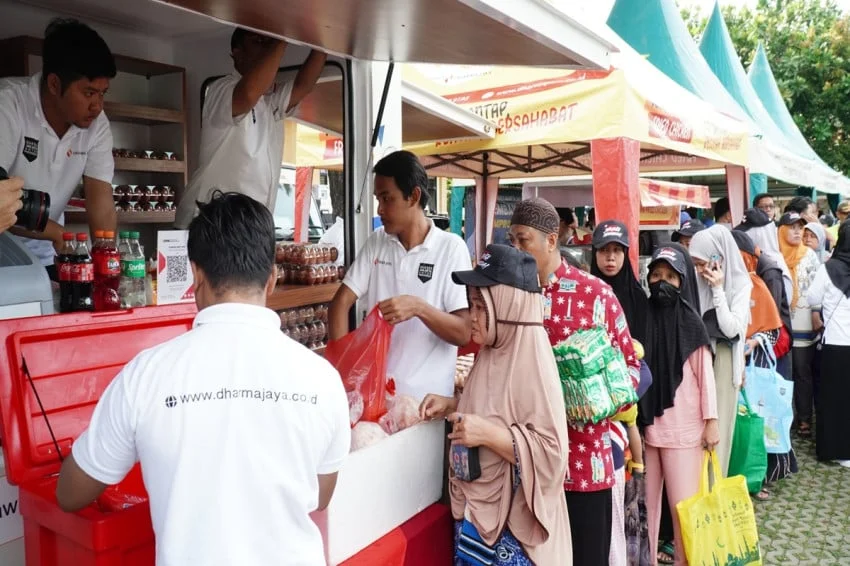
JAKARTA – Perumda Dharma Jaya, the DKI Jakarta-owned enterprise (BUMD) responsible for food services, has set an ambitious target to establish 1,416 bazaar points by the end of 2026. This extensive network aims to significantly broaden public access to affordable animal protein, a critical component of household nutrition and a key factor in regional economic stability. As of March 2026, the company has already realized 480 of these targeted bazaar points, demonstrating substantial progress towards its strategic goals.
Expanding Access to Essential Protein and Combating Food Insecurity
The initiative by Perumda Dharma Jaya is a direct response to the ongoing challenge of ensuring equitable access to nutritious food sources, particularly animal protein, for Jakarta’s burgeoning population. Animal protein, including meat, plays a vital role in addressing nutritional deficiencies and supporting overall public health, especially among vulnerable communities. In a megacity like Jakarta, where socio-economic disparities can impact access to essential goods, government-backed programs like these bazaars are crucial. They provide a reliable channel for residents to purchase high-quality meat at prices significantly below market rates, thereby easing household expenditure burdens and contributing to improved dietary intake.
Raditya Endra Budiman, Director Utama of Dharma Jaya, articulated the company’s determination during an announcement on Tuesday, April 14, 2026. "We are targeting at least to match, if not surpass, the achievement of 1,200 points from the previous year. As of March, we have already reached 480 points," Budiman stated, emphasizing the momentum gained early in the year. This statement underscores a clear commitment not only to meet but to exceed prior performance benchmarks, reflecting an intensified effort to serve the community.
Operational Strategy and Capacity Building for Enhanced Distribution
To achieve its ambitious target, Perumda Dharma Jaya has meticulously planned its operational strategy, focusing on efficiency and expanded reach. The company projects an average daily execution of six bazaar points, a pace that, if maintained, is expected to comfortably surpass the 2026 target. This operational tempo requires robust logistical support and a well-coordinated distribution network.
A critical enhancement to Dharma Jaya’s operational capabilities has been the significant upgrade of its distribution fleet. The number of refrigerated meat distribution vehicles has been increased from two to four units. This doubling of capacity is pivotal for maintaining the cold chain integrity of perishable goods, ensuring that meat products reach bazaar locations fresh and safe for consumption. The expanded fleet also allows for greater geographical coverage and the ability to serve more locations simultaneously, which is essential for scaling up operations to 1,416 points.
The logistical challenges in a dense urban environment like Jakarta are considerable. Traffic congestion, varied infrastructure, and the sheer volume of daily transactions necessitate a highly efficient and adaptable distribution system. Dharma Jaya’s investment in its refrigerated fleet demonstrates a proactive approach to overcoming these hurdles, ensuring that product quality is never compromised and that supply remains consistent across all bazaar points.
The Mandate of Perumda Dharma Jaya: A Pillar of Jakarta’s Food Security
Perumda Dharma Jaya operates as a vital arm of the DKI Jakarta provincial government, mandated with a broad range of responsibilities related to food security. Established with the core objective of managing and distributing food commodities, including meat, poultry, and fish, the company plays a pivotal role in stabilizing food prices, ensuring supply availability, and enhancing public access to nutritious food. Its activities are integral to the province’s overall strategy for economic stability and social welfare.
Historically, Dharma Jaya has been instrumental during periods of market volatility or supply chain disruptions, acting as a buffer against speculative pricing and shortages. The company’s operations extend beyond direct sales to consumers, often involving partnerships with local farmers and suppliers, and engagement in various food processing and storage activities. This multi-faceted approach allows Dharma Jaya to influence the entire food value chain, from procurement to final distribution. The current bazaar initiative is a direct manifestation of this mandate, focusing on the retail end to directly impact household food access and affordability.
Combating Inflation and Ensuring Affordability: A Dual Economic Impact
One of the most significant impacts of Dharma Jaya’s bazaar program is its contribution to combating inflation and ensuring affordability. The company’s deliberate strategy to sell meat products at prices below market rates serves a dual purpose: it directly reduces the cost burden on consumers and acts as a market stabilizer. By introducing a competitive, lower-priced alternative, Dharma Jaya helps to temper inflationary pressures on meat prices across the board.
"We want the community to get quality meat at more affordable prices. This is what drives the high public enthusiasm," Budiman explained. This strategy is particularly crucial in a period where global and domestic economic factors can lead to fluctuating food prices, directly impacting the purchasing power of urban households. For many families, meat can be a significant portion of their food budget, and even a small reduction in price can translate into substantial savings. The high demand observed at these bazaars validates the effectiveness of this pricing strategy and highlights the community’s need for such affordable options.
Beyond Jakarta’s administrative boundaries, Perumda Dharma Jaya also selectively accommodates demand from surrounding buffer regions. This demonstrates a broader understanding of regional food dynamics and an effort to contribute to stability beyond the immediate provincial borders, acknowledging the interconnectedness of food supply chains and consumer markets in the Jakarta metropolitan area.
Chronology of Public Outreach Initiatives and Government Support
The expansion to 1,416 bazaar points by 2026 is not an isolated effort but rather the culmination of years of progressive development in Dharma Jaya’s public outreach initiatives. The company has steadily increased its footprint and the frequency of its bazaars, building on lessons learned and responding to evolving community needs. The reference to "surpassing 1,200 points from the previous year" indicates a robust and growing program, suggesting that these bazaars have become an established and anticipated feature in many Jakarta neighborhoods.
Over the years, Dharma Jaya has likely refined its site selection process, logistics, and community engagement strategies. Initial bazaars might have focused on high-density residential areas or those identified as food-insecure. As the program matured, data on consumer demand, accessibility, and community feedback would have informed further expansion and optimization. This iterative process of growth and refinement is characteristic of successful public service initiatives.
Suharini Eliawati, Assistant for Economy and Finance at the DKI Jakarta Regional Secretariat, underscored the provincial government’s perspective on these efforts. She stated that the actions taken by Perumda Dharma Jaya constitute a "crucial part of the regional government’s strategy in maintaining food security while simultaneously controlling inflation." This official endorsement highlights the strategic importance of Dharma Jaya’s role within the broader framework of Jakarta’s governance. It signifies that the initiative is not merely a commercial venture but a fundamental public service aligned with provincial policy objectives. The government likely provides financial, logistical, and policy support to enable Dharma Jaya to maintain its below-market pricing and expand its reach.
Economic and Social Implications: A Holistic View
The implications of Perumda Dharma Jaya’s aggressive bazaar expansion are far-reaching, touching upon various facets of Jakarta’s socio-economic landscape.
Economic Impact:
- Inflation Control: By offering meat at competitive prices, Dharma Jaya directly helps to moderate overall food inflation, which is a significant component of the consumer price index in Indonesia. This contributes to macro-economic stability.
- Consumer Purchasing Power: Lower meat prices effectively increase the real income of households, allowing them to allocate more of their budget to other essential goods and services or to save, stimulating local economic activity.
- Market Dynamics: While primarily a public service, the bazaars introduce a strong element of competition into the meat market, potentially encouraging private retailers to keep their prices in check.
- Supply Chain Resilience: Dharma Jaya’s operations, especially with its expanded refrigerated fleet, strengthen the overall food supply chain infrastructure in Jakarta, making it more resilient to shocks.
Social Impact:
- Nutritional Improvement: Enhanced access to affordable animal protein directly contributes to better nutrition for families, particularly children, potentially reducing rates of malnutrition and stunting. This has long-term benefits for public health and human capital development.
- Equitable Access: The widespread distribution of bazaar points ensures that residents across various income levels and geographical locations have access to quality meat, promoting greater social equity.
- Community Welfare: The ability to consistently purchase affordable, high-quality food reduces stress on household budgets and improves the overall quality of life for Jakarta’s residents. It fosters a sense of security and trust in government initiatives.
- Public Health: By ensuring proper cold chain management, Dharma Jaya minimizes the risk of foodborne illnesses associated with improperly stored meat, further safeguarding public health.
Challenges and Future Outlook
Despite the significant progress and positive impacts, Perumda Dharma Jaya’s ambitious targets are not without challenges. Maintaining a stable and sufficient supply of quality meat at below-market prices requires continuous strategic sourcing, potentially involving long-term contracts with domestic and international suppliers. Managing the logistics for 1,416 points across a bustling metropolis will require sophisticated planning and real-time adaptability to address unforeseen issues like traffic or sudden shifts in demand.
Ensuring the financial sustainability of selling at subsidized prices is another critical consideration. While public service is the primary goal, a balance must be struck to ensure that Dharma Jaya remains operationally sound. This might involve exploring various funding models, including provincial government subsidies, efficient cost management, and strategic partnerships.
Looking ahead, the success of this initiative could serve as a blueprint for other Indonesian cities facing similar challenges in food security and inflation control. The model of a state-owned enterprise actively intervening in the market to ensure essential food access, supported by robust logistics and clear government mandates, offers a powerful tool for urban resilience. Dharma Jaya’s continued innovation in distribution, supply chain management, and community engagement will be key to solidifying its role as a cornerstone of Jakarta’s food ecosystem.
In conclusion, Perumda Dharma Jaya’s commitment to establishing 1,416 bazaar points by 2026 represents a substantial investment in Jakarta’s food security and economic stability. By prioritizing widespread access to affordable animal protein, the company is not only addressing immediate nutritional needs but also playing a crucial role in mitigating inflationary pressures and enhancing the overall welfare of the city’s residents, firmly aligning with the provincial government’s broader vision for a prosperous and healthy Jakarta.