
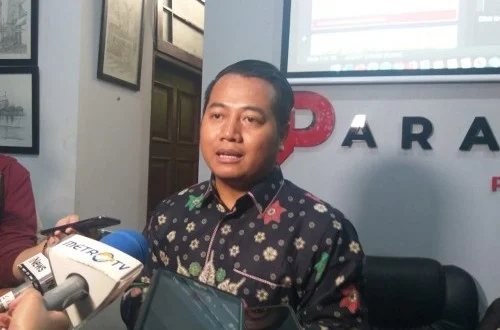
JAKARTA, Indonesia – In an early assessment of potential contenders for the upcoming Central Java gubernatorial election, a survey conducted by Parameter Politik Indonesia has identified Taj Yasin Maimoen, the former Deputy Governor of Central Java (2018-2023), as the most popular figure among prospective candidates. The findings, derived from data collected between May 15 and May 21, 2024, indicate a dynamic but still nascent political landscape in one of Indonesia’s most populous and politically significant provinces.
According to Adi Prayitno, Executive Director of Parameter Politik Indonesia, who presented the survey results online from Jakarta on Wednesday, May 29, 2024, Taj Yasin Maimoen garnered a recognition rate of 52.1 percent among respondents. This metric, focusing on public awareness rather than electability, positions him as the most recognized individual in the nascent race for the Central Java gubernatorial seat. Prayitno elaborated on the methodology, stating, "We asked respondents one by one, ‘Sir, Ma’am, are you familiar with the following figure?’ So, we asked each respondent individually, and approximately 52.1 percent recognized the name Taj Yasin."
Following Taj Yasin, Hendrar Prihadi, who currently serves as the Head of the Government Goods/Services Procurement Policy Institute (LKPP) and is a former Mayor of Semarang, secured the second position with a popularity rating of 40 percent. Bupati Kendal (Regent of Kendal) Dico Ganinduto emerged as the third most popular figure, registering 38.1 percent recognition among the survey participants.
Adi Prayitno underscored the rationale behind selecting these particular individuals for the survey, explaining, "These are individuals whom we believe possess potential, are frequently discussed, or are consistently associated with the possibility of running in the Central Java gubernatorial election. Thus, when we tally them one by one, this is the general portrait of their popularity." Despite these initial findings, Prayitno cautioned that none of the popular figures could yet be described as "outstanding" or "shining," suggesting that the race remains wide open and highly competitive, with no single dominant frontrunner emerging at this early stage. This observation implies that while these figures have managed to capture public attention, their support bases may not yet be consolidated, and their appeal might not translate directly into overwhelming electoral advantage.
Background and Significance of Central Java’s Pilkada
The gubernatorial election, known as "Pilkada" (Pemilihan Kepala Daerah), for Central Java is a pivotal event in Indonesia’s democratic calendar. Central Java, with its vast population exceeding 37 million people, is not only the third most populous province in the country but also a historical stronghold for certain political parties, particularly the PDI-P (Indonesian Democratic Party of Struggle). The province’s political dynamics often serve as a bellwether for national trends and a crucial battleground for presidential elections. Winning Central Java is frequently seen as a strategic imperative for any party aiming for national dominance, making the gubernatorial race intensely scrutinized.
The 2024 regional elections across Indonesia are scheduled to be held simultaneously on November 27, 2024, following the conclusion of the general elections earlier in the year. This synchronized schedule adds a layer of complexity, as regional races often reflect the broader political sentiments and party alliances forged during the presidential and legislative elections. For Central Java, the election will determine the successor to Ganjar Pranowo, who served two terms as governor before making an unsuccessful bid for the presidency in 2024. His long tenure and significant public profile leave large shoes to fill, creating an opportunity for new leadership to emerge. The next governor will inherit a province with a diverse economic landscape, ranging from agricultural heartlands to burgeoning industrial zones, and a rich cultural heritage, including its strong ties to Nahdlatul Ulama (NU), Indonesia’s largest Islamic organization.
Survey Methodology and Context
Parameter Politik Indonesia’s survey, conducted from May 15 to May 21, 2024, employed a standard quantitative methodology typical of public opinion polls. While specific details such as sample size, margin of error, and respondent distribution were not explicitly detailed in the initial release, reputable survey institutions generally adhere to scientific sampling techniques to ensure representativeness. Typically, such surveys involve face-to-face interviews or telephone surveys with a random sample of eligible voters across the province, stratified by demographics such as age, gender, education, and geographic location. The focus on "popularity" or "recognition" in this early survey is crucial. It measures the extent to which a candidate’s name is known among the general public, distinct from "electability," which gauges a candidate’s likelihood of winning based on direct voter preference. High popularity is a prerequisite for high electability, but it does not guarantee it. A candidate might be widely known but not widely preferred, or vice versa. This early popularity poll serves as an initial benchmark, indicating which figures have successfully registered in the public consciousness, possibly due to their previous roles, media exposure, or political lineage.
Profiles of Leading Candidates and Their Potential Appeal
-
Taj Yasin Maimoen (52.1% Popularity):
Taj Yasin Maimoen carries significant political weight, largely attributed to his lineage and past executive experience. He is the son of the late K.H. Maimoen Zubair (Mbah Moen), a highly revered Islamic scholar, spiritual leader, and former chairman of the consultative council (Syuriah) of Nahdlatul Ulama (NU). Mbah Moen’s influence, particularly among the traditionalist Muslim community in Central Java, remains immense. Taj Yasin himself served as the Deputy Governor of Central Java from 2018 to 2023, alongside Ganjar Pranowo. This experience provided him with direct exposure to provincial governance and allowed him to build a public profile independent of his father’s legacy, though the connection undoubtedly enhances his recognition. His appeal is likely strong among religious voters, particularly those affiliated with NU, and those who appreciate his background in Islamic education and community leadership. His previous role as Deputy Governor also gives him a platform of proven administrative experience, which could appeal to a broader segment of the electorate seeking competent leadership. The challenge for Taj Yasin will be to translate this high recognition and inherited reverence into concrete policy proposals and a distinct vision for Central Java that resonates beyond his traditional base. -
Hendrar Prihadi (40% Popularity):
Hendrar Prihadi brings a strong track record of executive leadership at the municipal level. As the former Mayor of Semarang, the provincial capital, he oversaw significant urban development and improvements in public services, earning him considerable popularity in the city. His current role as the Head of LKPP, a central government agency, further elevates his profile and demonstrates his capacity for high-level administration. Prihadi’s political career is often associated with the PDI-P, the dominant party in Central Java. His appeal is likely strongest in urban centers and among voters who value administrative efficiency, infrastructure development, and a modern approach to governance. Having successfully managed a major city, he can present himself as a pragmatic leader capable of tackling complex challenges. For Prihadi, the task would be to expand his recognition and appeal from Semarang and his national role to the entire diverse landscape of Central Java, which includes rural areas with different priorities. -
Dico Ganinduto (38.1% Popularity):
Dico Ganinduto represents a newer generation of political leaders. As the current Regent of Kendal, a district west of Semarang, he has gained experience in local governance. His youth and relatively fresh face might appeal to younger voters and those seeking a departure from more established political figures. Dico has also gained some national media attention, partly due to his marriage to a celebrity. While his popularity is slightly lower than the top two, his emergence at this stage suggests a growing recognition, possibly fueled by social media presence and grassroots engagement in his regency. His challenge will be to articulate a compelling vision for Central Java that distinguishes him from more experienced contenders and to demonstrate his capacity for leadership on a provincial scale. He would likely need strong party backing and a well-funded campaign to effectively compete against the more established names.
Analysis of the "Not Outstanding" Caveat
Adi Prayitno’s observation that "none of the popular figures could yet be described as ‘outstanding’ or ‘shining’" is a critical insight. It suggests several implications for the Pilkada Jateng:
- Open Race: The absence of a clear, dominant frontrunner means the election is genuinely open. This could lead to a highly contested campaign, with candidates needing to work harder to differentiate themselves and mobilize support.
- Importance of Endorsements: In a field without a "shining" star, party endorsements become even more crucial. Major political parties, particularly PDI-P, Golkar, Gerindra, PKB, and PPP, will play kingmaker roles. Their internal nomination processes, often influenced by electability surveys, political horse-trading, and national party directives, will significantly shape the final candidate pairings.
- Fluid Voter Preferences: Voters in Central Java may not yet have firmly committed to a candidate. This allows for potential shifts in public opinion as campaigns officially kick off, candidates present their platforms, and debates unfold. It also means that external factors, such as national political developments or unexpected events, could have a significant impact.
- Need for Strong Campaign Strategies: Candidates will need robust campaign teams, clear messaging, and effective outreach strategies to convert recognition into actual votes. Merely being known is insufficient; they must articulate why they are the best choice for the province.
- Potential for Dark Horses: The unsettled nature of the field could also open doors for lesser-known figures to emerge as viable contenders if they can secure strong party backing and run effective campaigns.
Timeline and Future Developments
The period between now and the November 27, 2024, election will be marked by several critical phases:
- Party Nomination Process: Political parties will undertake internal deliberations, conduct their own surveys, and engage in negotiations to select and endorse their gubernatorial and deputy gubernatorial candidates. This process often involves intense lobbying and strategic alliances.
- Candidate Registration: The General Election Commission (KPU) will set specific dates for candidates to officially register. This is a crucial deadline, as only registered pairs can contest the election.
- Campaign Period: Following registration, an official campaign period will be allocated, during which candidates will hold rallies, conduct public debates, engage with communities, and disseminate their campaign messages through various media.
- Voter Education: The KPU and civil society organizations will conduct voter education initiatives to inform the public about the candidates and the electoral process.
These early survey results provide a snapshot of public sentiment but are merely the first chapter in a long and complex political narrative. The dynamics of alliances, the strength of campaign messages, the impact of national politics, and the ultimate choices of political parties will all converge to shape the outcome of Central Java’s crucial gubernatorial election.
Official Responses and Inferred Reactions
While the survey results were presented by Parameter Politik Indonesia, direct official statements from the candidates themselves regarding these specific findings were not immediately available at the time of the announcement. However, based on typical political responses to such early polls, one can infer certain reactions:
- From Taj Yasin Maimoen’s Camp: While not directly commenting on the survey, sources close to Taj Yasin Maimoen would likely view his leading popularity as an encouraging sign, affirming the resonance of his public service and the enduring legacy of his family. Any public statement would likely acknowledge the public’s trust and reiterate his commitment to serving the people of Central Java, without necessarily declaring his candidacy officially at this nascent stage. He might emphasize the importance of continuous engagement with the public and a focus on the province’s developmental needs.
- From Hendrar Prihadi’s Camp: Hendrar Prihadi’s team would likely interpret his strong second-place showing as validation of his proven track record in Semarang and his current national role. Any response would probably highlight his executive experience and capacity for effective governance, framing it as a solid foundation for potential provincial leadership. He might express gratitude for the public’s recognition and reiterate his dedication to public service, while awaiting party directives regarding a potential candidacy.
- From Dico Ganinduto’s Camp: Dico Ganinduto’s team would likely see his third-place position as a significant achievement for a younger leader, demonstrating growing recognition and potential. Their response might focus on his fresh perspectives and commitment to innovation for Central Java, aiming to build momentum and attract further support, particularly from younger demographics. He might emphasize that the race is long and that he is prepared to work hard to earn the public’s trust.
- From Political Parties: Major political parties, including PDI-P (which has strong ties to both Hendrar Prihadi and likely has an interest in Taj Yasin Maimoen due to NU connections) and Golkar (which Dico Ganinduto is affiliated with), would likely approach these early results with caution. Party strategists often emphasize that early surveys are just one factor among many in candidate selection. They would stress the importance of internal mechanisms, comprehensive assessments of electability, political viability, and alignment with party ideology. A party official might state that while popularity is important, the ultimate decision will be based on a candidate’s full profile, including leadership qualities, vision for the province, and ability to build broad coalitions.
Broader Impact and Implications
The findings of this early popularity survey for the Central Java gubernatorial election carry several broader implications for the province’s political landscape and beyond:
- Shaping Campaign Narratives: These results will inevitably influence the initial narratives of prospective candidates. Those with higher popularity will leverage it as a sign of public trust, while those trailing will focus on building their recognition and introducing their platforms more aggressively.
- Influencing Party Endorsements: While not the sole determinant, survey results are a significant factor for political parties when deciding on endorsements. Parties aim to back candidates with the highest chance of winning. High popularity can make a candidate more attractive for party tickets, potentially leading to intense internal competition within parties or strategic cross-party alliances.
- Focus on Key Demographics: The profiles of the leading candidates suggest that the campaign will likely see a strong focus on different demographic segments. Taj Yasin’s appeal to traditional religious communities, Hendrar Prihadi’s strength in urban areas and among those valuing administrative experience, and Dico Ganinduto’s potential with younger voters and those seeking change, will dictate targeted campaign strategies.
- Economic and Social Policy Debates: As the campaign progresses, the candidates will be pressed to articulate their visions for Central Java’s future. This will involve debates on crucial issues such as economic development, job creation, agricultural sustainability, infrastructure improvements, social welfare programs, and environmental protection. The province’s reliance on both agriculture and emerging industries means that candidates will need comprehensive and nuanced policy proposals.
- Role of Social Media and Traditional Media: In an increasingly digitized political landscape, the campaign will undoubtedly utilize both traditional media (television, radio, print) and social media platforms to reach voters. The "popularity" measured in early surveys can be significantly influenced by a candidate’s media presence and public relations efforts.
- National Political Ramifications: The outcome of the Central Java Pilkada could have ripple effects on national politics. A strong showing by a particular party or coalition in this key province could bolster its position in the national political arena, influencing future policy debates and alliances at the central government level. Conversely, an unexpected result could prompt national parties to reassess their strategies.
- Voter Engagement: Early surveys, by highlighting potential contenders, can help generate public interest and engagement in the electoral process. As more candidates emerge and the campaign intensifies, voter turnout will be a key indicator of the public’s investment in the democratic process.
In conclusion, the Parameter Politik Indonesia survey provides an important initial glimpse into the Central Java gubernatorial race. While Taj Yasin Maimoen currently holds the highest recognition, the field remains dynamic and unsettled, with no candidate yet dominating the landscape. The coming months will be crucial as political parties finalize their nominations, candidates refine their messages, and the people of Central Java prepare to choose their next leader, who will shape the destiny of this vital Indonesian province for the next five years.