
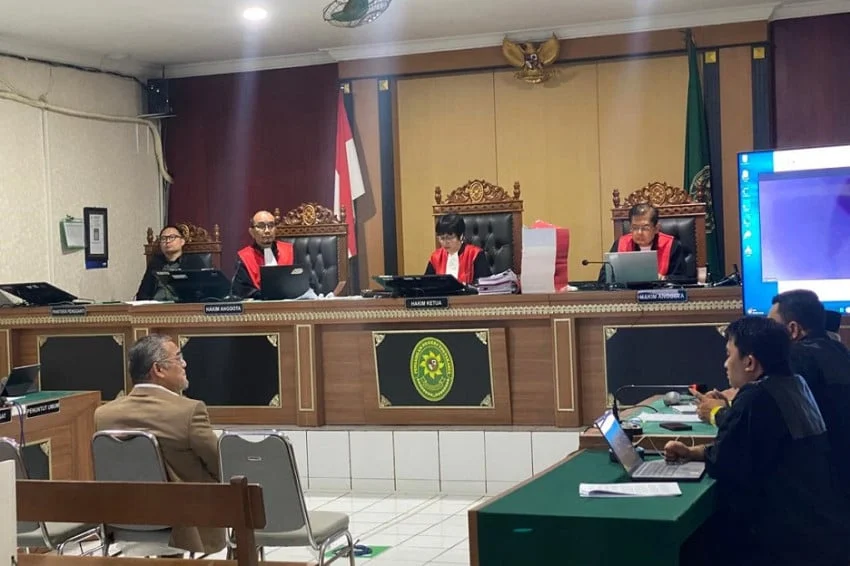
The legal proceedings surrounding alleged corruption in tourism grant funds, with Sri Purnomo as the defendant, have entered a critical new phase. The focus has sharpened on the validity of state loss calculations and the absence of criminal intent, particularly in light of a significant Constitutional Court ruling. Chairul Huda, a legal expert and advisor to the National Police Chief, has cast doubt on the foundation of the case, asserting that evidence linking the tourism grant policy to violations during the 2020 Sleman Regional Election remains elusive. His testimony, delivered as an expert witness at the Yogyakarta District Court, emphasized the lack of any indication of fund diversion or personal gain by the accused.
Scrutiny Over Criminal Intent and State Loss Calculation
At the heart of the current legal debate is the fundamental question of mens rea, or criminal intent. Huda, in his capacity as an expert witness, articulated a core tenet of criminal law: an individual cannot be deemed guilty of a crime without demonstrable intent. He stated unequivocally, "How can someone be said to have committed a crime if they have no motive? So far, no such motive has been found; there is no mens rea." This assertion directly challenges the prosecution’s narrative, suggesting a potential deficiency in establishing the necessary psychological element for a criminal conviction.
Furthermore, the calculation of state losses, a crucial component in corruption cases, has come under significant scrutiny. While the original article does not detail the specific figures or methodologies used, the expert’s questioning implies that these calculations may be flawed or unsubstantiated. In corruption cases, the precise quantification of financial harm to the state is paramount. If this calculation is found to be inaccurate or based on incorrect premises, it could fundamentally weaken the prosecution’s case. Legal experts often point to cases where overly broad interpretations of financial impropriety or speculative loss estimations have been overturned on appeal. The integrity of these calculations is therefore a linchpin for the prosecution.
The Constitutional Court’s Influence and Neutrality Allegations
The proceedings are also being viewed through the lens of Constitutional Court (MK) Decision Number 28/PUU-XXIV/2026. While the original article does not elaborate on the specifics of this ruling, its mention suggests a potential legal precedent or interpretation that could impact the case. Constitutional Court decisions often clarify ambiguities in existing laws or establish new legal principles. If this ruling pertains to the interpretation of governmental authority, the use of public funds, or the definition of neutrality for regional heads during elections, it could have direct implications for Sri Purnomo’s defense.
A significant aspect of the allegations, as alluded to by Huda, revolves around the supposed violation of neutrality by the regional head during the 2020 Sleman Regional Election. Huda’s testimony, however, directly refutes this, stating that no evidence has emerged to connect the tourism grant policy to electoral misconduct. He further stressed that if any violations of regional head neutrality had occurred, they should have been definitively established by the appropriate authorities. These include the Election Supervisory Agency (Bawaslu), the Integrated Law Enforcement Team (Gakkumdu), or the Constitutional Court itself, which adjudicates election disputes. The absence of any such pronouncements from these bodies, according to Huda, further undermines the basis of the current charges.
Background: Tourism Grants and Sleman’s Development
To understand the context of this case, it is essential to examine the broader landscape of tourism grants in Indonesia and specifically in Sleman Regency. Tourism grants are often disbursed by central or regional governments to support local tourism initiatives, infrastructure development, promotion, and community empowerment programs aimed at boosting the sector. These funds are intended to stimulate economic growth, create employment, and enhance the appeal of tourist destinations.
Sleman Regency, located in the Special Region of Yogyakarta, is a region rich in cultural heritage and natural attractions, including historical sites like Borobudur Temple (though technically in neighboring Magelang, its influence extends to the region) and Prambanan Temple, as well as natural landscapes like Mount Merapi. The tourism sector is a significant contributor to the local economy. Therefore, the allocation and utilization of tourism grants are typically viewed as crucial for the region’s development.
The 2020 Sleman Regional Election was a period of heightened political activity. Allegations of misuse of public funds or abuse of power for electoral advantage are not uncommon in such contexts. However, the specific nature of the alleged corruption in this case, linked to tourism grants, raises questions about whether the funds were indeed diverted for political purposes or if the disbursement process itself was manipulated.
Chronology of the Case (Inferred and General)
While a precise timeline is not provided in the original text, a typical corruption case involving a regional official would generally follow a sequence of events:
- Initial Allegations: Reports or whistleblowers might surface regarding irregularities in the disbursement or utilization of tourism grant funds.
- Investigation: Law enforcement agencies, such as the Corruption Eradication Commission (KPK) or the National Police, would initiate an investigation. This would involve gathering evidence, interviewing witnesses, and potentially conducting forensic accounting.
- Evidence Gathering and Analysis: Investigators would meticulously examine financial records, project documents, and correspondence related to the grants. This is where the calculation of state losses would be meticulously undertaken.
- Indictment: If sufficient evidence is found to establish probable cause, the suspect would be formally charged and indicted.
- Trial Proceedings: The case would proceed to trial, where the prosecution presents its evidence and arguments, and the defense has the opportunity to challenge the evidence and present its own case. Expert witnesses, like Chairul Huda, are often called during this phase.
- Verdict and Sentencing: The court would deliver a verdict based on the evidence presented and legal arguments. If found guilty, the defendant would be sentenced.
The current stage, with an expert legal witness challenging the core tenets of the case, indicates that the trial is likely well underway, and the defense is actively presenting its counter-arguments.
Expert Testimony and the "Forced Case" Accusation
Chairul Huda’s strong assertion that the case is "forced" is a significant statement. This implies that he believes the prosecution is attempting to build a case where the evidence does not naturally support a criminal charge. His reasoning is multifaceted:
- No Personal Benefit: He explicitly stated that there is no evidence of the accused receiving personal financial gain from the grant funds. This is a critical distinction. Corruption charges often hinge on proving that public funds were misappropriated for personal enrichment.
- Community Beneficiary: Huda pointed out that the grant funds were ultimately received by the community. This suggests that the projects or initiatives funded by the grants were implemented and, presumably, benefited the intended recipients. If the funds were disbursed and used for their stated purpose, even if there were procedural irregularities, it complicates the argument for criminal corruption.
- Inappropriate Criminalization: He views the escalation of the matter to a criminal domain as an inappropriate response, particularly if the alleged wrongdoing could be addressed through administrative or civil means. This suggests a belief that the case is being pursued with undue severity.
Broader Implications for Governance and Public Trust
The implications of this case, and particularly the expert’s critique, extend beyond the immediate legal battle.
- Due Process and Presumption of Innocence: The case highlights the importance of due process and the presumption of innocence. The defense’s strategy, as evidenced by Huda’s testimony, is to rigorously question the evidence and the legal basis for the charges. This is a fundamental aspect of a fair trial.
- Clarity in Grant Disbursement: If the case indeed stems from procedural issues rather than deliberate corruption, it underscores the need for clear, transparent, and robust guidelines for the disbursement and oversight of public grants. Ambiguities in regulations can inadvertently create opportunities for accusations of impropriety, even when no criminal intent exists.
- Impact on Public Service: Cases like this can have a chilling effect on public officials. Fear of baseless accusations or overly aggressive prosecution could deter individuals from taking on leadership roles or from making decisions that involve public funds, even when acting with good intentions. This can ultimately hinder effective governance and public service delivery.
- Public Trust: The manner in which such cases are handled significantly impacts public trust in the justice system and in government institutions. A perceived "forced case" or a miscarriage of justice can erode public confidence. Conversely, a rigorous and fair process that upholds legal principles, regardless of the outcome, can help maintain that trust.
Need for Definitive Proof
The legal system is designed to operate on proof beyond a reasonable doubt. For Sri Purnomo to be convicted, the prosecution must demonstrably prove not only that irregularities occurred but also that these irregularities constituted criminal corruption, including the essential element of criminal intent. Chairul Huda’s testimony serves as a significant challenge to the prosecution’s ability to meet this burden of proof. The coming proceedings will likely focus on whether the prosecution can present irrefutable evidence that overcomes these fundamental legal questions, particularly regarding the absence of mens rea and the validity of the state loss calculation in the context of the Constitutional Court’s pronouncements. The outcome of this case could set an important precedent for how allegations of corruption involving public grants are investigated and prosecuted in Indonesia.