
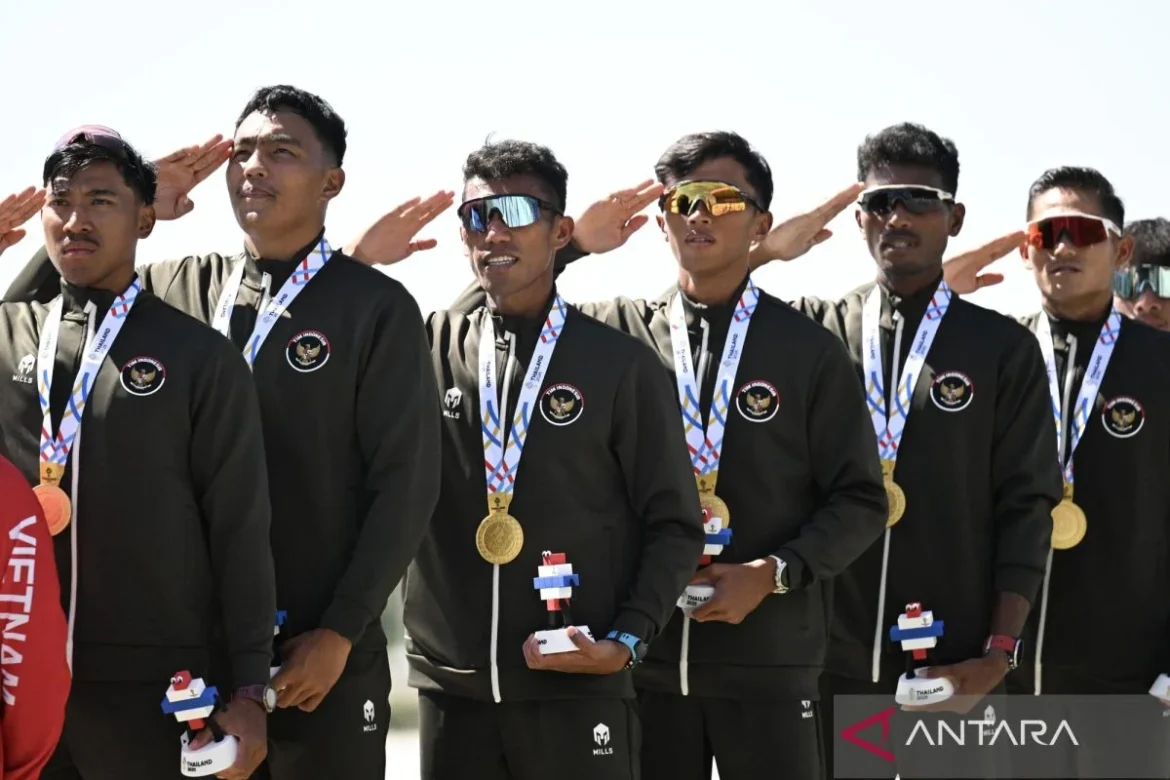
The vibrant sporting spectacle of the 33rd Southeast Asian Games (SEA Games) is set to ignite the region as Thailand plays host to this prestigious event, scheduled to run from December 9 to 20. As the largest multi-sport gathering in Southeast Asia, the SEA Games have been a cornerstone of regional camaraderie and athletic excellence, held biennially during odd-numbered years. This quadrennial event, dedicated to athletes from ASEAN nations, operates under the auspices of the Southeast Asian Games Federation (SEAGF) and adheres to the governance frameworks set forth by the International Olympic Committee (IOC) and the Olympic Council of Asia (OCA).
A Legacy Forged in Friendship: The Genesis of the SEA Games
The origins of what is now known as the SEA Games can be traced back to the "Southeast Asian Peninsular Games" (SEAP Games). The initial spark for this regional sporting initiative was ignited in 1957 by Laung Sukhumnaipradit, then Vice President of the Thai Olympic Committee. Driven by a vision to foster deeper bonds of brotherhood among Southeast Asian nations through the unifying power of sport, Sukhumnaipradit also aspired to establish a regional competition that mirrored the standards and aspirations of larger international events like the Asian Games and the Olympic Games. This ambition was rooted in the desire to elevate the level of athletic development across ASEAN countries, creating a common benchmark for progress.
Sukhumnaipradit’s visionary idea was subsequently shared with Dave Kitcher, the then-coach of the Thailand Athletics Association. Recognizing the potential of this proposal, Kitcher took it upon himself to further discuss and champion the concept. In February 1958, from the 8th to the 4th (note: the original text has a slight discrepancy here, likely meaning February 8-12 or similar, but preserving the intent), Kitcher engaged in crucial discussions with representatives from Cambodia and Vietnam. These initial dialogues proved fruitful, with both nations lending their enthusiastic support to the burgeoning idea of a peninsular games.
The momentum continued to build, culminating in a pivotal meeting of the Thai Olympic Committee on February 22, 1958. This assembly was attended by representatives from Thailand, Cambodia, and Vietnam, alongside delegates from Myanmar, Laos, and Malaysia. In this landmark session, the participating nations reached a unanimous consensus to officially launch the Southeast Asian Peninsular Games (SEAP Games) in Bangkok, Thailand, with a proposed commencement in December 1958. Furthermore, the agreement stipulated that the Games would be held every two years, and a dedicated SEAP Games Federation Committee was established to oversee its operations. This foundational meeting marked the inception of the SEAP Games, with Thailand, Vietnam, Malaysia, Cambodia, Myanmar, and Laos proudly recognized as the founding nations.
From Peninsular Roots to Regional Dominance: The Evolution of the SEA Games
The inaugural SEAP Games officially took place in Bangkok, Thailand, from December 12 to 17, 1959. This historic event, though initially intended to include all six founding nations, saw Cambodia’s absence, with Singapore stepping in to fill the void. In the same year, Singapore formally became a member of the SEAP Games family, signaling the event’s growing regional appeal.
The evolution of the SEAP Games into the broader SEA Games was a gradual yet significant process. By the 8th edition of the Games in 1975, the Federation Committee made a landmark decision to expand its membership. Indonesia, Brunei Darussalam, and the Philippines were welcomed as new participants, officially joining the fold in 1977. This expansion necessitated a rebranding, and in the same year, the "SEAP Games Federation" was officially renamed the "Southeast Asian Games Federation" (SEAGF). Consequently, the "SEAP Games" were rebranded to the "SEA Games," reflecting its expanded geographical scope and increasing prominence.
The most recent expansion of the SEA Games membership occurred in 2003 when Timor-Leste became the eleventh nation to join the prestigious regional sporting event. This brought the total number of participating countries to the current count of eleven, solidifying the SEA Games as a truly pan-Southeast Asian athletic endeavor.
The Unique Allure of the SEA Games: A Platform for Cultural Expression
One of the most distinctive characteristics of the SEA Games, setting it apart from many other international sporting competitions, is the flexibility afforded to host nations in selecting additional sports for inclusion. Unlike the Olympic Games, where the program of sports is largely fixed, the SEA Games allow the host country to incorporate sports that are either locally popular or hold significant cultural importance. This policy serves as a powerful platform for host nations to showcase their rich heritage and unique national identity to a regional and international audience.
Examples of this cultural integration abound throughout the history of the SEA Games. In 2003, Vietnam, as host, introduced traditional sports such as bicycle rickshaw racing and pencak silat, a martial art widely practiced in the region. More recently, the Philippines, during its hosting in 2019, included obstacle course racing, a dynamic and challenging discipline. In the 2023 Games, Cambodia proudly presented its traditional martial art, bokator, a testament to its deep-rooted cultural practices. These inclusions not only add a unique flavor to the Games but also provide a valuable opportunity to preserve and promote indigenous sports and cultural practices.
The 2025 SEA Games: A Grand Spectacle in Thailand
The upcoming 33rd SEA Games in Thailand are poised to be a grand spectacle, featuring an impressive lineup of 50 different sports. This extensive program underscores the breadth of athletic talent and the diversity of sporting interests within Southeast Asia. Thailand, in its capacity as host, has strategically chosen three key locations to stage the various competitions: the bustling capital city of Bangkok, the coastal province of Chonburi, and the southern province of Songkhla. This geographical distribution aims to showcase the diverse landscapes and vibrant cultures of Thailand while facilitating widespread participation and spectator engagement.
The scale of the SEA Games is significant, drawing thousands of athletes, coaches, officials, and spectators from across the region. The economic impact on the host nation is also considerable, with boosts to tourism, hospitality, and local businesses. Beyond the immediate economic benefits, the Games serve as a powerful tool for fostering national pride, promoting healthy lifestyles, and strengthening diplomatic ties among participating nations. The spirit of friendly competition and mutual respect that defines the SEA Games contributes to a more cohesive and cooperative Southeast Asia.
Broader Implications and Future Outlook
The SEA Games are more than just a competition; they are a symbol of regional unity and shared aspirations. The continuous evolution of the Games, from its humble beginnings as the SEAP Games to its current status as a major regional sporting event, reflects the growing dynamism and sporting prowess of Southeast Asia. The inclusion of diverse sports, including those with strong cultural roots, ensures that the Games remain relevant and engaging for both participants and audiences.
As the 33rd edition unfolds in Thailand, it is expected to not only witness incredible athletic achievements but also to further cement the bonds of friendship and cooperation that define the spirit of Southeast Asia. The Games serve as a crucial stepping stone for many athletes aspiring to compete on the global stage, providing invaluable experience and exposure. The commitment of the Southeast Asian Games Federation and the International Olympic Committee in supporting and developing these Games ensures their continued relevance and impact for generations to come. The ongoing discussions regarding athlete development, fair play, and the sustainable hosting of future editions will undoubtedly shape the trajectory of this cherished regional event.