
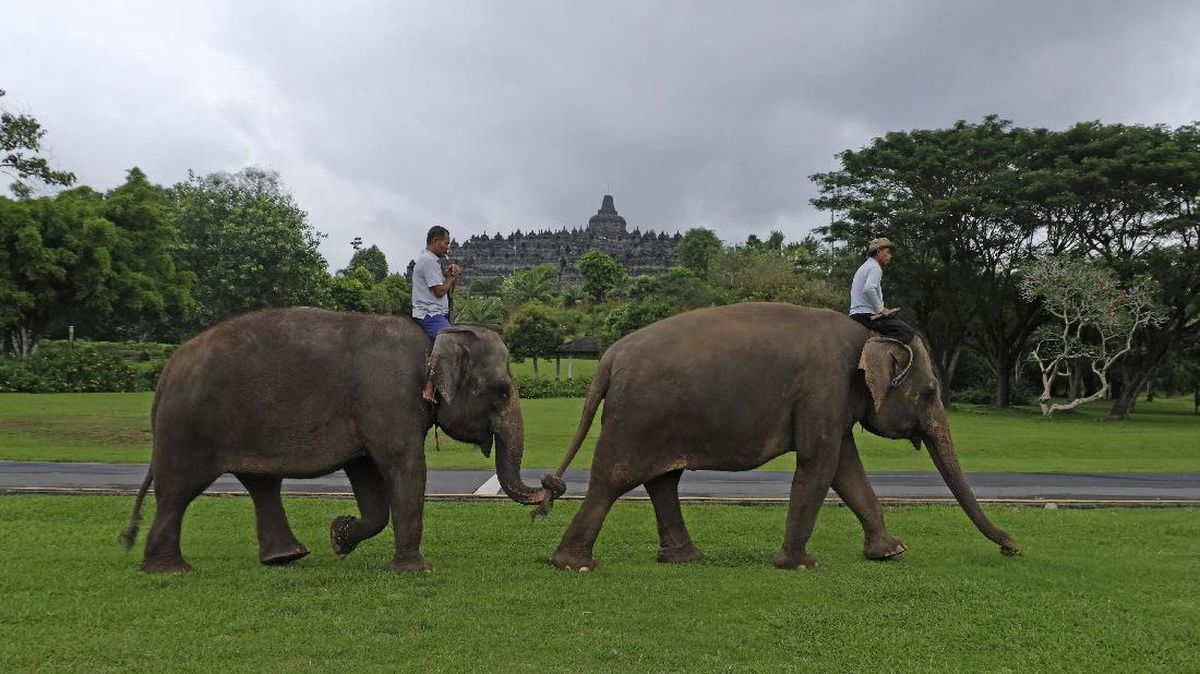
The Indonesian government, through the Ministry of Forestry, has formally announced a comprehensive ban on elephant riding attractions within all conservation areas, including zoos and safari parks, marking a significant shift in the nation’s approach to wildlife management and ethical tourism. This landmark decision was unveiled by the Deputy Minister of Forestry, Rohmat Marzuki, during a high-level working meeting with Commission IV of the House of Representatives (DPR) in Jakarta on Wednesday, April 15, 2026. The policy is rooted in the principles of animal welfare and is designed to ensure the long-term survival and physical health of the elephant population, which has faced mounting pressure from habitat loss and the demands of the tourism industry.
According to Deputy Minister Marzuki, the ban is a direct response to growing concerns regarding the treatment of captive elephants and the physiological impact of carrying tourists for extended periods. He emphasized that the move is not merely a regulatory adjustment but a moral imperative to align Indonesia with international standards of conservation. The policy focuses on three core pillars: the protection of the population, the physical safety of the animals, and the comprehensive implementation of animal welfare standards. By removing the burden of riding, the government aims to reduce stress and physical ailments commonly found in captive elephants, such as spinal damage and foot infections.
The decision has received substantial high-level political backing, most notably from President Prabowo Subianto. The President has issued a specific Presidential Instruction (Inpres) regarding the rescue and preservation of elephant populations and their natural habitats, specifically targeting the regions of Sumatra and Kalimantan. These two islands are the primary strongholds for Indonesia’s native elephant subspecies, the Sumatran elephant (Elephas maximus sumatranus) and the Bornean elephant (Elephas maximus borneensis), both of which are currently listed as critically endangered and endangered, respectively, by the International Union for Conservation of Nature (IUCN).
A Paradigm Shift in Wildlife Tourism
For decades, elephant riding has been a staple of the Indonesian tourism experience, particularly in hotspots like Bali, Central Java near the Borobudur temple complex, and various national parks in Lampung. However, the global perspective on such attractions has shifted dramatically. Scientific research has increasingly highlighted the "crush" training process—a traditional method used to break an elephant’s spirit to make it submissive enough for riding—as a primary concern for animal rights advocates. Furthermore, the biomechanics of an elephant’s spine are not designed to support the weight of heavy saddles and multiple passengers, leading to chronic pain and long-term disability.
By implementing a total ban, Indonesia joins a select group of nations that have prioritized the biological needs of wildlife over commercial entertainment. Deputy Minister Marzuki noted that this bold step has garnered significant praise from both domestic conservationists and the international community. "Indonesia is now among the few countries that have taken the decisive step to totally ban elephant riding for tourism purposes," Marzuki stated. This move is expected to bolster Indonesia’s reputation as a leader in ethical eco-tourism, attracting a new demographic of travelers who prioritize sustainability and animal rights.
Despite the ban on riding, the Ministry of Forestry clarified that elephants will remain a part of the tourism landscape, albeit in a non-exploitative capacity. The government continues to permit "low-impact" interactions that promote education and empathy. These activities include supervised feeding sessions, observing elephants as they bathe in natural or semi-natural water bodies, and taking photographs from a respectful distance. This transition aims to foster a "look but don’t ride" culture, where the focus is on the animal’s natural behavior rather than its utility as a vehicle.
Historical Context and the Road to Reform
The journey toward this ban has been decades in the making. In the late 20th and early 21st centuries, "Elephant Training Centers" (PLG) were established across Sumatra to mitigate human-elephant conflict. These centers were initially designed to tame "problem" elephants that had wandered into human settlements due to deforestation. Over time, many of these centers evolved into tourism hubs where riding became the primary source of revenue.
The chronology of this policy shift can be traced through several key milestones:
- 2010–2015: Increasing reports of elephant deaths in captivity and declining wild populations sparked national debate. NGOs began campaigning against the use of elephants in circuses and riding camps.
- 2017: Several major international travel platforms, following pressure from animal welfare groups, stopped selling tickets to attractions that offered elephant rides.
- 2020–2024: The Ministry of Environment and Forestry (pre-split) began auditing conservation institutions, finding that many facilities lacked the space and veterinary care required for large pachyderms.
- 2025: President Prabowo Subianto prioritized biodiversity as a pillar of national security, leading to the drafting of the Presidential Instruction on elephant habitat restoration.
- April 2026: The official announcement of the total ban on riding in all conservation areas.
Supporting Data: The Plight of the Sumatran Elephant
The necessity of this ban is underscored by sobering statistics regarding the Sumatran elephant population. According to data from the World Wildlife Fund (WWF) and the Indonesian Elephant Conservation Forum (FKGI), the population of Sumatran elephants has plummeted by nearly 50% over the last 25 years. Current estimates suggest that only 2,400 to 2,800 individuals remain in the wild.
The primary driver of this decline is habitat fragmentation. Approximately 70% of the Sumatran elephant’s habitat has been lost to palm oil plantations, pulp and paper concessions, and illegal logging. This has forced elephants into closer contact with humans, often resulting in tragic outcomes for both species. In captivity, there are roughly 500 elephants across various institutions in Indonesia. The Ministry of Forestry believes that by ending the riding industry, these captive animals can be better managed in "retirement" sanctuaries or used for forest patrol duties where their presence helps deter illegal logging and poaching, a role far more suited to their nature than carrying tourists.
Economic Implications and Stakeholder Reactions
The transition away from elephant riding is not without its challenges, particularly for the tourism operators and the "mahouts" (elephant trainers) who have relied on this income for generations. Economists suggest that while there may be a short-term dip in revenue for specific parks, the long-term gains from a "premium" ethical tourism model could far outweigh the losses.
Stakeholders from the tourism sector have expressed a mix of concern and cautious optimism. "We understand the need for welfare, but we need government support to retrain our staff and redesign our facilities to offer observation-based experiences," said a representative from a prominent safari park in West Java. The Ministry of Forestry has indicated that it will provide a transition period and technical assistance to help zoos and parks adapt their business models.
Environmental NGOs have hailed the move as a victory for biodiversity. Activists argue that when tourists see elephants being ridden, it reinforces the idea that wild animals are commodities. By removing the saddle, the government is sending a powerful message about the intrinsic value of wildlife. Furthermore, this policy is expected to reduce the demand for wild-caught calves, which were historically snatched from their mothers to be trained for the tourism trade.
Analysis of Broader Impacts
The implications of this policy extend beyond the welfare of individual elephants. It serves as a cornerstone for broader ecological restoration. By focusing on "habitat-based" conservation as mentioned in the Presidential Instruction, the government is committing to the protection of vast forest corridors in Sumatra and Kalimantan. These corridors are essential not only for elephants but for other endangered species like the Sumatran tiger, the orangutan, and the rhinoceros.
Moreover, the ban aligns Indonesia with the United Nations Sustainable Development Goals (SDGs), specifically Goal 15, which focuses on "Life on Land." As climate change continues to threaten tropical ecosystems, the preservation of "umbrella species" like elephants ensures the health of the entire forest ecosystem. Elephants play a crucial role as seed dispersers and forest architects; their survival is inextricably linked to the survival of Indonesia’s rainforests.
In the international arena, this move positions Indonesia as a progressive voice in the ASEAN region. While neighboring countries continue to grapple with the ethics of wildlife tourism, Indonesia’s total ban sets a precedent that may influence regional policy. It also strengthens Indonesia’s hand in international conservation forums, such as CITES (the Convention on International Trade in Endangered Species of Wild Fauna and Flora), by demonstrating a commitment to domestic enforcement of welfare standards.
Conclusion and Future Outlook
As the Ministry of Forestry moves toward full implementation of the ban, the focus will now shift to monitoring and enforcement. The government has signaled that it will conduct regular inspections of zoos and conservation sites to ensure compliance. Facilities that fail to adhere to the new "no-riding" standards may face the revocation of their operating licenses.
The transition to ethical elephant tourism represents a new chapter for Indonesia. It is a chapter where the majesty of the elephant is respected through distance and care rather than subjugation. While the sight of a tourist atop a giant pachyderm may soon vanish from Indonesian zoos, the hope is that the sight of healthy, thriving elephants in protected forests will become more common for generations to come. Through the synergy of government regulation, presidential leadership, and public support, Indonesia is redefining what it means to coexist with one of the most intelligent and culturally significant species on the planet.