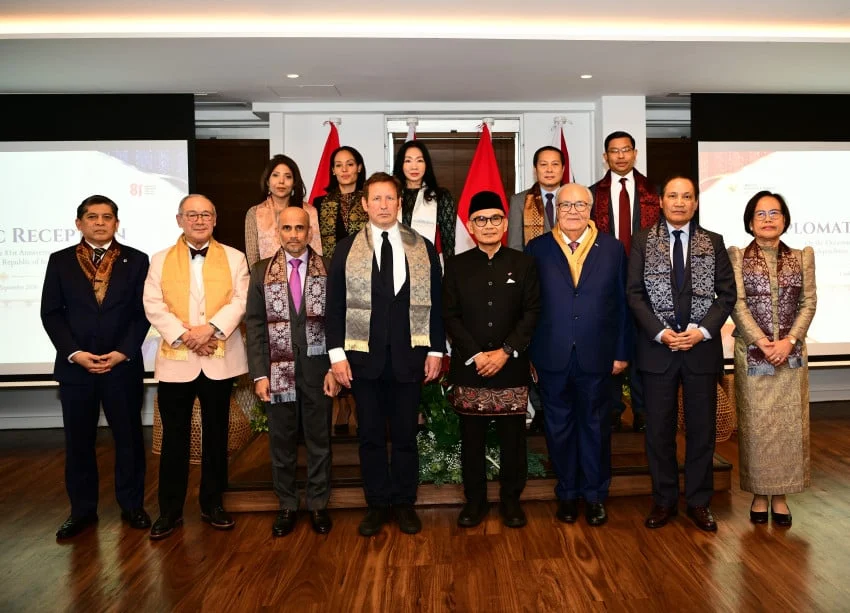
The Embassy of the Republic of Indonesia in London recently transformed its diplomatic halls into a vivid showcase of archipelago heritage, hosting more than 200 distinguished guests for the diplomatic reception commemorating the independence anniversary of the Republic of Indonesia. The gathering convened high-ranking British government officials, members of Parliament, the diplomatic corps, business leaders, academics, prominent members of the Indonesian diaspora, and dedicated Friends of Indonesia.
The evening served as a strategic platform not only to reflect on historical sovereignty but also to accelerate contemporary bilateral ties between Jakarta and London. By intertwining high-level statecraft with immersive cultural showcases, the Indonesian mission underscored the growing economic, political, and strategic convergence uniting the two nations within the broader Indo-Pacific and ASEAN frameworks.
A Distinguished Gathering of UK and ASEAN Stakeholders
The significance of the evening was punctuated by the presence of The Rt Hon. Lord Vaizey of Didcot, Chairman of the UK-ASEAN Business Council (UKABC), who attended as the Guest of Honor. Lord Vaizey’s participation highlighted the pivotal economic trajectory Indonesia commands as the largest economy in Southeast Asia and a linchpin for British trade strategy in the region.
The convergence of British legislators and corporate executives with Indonesian diplomats reflects an intensifying bilateral dialogue. Over recent years, trade volumes, green energy partnerships, and educational exchanges between the United Kingdom and Indonesia have steadily expanded. The presence of UKABC leadership at the anniversary celebration signaled a mutual commitment to deepening commercial ties, particularly in areas concerning sustainable development, technological innovation, and supply chain resilience.
Cultural Diplomacy as a Strategic Instrument
While geopolitical and economic partnerships formed the substantive backbone of the discussions, the event’s execution relied profoundly on soft power. Indonesia’s rich cultural tapestry took center stage, offering international guests a sensory journey through the nation’s diverse heritage.
Upon arrival, attendees were greeted with traditional hospitality, receiving exquisitely crafted songket stoles draped over their shoulders—a tactile introduction to Indonesia’s legendary textile craftsmanship. The culinary diplomacy of the evening featured the ceremonial presentation and philosophy of the tumpeng, the iconic conical yellow rice dish that symbolizes gratitude, communal harmony, and the balance between humanity and nature.
Artistic performances further captivated the audience. Traditional Indonesian dances, executed with intricate choreography and vibrant attire, showcased the multiplicity of the nation’s ethnic identities. Adding a unique auditory dimension to the evening was the enchanting resonance of the sasando, a traditional stringed instrument meticulously crafted from lontar palm leaves, hailing natively from Rote Island in East Nusa Tenggara. The hauntingly melodious notes of the sasando provided a bridge between remote Indonesian islands and the cosmopolitan heart of the British capital.
Insights from the Head of Mission
Addressing the assembled dignitaries, Dr. Desra Percaya, Ambassador of the Republic of Indonesia to the United Kingdom, Ireland, and the International Maritime Organization (IMO), emphasized the multifaceted nature of modern diplomacy. He noted that celebrating national independence far from home serves a dual purpose: honoring historical sacrifices while actively cultivating contemporary international goodwill.
“The independence anniversary of the Republic of Indonesia in London is not merely a commemoration of our historical sovereignty,” Ambassador Desra stated in a press release issued following the event. “It is a vital opportunity to fortify our friendship with the United Kingdom and introduce Indonesia directly to our international partners: a nation that is free, diverse, and fully prepared for collaborative progress. Culture remains the warmest language of diplomacy.”
Ambassador Desra’s remarks captured the essence of Indonesia’s current foreign policy posture—one that balances assertive economic diplomacy with inclusive cultural engagement. By opening diplomatic spaces to artistic and communal expression, the embassy effectively humanized state relations, fostering organic connections that transcend traditional bureaucratic boundaries.
Historical Context and the Evolution of Indonesia-UK Relations
The diplomatic reception in London takes place against a rich backdrop of historical interactions and a rapidly evolving modern partnership. Formal diplomatic relations between Indonesia and the United Kingdom were established in 1949, following international recognition of Indonesian independence. Over the subsequent decades, the relationship has evolved from a post-colonial association into a modern strategic partnership characterized by mutual respect and shared global objectives.
In recent years, bilateral cooperation has accelerated across multiple domains. Climate change cooperation has emerged as a cornerstone of the UK-Indonesia relationship, particularly through joint initiatives aimed at reducing deforestation, accelerating the transition to renewable energy, and mobilizing green finance. Furthermore, educational ties have flourished, with thousands of Indonesian scholars pursuing higher education at British universities through government-funded programs such as the LPDP, while British academic institutions establish robust research partnerships with Indonesian counterparts.
The economic pillar has similarly strengthened. Bilateral trade between the two nations has recovered strongly from global disruptions, encompassing sectors ranging from agriculture and manufacturing to advanced technology and creative industries. The involvement of organizations like the UK-ASEAN Business Council ensures that commercial dialogue remains continuous, dynamic, and responsive to emerging market opportunities in both countries.
The Broader Implications of Cultural Diplomacy in Modern Statecraft
The strategic deployment of culture during the London reception aligns with broader academic and practical frameworks concerning soft power in international relations. Coined by political scientist Joseph Nye, the concept of soft power emphasizes a nation’s ability to shape the preferences of others through appeal and attraction rather than coercion. For a middle power like Indonesia—a nation boasting the world’s fourth-largest population, immense biodiversity, and a foundational foreign policy doctrine of "free and active" (bebas aktif)—cultural diplomacy serves as an indispensable tool.
By showcasing intangible cultural heritage, traditional music, culinary philosophy, and textile artistry, the Indonesian Embassy in London achieved several strategic communication objectives:
- Amplifying National Identity: Countering generalized global perceptions by presenting the specific, localized richness of Indonesia’s multicultural society.
- Humanizing Policy: Fostering emotional resonance among decision-makers, business leaders, and opinion formers who hold the power to influence public policy and investment decisions.
- Building Resilient Networks: Creating informal, hospitable environments where diplomatic friction is minimized, and collaborative initiatives can be conceptualized organically.
The inclusion of high-profile British political and business figures demonstrates that cultural exhibitions, when executed with professional precision, can successfully draw elite attention to missions that might otherwise remain confined to bureaucratic routines.
Fact-Based Analysis of Bilateral Prospects
The convergence of over 200 influential figures at the Indonesian Embassy highlights several underlying trends in contemporary international relations:
Economic Integration and ASEAN Centrality: The active participation of the UK-ASEAN Business Council underscores London’s post-Brexit strategic imperative to pivot toward the Indo-Pacific region. As the largest economy within ASEAN, Indonesia is widely regarded by British strategists as an essential gateway to broader regional integration. Enhanced bilateral ties with Jakarta provide London with a reliable anchor in Southeast Asia’s rapidly expanding digital and green economies.
The Rise of Creative Economies: By highlighting traditional arts such as the sasando and songket weaving, the embassy subtly aligned its diplomatic outreach with Indonesia’s rapidly growing creative economy sector. As Jakarta seeks to diversify its export profile beyond traditional commodities and natural resources, cultural assets and creative industries are increasingly recognized as viable vectors for sustainable economic growth and international partnerships.
Diaspora and People-to-People Connections: The presence of a vibrant Indonesian community alongside British academics and parliamentarians emphasizes the foundational importance of people-to-people ties. Modern diplomacy is no longer the exclusive preserve of career diplomats; it relies heavily on students, diaspora professionals, artists, and cultural ambassadors who build enduring bridges at the grassroots level.
Chronology of the Independence Anniversary Observances in London
The diplomatic reception was the culmination of a structured series of commemorative activities organized by the Indonesian Embassy in London to mark the milestone anniversary.
- Early August: The embassy initiated preparatory community outreach programs, engaging the Indonesian diaspora across various regions of the United Kingdom and the Republic of Ireland.
- Mid-August: Official flag-raising ceremonies and internal community gatherings were conducted on embassy grounds, engaging diplomatic staff, local citizens, and students.
- Late August: The focal point of the commemoration, the Diplomatic Reception, took place at the embassy premises, hosting international dignitaries, UK government officials, business executives, and cultural partners.
- Post-Event Phase: Follow-up engagements initiated during the reception are scheduled to transition into concrete bilateral discussions concerning trade delegations, academic exchanges, and upcoming cultural festivals slated for the upcoming calendar year.
Conclusion and Future Outlook
The success of the Independence Day diplomatic reception at the KBRI London illustrates the enduring relevance of cultural diplomacy in navigating complex geopolitical landscapes. By pairing high-level economic engagement with authentic cultural representation, the Indonesian mission successfully projected a multifaceted image of a modern, confident, and culturally rich nation.
As Indonesia continues to assert its role on the global stage—through its dynamic economic growth, active multilateral diplomacy, and commitment to sustainable development—events in diplomatic hubs like London serve as vital catalysts. They reinforce existing alliances, open new avenues for commercial and academic collaboration, and ensure that the spirit of Indonesian independence resonates meaningfully across international borders.