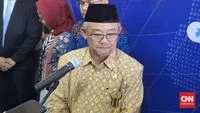
The Indonesian government, through the Ministry of Basic and Secondary Education (Kemendikdasmen), has unveiled a comprehensive strategic roadmap for the revitalization of national educational infrastructure for the 2026 fiscal year. Minister of Basic and Secondary Education Abdul Mu’ti announced that the initiative will focus on 71,744 educational units nationwide, prioritizing institutions that face the most critical infrastructural challenges. This ambitious undertaking represents a significant shift in how the state manages school maintenance, moving toward a more decentralized, community-driven model known as the self-management or "swakelola" system.
The Strategic Priority Framework
The 2026 revitalization program is structured around three core pillars of urgency. By segmenting the target schools into specific categories, the Ministry aims to ensure that limited fiscal resources are directed toward those most in need of immediate intervention.
The first priority includes schools affected by natural disasters. Indonesia’s geographical position along the Pacific Ring of Fire makes it highly susceptible to earthquakes, volcanic eruptions, and floods, which frequently cause structural damage to school buildings. The second priority focuses on schools currently classified as having "heavy damage" (rusak berat), a status determined by technical assessments regarding structural integrity, safety standards, and habitability. Finally, the third priority encompasses schools located in the 3T regions—an acronym representing underdeveloped, frontier, and outermost areas. These regions historically face significant logistical challenges, limited access to construction materials, and a scarcity of specialized labor, all of which compound the difficulty of maintaining adequate educational facilities.
Scaling the Initiative: Current Progress and 2026 Projections
Minister Mu’ti confirmed that the groundwork for this massive infrastructure project is already underway. As of the latest reporting, the government has commenced construction work on 11,744 educational units. Of this number, more than 1,000 schools have already reached the completion phase, signifying a promising start to the multi-year cycle.
The total target of 71,744 units includes projects funded through the standard state budget as well as those supported by the Additional Expenditure Budget (ABT). The Minister noted that this figure is not necessarily a hard cap. Because the program utilizes the swakelola system—where schools themselves manage the construction process—there is room for financial and logistical efficiency. Should the initial projects demonstrate high levels of cost-effectiveness, the Ministry expects to reallocate saved funds to expand the scope of the program to include additional facilities.
The Swakelola Model: Decentralization and Efficiency
The adoption of the self-management model is perhaps the most significant policy innovation in the 2026 revitalization plan. In previous years, major infrastructure projects were often handled by centralized contractors. While this offered a level of uniformity, it was frequently criticized for being bureaucratic, expensive, and disconnected from local realities.
By empowering schools to manage their own construction and repairs, the government is aiming to achieve three primary outcomes:
- Cost Efficiency: By bypassing large-scale third-party contractors, schools can eliminate middleman overheads. According to the Ministry, the procurement of materials from local vendors and the use of local labor significantly lower the overall expenditure per unit.
- Quality Control: Minister Mu’ti emphasized that because the school leadership, committees, and local stakeholders are directly involved in the construction, there is a greater sense of ownership. This personal stake often leads to higher-quality workmanship compared to projects completed by external firms that may prioritize speed over durability.
- Regional Economic Stimulation: This model serves as a stimulus for local economies. By mandating the use of local labor and materials, the program ensures that the state’s education budget circulates within the community, supporting local craftsmen, hardware suppliers, and laborers in the vicinity of the schools.
Inclusivity: Bridging the Public-Private Divide
A crucial aspect of the 2026 initiative is its inclusive approach. The Ministry has explicitly stated that the revitalization program is not limited to state-owned public schools but extends to the private sector as well.
"Our target includes not only public schools but also private institutions," Mu’ti stated. "We recognize the massive contribution that private education providers have made to the national literacy rate and the overall development of Indonesian human capital."
This acknowledgement is vital, as private schools in Indonesia—ranging from large foundations to small, community-run madrasas—often bear the burden of educating students in underserved areas where public school capacity is insufficient. Many of these private institutions operate on tight budgets and rely on community self-funding (swadaya). The Ministry’s commitment to providing financial and material support for these schools is seen as a strategic move to ensure that the quality of the national learning environment is raised across the board, regardless of the school’s legal status.
Oversight and Transparency
Given the scale of the 71,744-school project, the potential for mismanagement, budget leakage, or corruption is a primary concern for the Ministry. To mitigate these risks, the government is implementing a rigorous oversight mechanism. Minister Mu’ti has publicly called upon civil society organizations, local community leaders, and the media to play an active role in monitoring the progress of these projects.
The Ministry’s appeal for transparency is part of a broader strategy to ensure that the revitalization program adheres to the principles of "clean and good governance." By encouraging public reporting and scrutiny, the government aims to prevent the misuse of funds and ensure that every rupiah allocated translates into tangible improvements in the classroom. The Ministry has signaled that any reports of irregularities or subpar construction will be met with immediate administrative audits.
Broader Implications and Long-Term Impact
The revitalization of over 70,000 schools is more than a mere maintenance project; it is an attempt to address the "infrastructure gap" that has historically impeded equitable education in Indonesia. Decades of underinvestment in maintenance have left many schools in rural or disaster-prone areas with decaying roofs, unsafe electrical systems, and insufficient sanitary facilities.
Analysts suggest that if the 2026 program is successfully executed, it could provide the necessary foundation for the government’s other educational reforms, such as the digital transformation of classrooms and the modernization of curricula. It is difficult to implement modern pedagogical tools or digital learning platforms in buildings that lack basic structural safety or reliable electrical infrastructure.
Furthermore, the focus on 3T regions aligns with the broader national objective of reducing the developmental disparity between Java and the outer islands. By improving the quality of the physical learning environment in these remote areas, the government is attempting to signal to families that quality education is accessible regardless of one’s geographical location.
Conclusion and Future Outlook
As the 2026 timeline approaches, the Ministry of Basic and Secondary Education faces the daunting task of logistical coordination across one of the world’s largest archipelagos. The success of this program will likely depend on the Ministry’s ability to maintain the efficiency of the swakelola system while simultaneously providing enough technical guidance to ensure that all schools—especially those in remote regions—meet national safety and building codes.
For the students and teachers in the 71,744 targeted schools, the program represents a long-awaited opportunity for a safer and more conducive learning environment. The coming year will be a critical testing ground for the Ministry’s decentralized approach, as it seeks to balance rapid, large-scale implementation with the nuanced needs of Indonesia’s diverse and vast educational landscape. With the explicit backing of the central government and a clear prioritization of the most vulnerable institutions, the 2026 revitalization program stands as a landmark effort in the ongoing evolution of Indonesia’s educational infrastructure.