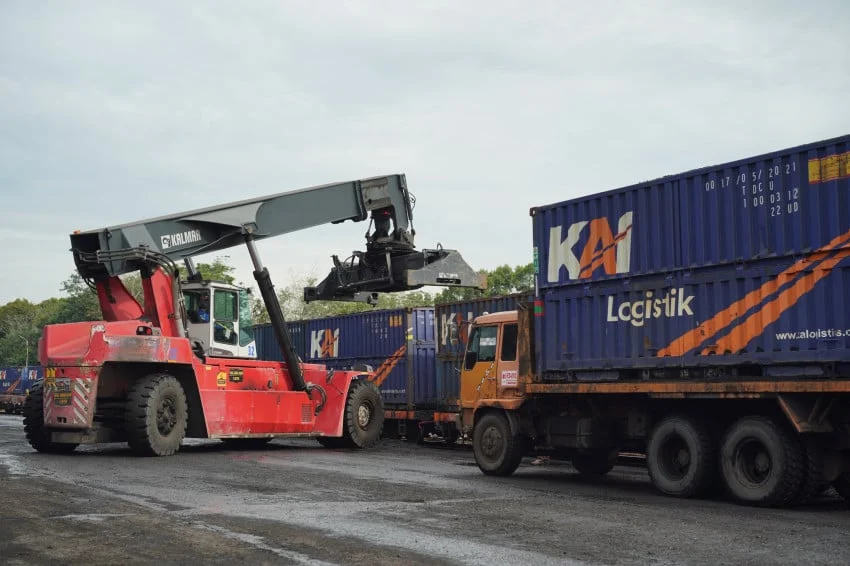
PT Kereta Api Logistik (KAI Logistik), a prominent subsidiary of PT Kereta Api Indonesia (Persero), announced a significant achievement in its operational performance for the first half of 2026, reporting an impressive total freight volume of approximately 8.7 million tons. This substantial figure underscores the company’s pivotal role in bolstering Indonesia’s supply chain and highlights the growing reliance on rail-based logistics as an efficient, reliable, and increasingly sustainable mode of transport across the archipelago. The remarkable performance, detailed in a report released on Wednesday, July 22, 2026, was primarily propelled by the continued dominance of coal transport, alongside notable positive growth observed in strategic business segments such as container and retail services, signaling a broadening customer base and diversified operational strength.
Detailed Performance Breakdown Across Key Commodities
The first six months of 2026 saw coal maintain its position as the cornerstone of KAI Logistik’s operations, contributing a substantial 63% to the overall freight volume, translating to approximately 5.4 million tons. This enduring reliance on coal transport reflects Indonesia’s robust demand for energy, particularly within its industrial and power generation sectors, where coal remains a primary fuel source. KAI Logistik’s established infrastructure and extensive network are instrumental in facilitating the efficient movement of this critical commodity from mining sites to various distribution points and power plants nationwide. The company’s capabilities in handling bulk commodities, combined with the inherent advantages of rail for heavy-haul transport, make it an indispensable partner for the nation’s energy supply chain.
Beyond coal, KAI Logistik demonstrated a strategic diversification and expansion into other high-growth segments. Container transport, a vital indicator of industrial activity and trade flows, experienced a significant surge, increasing by 27% compared to the corresponding period last year, reaching approximately 1.5 million tons. This growth trajectory in containerized freight is indicative of several positive trends: the expansion of manufacturing sectors, the increasing sophistication of supply chain management demanding multimodal solutions, and a growing preference for the security and volume efficiency offered by rail for inter-island and inter-city cargo movement. The consistent rise in container volume points to KAI Logistik’s success in integrating its services within broader logistics ecosystems, connecting ports, industrial estates, and distribution centers.
Similarly, the retail services segment exhibited a robust expansion, registering a 29% growth with a total volume of approximately 38 thousand tons. This substantial increase in retail freight underscores the dynamic growth of Indonesia’s consumer market, driven by a burgeoning middle class and the rapid proliferation of e-commerce. As online shopping continues to redefine consumption patterns, the demand for swift, reliable, and cost-effective delivery solutions for smaller, diverse shipments has escalated. KAI Logistik’s retail services cater to this evolving market need, providing efficient last-mile and middle-mile solutions that complement traditional express delivery networks, further cementing rail’s role in a comprehensive logistics strategy.
Other significant commodities contributing to KAI Logistik’s H1 2026 performance included fuel (Bahan Bakar Minyak/Bahan Bakar Khusus – BBM/BBK), which accounted for approximately 1.5 million tons. The transport of fuel is critical for supporting various industries, transportation networks, and remote communities across Indonesia, where rail provides a secure and high-capacity alternative to road transport. Cement transport reached 191 thousand tons, reflecting ongoing infrastructure development and construction projects throughout the country. Furthermore, KAI Logistik also managed the transport of hazardous and toxic waste (Bahan Berbahaya dan Beracun – B3), handling approximately 4 thousand tons, a testament to its specialized capabilities and adherence to stringent safety and environmental regulations for sensitive cargo. This diversification across a spectrum of commodities highlights the company’s operational versatility and its ability to serve a wide array of industrial and commercial needs.
Strategic Imperative of Rail Logistics in Indonesia
Indonesia, with its vast archipelago and rapidly expanding economy, faces unique logistics challenges. Efficient and integrated transportation infrastructure is paramount to connect production centers with consumption hubs, facilitate trade, and reduce regional disparities. In this context, rail logistics, championed by entities like KAI Logistik, plays an increasingly strategic role. The government’s long-term vision for national logistics, encapsulated in initiatives like the National Logistics System (Sislognas), consistently emphasizes the importance of multimodal transport solutions, with rail at its core. Rail offers several inherent advantages over road transport, particularly for bulk and heavy cargo over long distances: higher carrying capacity, greater fuel efficiency, lower emissions per ton-kilometer, reduced traffic congestion, and enhanced safety.
The decision by a growing number of businesses to opt for rail-based logistics solutions reflects a broader trend towards optimizing supply chains for both cost-effectiveness and sustainability. Companies are increasingly aware of their environmental footprint and are seeking greener alternatives. Rail transport, with its significantly lower carbon emissions compared to road haulage, aligns perfectly with corporate sustainability goals and national environmental targets. Furthermore, the reliability of rail schedules, less susceptible to road congestion or weather-related delays, provides businesses with greater predictability in their supply chains, which is crucial for just-in-time inventory management and meeting market demands.
Yuskal Setiawan’s Insights and Future Vision
Direktur Utama KAI Logistik, Yuskal Setiawan, articulated the company’s pride in its H1 2026 performance, emphasizing the foundational role of coal while acknowledging the promising growth in strategic segments. "Throughout the first half of 2026, coal remained the primary commodity under our management, contributing approximately 63% or 5.4 million tons," Setiawan stated, as quoted on Wednesday, July 22, 2026. "On the other hand, we also recorded positive growth in various flagship services, especially container transport and retail services, which demonstrates the increasing customer confidence in rail-based logistics services."
Setiawan’s remarks underscore KAI Logistik’s dual strategy: leveraging its core strengths in bulk commodities while aggressively expanding into higher-value, more diversified segments. The growth in containers and retail is not merely numerical but signifies a qualitative shift in customer perception and market penetration. It suggests that KAI Logistik is successfully positioning itself as a comprehensive logistics partner, capable of handling a spectrum of goods, from raw materials to finished consumer products. The "increasing customer confidence" is a direct result of continuous efforts in service improvement, operational efficiency, and adherence to international logistics standards.
Looking ahead, KAI Logistik is poised to further enhance its offerings and expand its reach. The company’s strategic roadmap likely includes continued investment in infrastructure upgrades, such as modernizing rolling stock, expanding intermodal terminals, and integrating advanced logistics technologies. Digital transformation, encompassing real-time tracking, automated warehousing, and predictive analytics, is also a key focus to improve efficiency, transparency, and responsiveness across its operations. Such initiatives are crucial for maintaining a competitive edge and meeting the evolving demands of a dynamic logistics market.
Driving Factors Behind Sustained Growth
Several factors contribute to KAI Logistik’s sustained growth and the increasing adoption of rail logistics in Indonesia. Firstly, ongoing infrastructure development, both within KAI Logistik’s network and broader national railway projects, plays a critical role. Investments in new railway lines, double tracking projects, and improved signaling systems enhance capacity and reduce transit times, making rail an even more attractive option. The seamless integration with port facilities and major industrial zones through dedicated rail lines or efficient intermodal transfers is also a significant driver.
Secondly, the company’s focus on customer-centric solutions and operational excellence has fostered trust and loyalty. KAI Logistik’s ability to offer customized logistics solutions, including door-to-door services, warehousing, and inventory management, caters to the specific needs of diverse industries. The emphasis on safety, security, and timely delivery of goods builds a strong reputation, attracting new clients and strengthening relationships with existing ones.
Thirdly, the broader economic environment in Indonesia, characterized by steady growth in manufacturing, agriculture, and e-commerce, provides a fertile ground for logistics expansion. As domestic consumption rises and trade volumes increase, the demand for efficient freight transport naturally follows. KAI Logistik’s strategic positioning allows it to capitalize on these macroeconomic trends, supporting the movement of goods that underpin economic activity.
Economic Contributions and Sustainability Focus
The robust performance of KAI Logistik in H1 2026 is not merely a corporate success story but also a significant contributor to Indonesia’s economic development and sustainability agenda. By providing efficient logistics services, KAI Logistik helps reduce overall supply chain costs for businesses, thereby enhancing their competitiveness in domestic and international markets. Lower logistics costs can translate into more affordable goods for consumers and improved profitability for producers, fostering economic growth across various sectors. Furthermore, the expansion of rail logistics creates direct and indirect employment opportunities, contributing to job creation and local economic development in areas serviced by the railway network.
From an environmental perspective, KAI Logistik’s emphasis on rail transport aligns with global efforts to combat climate change. Rail freight is inherently more energy-efficient and produces fewer greenhouse gas emissions per ton-kilometer compared to road transport. By diverting cargo from roads to rail, KAI Logistik actively contributes to reducing the national carbon footprint, mitigating air pollution, and alleviating road congestion. This commitment to sustainable logistics positions KAI Logistik as a leader in environmentally responsible transportation, appealing to stakeholders increasingly prioritizing ecological considerations. The company’s continued growth in green logistics solutions, such as the transport of B3 waste, further exemplifies its dedication to responsible operations.
Challenges and Opportunities in the Logistics Sector
Despite the impressive growth, the Indonesian logistics sector, including rail, faces its share of challenges. Competition from road transport, particularly for shorter distances or specific cargo types, remains fierce. Fluctuations in commodity prices, especially for coal, can impact revenue streams. Furthermore, the need for continuous investment in infrastructure and technology to keep pace with evolving market demands and maintain operational efficiency is perpetual. Integrating the various modes of transport—sea, road, and rail—into a truly seamless multimodal system across the vast Indonesian archipelago also presents complex logistical and coordination challenges.
However, these challenges are also ripe with opportunities. The untapped potential for rail logistics in many parts of Indonesia, particularly on less developed islands, offers significant room for expansion. The increasing sophistication of supply chain management, driven by digital transformation, opens avenues for KAI Logistik to innovate and offer advanced, integrated logistics solutions. Partnerships with other logistics providers, technology companies, and port operators can further enhance its service offerings and market reach. As Indonesia continues its trajectory towards becoming a developed nation, the demand for efficient, reliable, and sustainable logistics will only intensify, positioning KAI Logistik at the forefront of this critical industry.
Looking Ahead: KAI Logistik’s Strategic Road Map
KAI Logistik’s strong performance in the first half of 2026 sets a positive tone for the remainder of the year and beyond. The company’s strategic roadmap will likely focus on several key areas: further diversification of its commodity portfolio to reduce reliance on any single sector, continued investment in advanced logistics technologies to optimize operations and enhance customer experience, and expansion of its network to serve new industrial zones and growing consumer markets. The development of integrated logistics hubs that seamlessly connect rail with other modes of transport will be crucial for improving efficiency and reach. Moreover, KAI Logistik is expected to strengthen its commitment to sustainability, exploring green technologies and practices that further reduce its environmental impact. By continually adapting to market dynamics, investing in critical infrastructure, and fostering strong customer relationships, KAI Logistik is well-positioned to maintain its growth trajectory and continue playing a vital role in shaping the future of logistics in Indonesia.