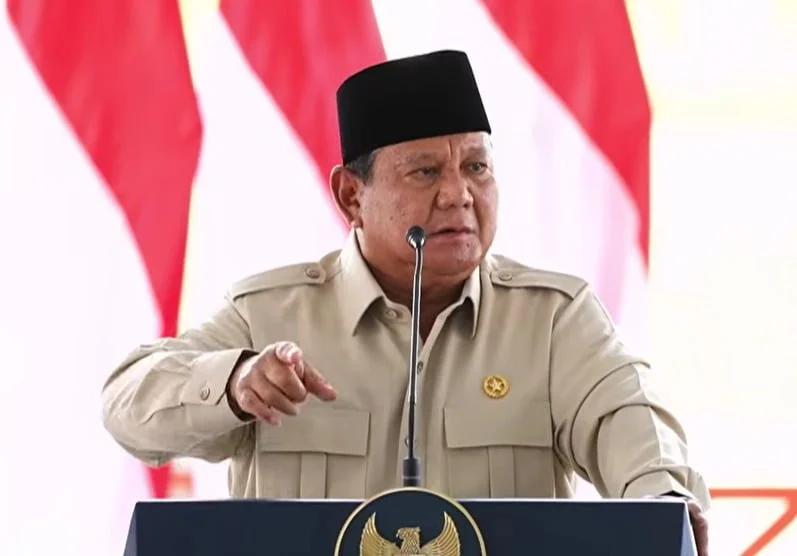
JAKARTA – President Prabowo Subianto has voiced profound concern and surprise regarding the recurring scarcity of cooking oil across Indonesia, despite the nation’s unparalleled position as the world’s largest producer of palm oil. Speaking at a Cabinet Plenary Session held at the State Palace on Monday, July 20, 2026, President Subianto emphasized that such a paradox points to deep-seated issues within the national economic governance that demand immediate and decisive rectification. His remarks underscored a broader critique of economic distortions, including practices like under-invoicing, which he contends contribute to the significant outflow of national wealth.
During the high-level meeting, attended by key ministers and senior officials, President Subianto articulated his astonishment at the situation, stating, "The world’s largest producer of palm oil, yet for weeks, cooking oil was unavailable, my brothers and sisters. This is something that defies logic." His statement highlighted the disconnect between Indonesia’s vast natural resources and the inability of its citizens to access a fundamental commodity, a situation that has previously sparked public frustration and economic instability. The President’s direct and candid assessment signaled a clear intent to tackle these structural economic challenges head-on during his administration.
The Paradox of Plenty: Indonesia’s Palm Oil Dominance and Domestic Shortages
Indonesia stands as the undisputed global leader in palm oil production, accounting for approximately 55-60% of the world’s total supply. With production figures consistently exceeding 45 million tons annually, the industry is a cornerstone of the national economy, contributing significantly to export earnings, employment, and rural development. Millions of smallholder farmers and large plantations are involved in cultivating oil palm across Sumatra, Kalimantan, and Sulawesi. This immense capacity would logically suggest an abundance of derivative products, including cooking oil, for the domestic market. However, the intermittent disappearance of cooking oil from supermarket shelves and traditional markets has become a perplexing and politically sensitive issue.
The recent scarcity, which President Subianto noted lasted for "weeks," echoes a more severe crisis that gripped the nation in early 2022. That earlier period saw widespread shortages and exorbitant prices for cooking oil, triggering public outrage and prompting the then-government to implement a series of drastic measures, including price caps, domestic market obligations (DMO) for producers, and even a temporary export ban on crude palm oil (CPO) and its derivatives. While these interventions eventually stabilized the domestic supply, the recurrence of scarcity in mid-2026 indicates that the underlying systemic vulnerabilities were not fully resolved. Experts have frequently pointed to a confluence of factors contributing to these shortages, including inefficient distribution channels, speculative hoarding, fluctuating global CPO prices, and a perceived lack of robust regulatory oversight and enforcement.
Addressing Systemic Economic Distortions and Illicit Financial Flows
Beyond the immediate issue of cooking oil, President Subianto broadened his critique to encompass more profound economic distortions plaguing the national economy. He asserted that Indonesia’s wealth is being siphoned out of the country on a massive scale, amounting to "thousands of trillions [rupiah], hundreds of billions of dollars each year." A primary mechanism for this illicit outflow, according to the President, is "under-invoicing," which he explicitly defined as "falsification of trade reports."
Under-invoicing is a practice where exporters declare a lower value for goods being shipped abroad than their actual market value. This manipulation serves multiple illicit purposes: it reduces the amount of export duties or taxes payable to the government, facilitates capital flight by moving undeclared funds offshore, and can be used for money laundering. Conversely, over-invoicing occurs when importers declare a higher value for goods than their actual cost, often to illicitly transfer funds abroad or to gain higher subsidies where applicable. Both practices distort trade statistics, undermine national revenue, and create an uneven playing field for legitimate businesses.
The President’s strong condemnation of these practices highlights a long-standing challenge for developing economies. Reports from organizations like Global Financial Integrity (GFI) have consistently shown that trade misinvoicing, including under-invoicing, is a major component of illicit financial flows (IFFs) from developing countries. These IFFs represent capital that is illegally earned, transferred, or utilized, depriving states of crucial revenue needed for public services, infrastructure development, and poverty reduction. For a resource-rich nation like Indonesia, where commodity exports play a vital role, the scale of potential losses from such practices could indeed run into billions of dollars annually, significantly impacting the nation’s fiscal health and developmental trajectory.
Official Responses and Regulatory Challenges
The President’s strong remarks are expected to prompt a renewed focus on improving economic governance and tightening regulatory frameworks. While specific reactions from cabinet ministers were not detailed in the immediate aftermath of the session, the Ministry of Trade would typically be tasked with ensuring domestic supply stability for essential goods like cooking oil. This involves monitoring market prices, enforcing DMO policies, and combating hoarding. The Ministry of Finance, particularly the Directorate General of Customs and Excise, would be at the forefront of tackling under-invoicing, requiring enhanced vigilance, sophisticated data analytics, and potentially stricter penalties for offenders.
Industry associations, such as the Indonesian Palm Oil Association (GAPKI), have often cited challenges in balancing export demands with domestic needs, especially when global CPO prices are high. They have also advocated for clearer, more consistent regulations. Meanwhile, consumer protection groups consistently call for greater transparency in supply chains and more effective enforcement to prevent price gouging and artificial scarcity.
Economists and governance experts have long argued that addressing these distortions requires a multi-pronged approach. This includes strengthening institutional capacity, enhancing inter-agency coordination (e.g., between trade, finance, and law enforcement agencies), improving data collection and analysis, and fostering a culture of transparency and accountability. The political will demonstrated by President Subianto’s statements is a crucial first step, but the implementation of effective, sustainable solutions will require sustained effort and overcoming entrenched interests.
Broader Implications for National Economy and Governance
President Subianto’s candid assessment of the persistent cooking oil scarcity and the broader economic distortions carries significant implications for his administration and the national economy. Firstly, it underscores the urgent need to fortify Indonesia’s food security and stabilize the prices of essential commodities, which directly impact the welfare of millions of households. Unstable prices and intermittent shortages can erode public trust, fuel inflation, and disproportionately affect low-income segments of the population.
Secondly, the emphasis on under-invoicing and illicit capital flight highlights a critical challenge to national revenue generation. The loss of billions of dollars annually through such practices directly diminishes the government’s capacity to fund critical development programs, improve public services, and invest in future growth. Tackling these illicit flows could unlock substantial resources for national development, allowing for greater investment in education, healthcare, infrastructure, and green initiatives.
Thirdly, addressing these deep-seated economic issues will be a litmus test for President Subianto’s commitment to good governance and reform. His administration has the mandate to implement comprehensive reforms that enhance transparency, combat corruption, and foster a more equitable and efficient economic system. Success in these areas could significantly boost investor confidence, both domestic and international, by demonstrating a commitment to a fair and predictable business environment. Conversely, failure to adequately address these issues could perpetuate economic vulnerabilities and hinder Indonesia’s long-term growth potential.
The President’s remarks serve as a powerful call to action for his cabinet and the broader economic apparatus of the state. It signals a shift towards a more rigorous examination of economic practices and a determination to ensure that Indonesia’s vast natural wealth genuinely benefits its own people, rather than being siphoned away through illicit means. The coming months will reveal the concrete policies and enforcement measures his administration will implement to turn this commitment into tangible improvements for the Indonesian economy and its citizens.