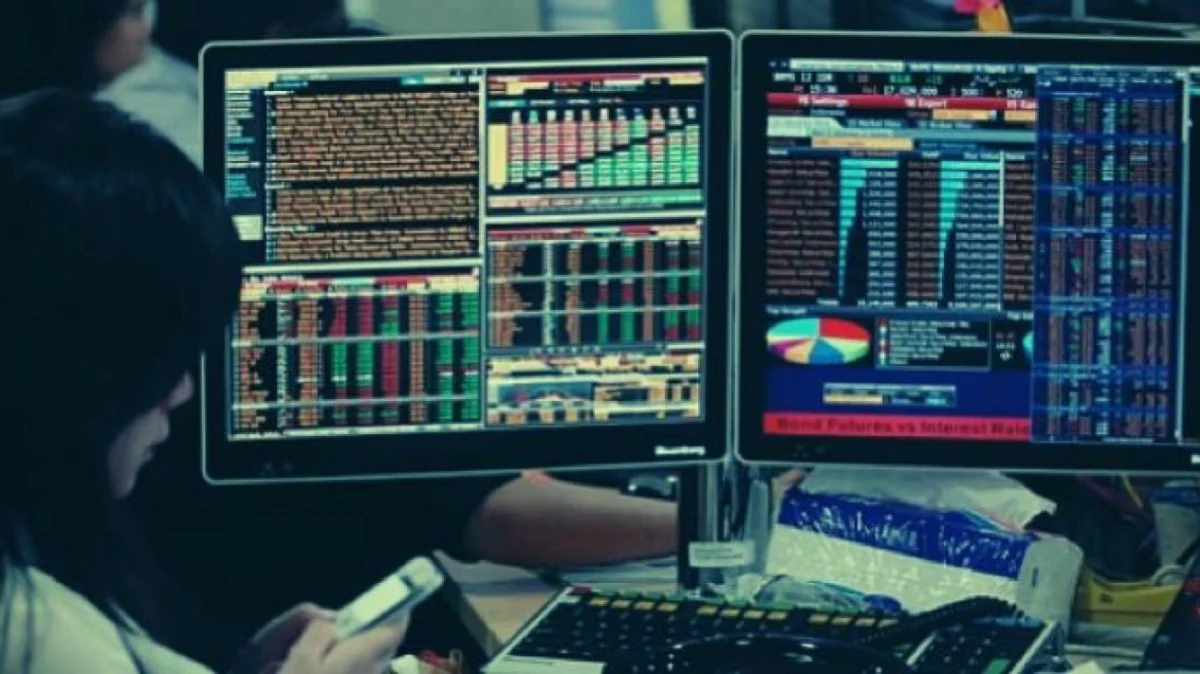
The allure of generating billions of rupiah in monthly income through financial trading has captured the public imagination, presenting a vision of professional freedom coupled with high-stakes financial rewards. This narrative, which depicts traders as individuals who command significant wealth simply by monitoring market fluctuations from a digital interface, has gained renewed traction following recent public discourse. Specifically, the topic resurfaced when Yudo Sadewa, the son of Purbaya Yudhi Sadewa, publicly commented on the potential earnings of traders, suggesting that monthly returns reaching the billions are attainable. While the prospect of escaping the traditional nine-to-five corporate structure to pursue independent wealth creation is undoubtedly seductive, the reality of the profession is significantly more complex, volatile, and demanding than social media trends often imply.
The Context of the Recent Discourse
The mention of lucrative trading profits by Yudo Sadewa served as a catalyst for a broader debate regarding the viability and risks of trading as a primary occupation. In an era where digital financial literacy is increasing, many individuals are drawn to the perceived simplicity of "buying low and selling high." However, financial experts warn that this simplistic view obscures the rigorous requirements of the craft. Trading is not merely a method of passive income; it is an analytical profession that requires a deep understanding of market mechanics, macroeconomic indicators, and technical analysis. The public fascination with these claims highlights a growing trend of retail participation in global markets, which has surged since the early 2020s, often driven by accessible trading platforms and mobile applications.
Understanding the Reality of Market Volatility
At its core, trading involves the active participation in financial markets—ranging from equities and commodities to foreign exchange (forex) and cryptocurrencies—with the objective of capitalizing on short-term price movements. Unlike long-term investing, which relies on the compounding growth of assets over years or decades, trading is a high-frequency endeavor. The potential for massive gains is directly proportional to the risk of substantial loss.
Professional traders often emphasize that the "billions in revenue" narrative rarely accounts for the risk-adjusted returns or the total capital deployed. Achieving a return of several billion requires an exceptionally large initial capital base. For example, a 5% monthly return on a capital base of IDR 100 million yields IDR 5 million, whereas the same percentage on IDR 20 billion yields IDR 1 billion. Thus, the ability to generate billions is not just a function of skill, but a function of institutional-level capital, which most retail traders do not possess.
The Professional Advantages of Trading
Despite the inherent risks, there are objective benefits that continue to draw individuals to the profession. Fidelity and other financial institutions have long documented these advantages for disciplined market participants.
1. Capitalizing on Market Volatility
The primary advantage of trading is the ability to generate profit from market inefficiencies. Whether the market is trending upward or experiencing a downturn, active traders can utilize various instruments, such as short-selling or derivatives, to profit from price action. This flexibility is rarely available to traditional passive investors who are tethered to the long-term performance of their holdings.
2. Diversity of Instruments
Modern trading platforms provide unprecedented access to a global suite of assets. A trader is no longer limited to domestic equities; they can participate in the liquidity of major currency pairs (Forex), commodities like gold and crude oil, and the high-volatility environment of digital assets. This diversity allows traders to build portfolios that align with their specific risk tolerance and technical expertise.
3. Development of Analytical Acumen
Successful trading mandates the development of a highly specific skill set. Traders must become proficient in reading candlestick charts, understanding moving averages, interpreting central bank policy statements, and analyzing corporate earnings reports. This process fosters a disciplined, data-driven approach to decision-making that is highly transferable to other sectors of finance and business management.
The Dark Side: Risks and Psychological Pressure
The public conversation regarding trading often omits the "survivorship bias"—a phenomenon where only the successful are heard, while the vast majority of retail traders experience capital depletion. According to data from various regulatory bodies globally, upwards of 70% to 80% of retail traders lose money within their first year of operation.
Financial Risk and Capital Erosion
The most immediate risk is the loss of principal. In a volatile market, an incorrectly timed position can lead to significant drawdowns. Furthermore, the use of leverage—a common tool in trading that allows individuals to control larger positions with smaller amounts of capital—can magnify both gains and losses. While leverage can lead to rapid wealth creation, it is frequently the primary cause of sudden account liquidation for inexperienced traders.
Psychological Toll
Trading is an intensely stressful profession. The requirement to make high-stakes decisions in real-time, often while watching capital fluctuate, places a significant burden on the trader’s mental health. Decision fatigue, anxiety during periods of high volatility, and the "revenge trading" phenomenon—where a trader attempts to recover losses by taking even higher risks—are well-documented psychological traps. Professional traders often cite "emotional regulation" as the most critical skill to master, often more important than technical strategy.
Institutional Perspective and Market Integrity
Financial authorities and institutions generally caution against viewing trading as a "get-rich-quick" scheme. The professional landscape is dominated by hedge funds, algorithmic trading systems, and institutional desks that possess technological advantages, such as lower latency and superior data processing capabilities. For a retail trader, competing against these entities requires not just luck, but a robust risk management framework.
Key pillars of responsible trading include:
- Position Sizing: Never risking more than a small percentage of total capital on a single trade.
- Stop-Loss Orders: The non-negotiable use of automated exit points to cap potential losses.
- Continuous Education: Acknowledging that market conditions are dynamic and that yesterday’s strategy may not work tomorrow.
Broader Implications of the "Trading Culture"
The normalization of trading as a "lifestyle" through social media platforms has significant societal implications. When high-profile figures or influencers promote the idea of billion-rupee monthly earnings, it may inadvertently encourage younger, less financially experienced individuals to treat the markets like a casino.
This behavior poses a risk to individual financial stability and creates a need for enhanced financial literacy initiatives. Regulatory agencies in various jurisdictions have already begun cracking down on misleading advertisements from brokerage firms and influencers that promise guaranteed returns. The objective is to move the narrative toward a more sustainable view: trading is a professional endeavor that requires years of study, adequate capital, and a rigorous, risk-averse mindset.
Conclusion: A Realistic Outlook
Can one earn billions as a trader? Technically, yes, but it is an outlier outcome that requires substantial capital, institutional-grade execution, and years of specialized experience. For the average individual, the goal should not be to chase the "billions" narrative, but to focus on consistent, sustainable risk management.
Trading offers a unique opportunity for those who possess the intellectual curiosity to study the markets and the emotional discipline to manage risk. However, it is fundamentally a high-stakes business, not a shortcut to wealth. As the discourse around trading continues to evolve, the public is encouraged to look past the sensationalism and understand that the most successful traders are those who prioritize the preservation of their capital over the pursuit of rapid, explosive gains. Before entering the market, prospective traders should conduct thorough research, define their risk limits, and treat the profession with the same level of seriousness one would apply to any high-level career.