Minggu, 19 Juli 2026 – 16:45 WIB
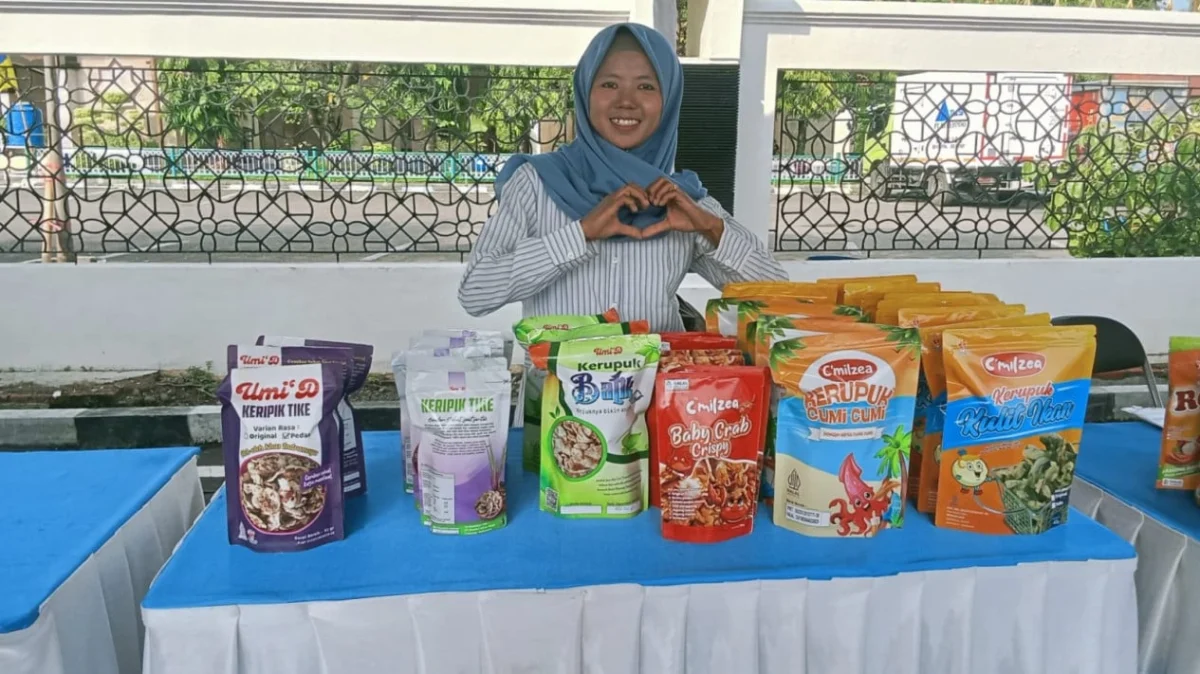
After dedicating four years to working as a migrant laborer in Malaysia, Rosyidah, a resilient woman from Eretan Kulon Village, Kandanghaur District, Indramayu Regency, chose a path of entrepreneurial transformation upon her return to Indonesia. Instead of seeking employment elsewhere, she embarked on a mission to harness the abundant marine resources of her coastal homeland, establishing a successful seafood processing business, C’milzea, that not only creates economic value but also empowers local women. Her journey underscores the immense potential of returning migrant workers (PMI) as catalysts for local economic development, particularly when supported by strategic financial inclusion programs like those offered by Bank Rakyat Indonesia (BRI).
The Journey Home: From Migrant Worker to Entrepreneur
Rosyidah’s four-year tenure in Malaysia, spanning from 2022 to 2026, represented a significant chapter in her life, a period often characterized by sacrifice and determination to secure a better future for her family. Like millions of Indonesians, she joined the ranks of Pekerja Migran Indonesia (PMI), contributing significantly to the nation’s remittances, which totaled an estimated US$11.4 billion in 2022, according to data from Bank Indonesia. While these remittances are crucial for national income and family welfare, the reintegration process for returning PMIs can often be fraught with challenges, ranging from financial literacy gaps to difficulties in finding suitable employment or initiating businesses.
However, Rosyidah’s return to Indramayu was marked by a distinct vision. Armed with a deeper understanding of economic realities and a broadened perspective gained abroad, she critically assessed her local environment. What she observed was a stark contrast: a region blessed with a rich coastline and an inexhaustible supply of marine products, yet much of this bounty remained in its raw form, fetching lower prices and limiting economic growth within the community. This untapped potential became the cornerstone of her new aspiration.
Unlocking Indramayu’s Coastal Riches
Indramayu, located on the northern coast of West Java, is famously known as one of Indonesia’s largest fishing producers. Its extensive coastline provides a vibrant ecosystem for diverse marine life, supporting thousands of local fishermen whose daily catches form the backbone of the local economy. Annually, Indramayu’s fisheries sector contributes significantly to the provincial and national economy, with substantial volumes of various fish, shrimp, and other seafood products landed at its numerous fishing ports, such as Eretan Wetan. Despite this abundance, a common challenge across many Indonesian coastal communities is the limited capacity for value-added processing. Most catches are sold fresh to middlemen or local markets, leaving significant economic potential unrealized and communities vulnerable to price fluctuations in raw commodities.
Rosyidah keenly identified this gap. She recognized that by transforming raw fish and seafood into processed, packaged, and ready-to-consume products, she could not only increase their market value but also extend their shelf life, open new distribution channels, and ultimately create more stable income streams for her community. This insight was the genesis of C’milzea.
C’milzea: A Vision for Value and Community Empowerment
With a bold entrepreneurial spirit, Rosyidah launched C’milzea, a brand dedicated to processing various marine products. Her initial product lines focused on popular local fish varieties, transforming them into snacks and ready-to-cook items. The name C’milzea itself, likely derived from "cemilan" (snack) and a personal touch, reflects the accessible and appealing nature of her offerings.
Beyond the commercial aspect, C’milzea was conceived with a profound social mission: to create opportunities for the "ibu-ibu nelayan" (fishermen’s wives) and other women in her community. In many traditional fishing villages, women often play crucial supporting roles in sorting catches or managing household finances, but direct income-generating opportunities can be scarce. By employing these women in her processing unit, Rosyidah not only provided them with additional income but also fostered a sense of community, shared purpose, and economic independence.
"I saw that the natural resources around us were abundant but lacked significant selling value. From that, I took the initiative to process them into products and simultaneously create job opportunities for the fishermen’s wives nearby," Rosyidah stated, encapsulating her dual objective of economic development and social empowerment. This approach aligns perfectly with the United Nations Sustainable Development Goal 5 (Gender Equality) and Goal 8 (Decent Work and Economic Growth), demonstrating a grassroots initiative with far-reaching positive impacts.
Navigating Entrepreneurial Hurdles
The path to building a successful enterprise is rarely linear, and Rosyidah’s journey was no exception. Her most significant challenges were not external market forces or logistical hurdles, but rather internal battles of self-confidence and a lack of prior entrepreneurial experience. Transitioning from being a wage earner to an employer and business owner requires a fundamental shift in mindset, resilience in the face of uncertainty, and a keen understanding of market dynamics.
"The biggest challenge I faced was building my self-confidence as a business owner. I had to learn to change my mindset, overcome various doubts, and understand how to market my products to gain wider recognition," she recounted. These struggles are common among nascent Micro, Small, and Medium Enterprises (MSMEs), particularly those initiated by individuals with limited formal business training. Many entrepreneurs, especially in rural areas, grapple with issues such as product standardization, branding, digital marketing, and financial management. Without proper guidance, these challenges can often prove insurmountable, leading to business failures despite innovative ideas and abundant resources.
BRI’s Pivotal Role: Training and Capital
Recognizing the need for structured support, Rosyidah proactively sought avenues for growth. Her determination led her to participate in a "Pelatihan Purna Pekerja Migran" (Training for Returned Migrant Workers) organized by Bank Rakyat Indonesia (BRI). This program was a turning point, providing her with the critical knowledge and skills necessary to professionalize her nascent business.
The BRI training program, part of the bank’s broader commitment to fostering financial inclusion and empowering MSMEs, typically covers a wide array of topics crucial for business development. These often include:
- Business Plan Development: Structuring ideas into actionable strategies.
- Product Innovation and Diversification: Exploring new product lines and improving existing ones.
- Marketing and Branding: Strategies for reaching target customers, packaging, and creating brand identity.
- Financial Management: Basic bookkeeping, cash flow management, and understanding profit margins.
- Access to Finance: Information on available credit facilities and application processes.
- Networking: Connecting entrepreneurs with peers and potential mentors.
For Rosyidah, the training proved transformative. It not only strengthened her entrepreneurial capabilities but also broadened her understanding of market trends and business scaling. Crucially, it provided a platform for networking with fellow entrepreneurs, offering new perspectives and fostering a supportive community. "This training greatly helped me improve my mindset as a business owner. Additionally, I gained new networks that are very beneficial for business development," she affirmed, highlighting the multifaceted benefits beyond just technical skills.
One immediate impact was the practical application of new knowledge, particularly in product development. "Alhamdulillah, after participating in the training, I gained a lot of knowledge, especially in processing fish, such as making fish crackers. This knowledge has been very helpful in developing my business," Rosyidah stated. This diversification into products like fish crackers not only expanded C’milzea’s offerings but also tapped into a lucrative market for savory snacks, further increasing the value of the raw fish.
Beyond training, BRI also extended crucial financial support through its Kredit Usaha Rakyat (KUR) program. KUR is a government-backed microcredit scheme channeled through various banks, including BRI, specifically designed to provide accessible capital to MSMEs with viable business plans but limited access to conventional loans. For entrepreneurs like Rosyidah, who might lack extensive collateral or a long credit history, KUR is a lifeline.
Rosyidah utilized the KUR facility as essential working capital to scale her operations. The funds were strategically allocated to purchase raw materials in larger quantities, increase product stock to meet growing demand, and cover operational necessities. This infusion of capital enabled C’milzea to expand its production capacity, fulfill more orders, and ensure consistent product availability, thus solidifying its market presence. The availability of such accessible credit is vital for MSME growth, as a significant barrier for many small businesses in Indonesia remains the lack of adequate funding for expansion.
Empowering Local Women: A Ripple Effect
The success of C’milzea, fueled by Rosyidah’s vision and BRI’s support, has created a tangible ripple effect within the Eretan Kulon community. By employing local women, primarily fishermen’s wives, Rosyidah has not only provided them with a source of income but also fostered economic independence and skill development. These women gain practical experience in food processing, quality control, and packaging, which are valuable skills transferable to other economic activities.
The additional income generated by these women directly contributes to household welfare, improving living standards, and enabling better access to education and healthcare for their families. This empowerment goes beyond financial aspects; it builds confidence, fosters collaboration, and strengthens the social fabric of the community. In a broader sense, C’milzea stands as a testament to the potential of women-led enterprises to drive inclusive economic growth at the local level, turning a local resource into a collective opportunity.
Broader Implications: A Model for Reintegration and MSME Growth
Rosyidah’s story is more than an individual success; it is a compelling case study for several national development objectives. Firstly, it highlights the immense potential of returned migrant workers as engines of entrepreneurship. Instead of being viewed solely as beneficiaries of welfare programs, PMIs, with their global exposure, savings, and often enhanced work ethic, can be effectively reintegrated as entrepreneurs and job creators, provided they receive the right support mechanisms. Government agencies, alongside financial institutions like BRI, are increasingly focusing on programs that facilitate this transition, recognizing that a successful PMI reintegration strategy contributes directly to local economic resilience and poverty reduction.
Secondly, C’milzea exemplifies the critical role of MSMEs in Indonesia’s economy. MSMEs account for over 97% of employment and contribute approximately 61% to the nation’s Gross Domestic Product (GDP). Their growth is therefore paramount for sustainable economic development. Programs like KUR and targeted training initiatives by financial institutions are indispensable in nurturing this sector, helping small businesses overcome common hurdles related to capital, knowledge, and market access. BRI, with its vast network reaching even the most remote areas, is uniquely positioned to deliver these services, embodying its role as a champion for the ‘rakyat’ (people).
Thirdly, the focus on value-added processing of marine products directly supports Indonesia’s "Blue Economy" strategy. By transforming raw fish into higher-value goods, C’milzea contributes to increasing the economic output from marine resources, reducing waste, and creating more resilient supply chains. This approach aligns with national efforts to maximize the economic potential of Indonesia’s vast maritime territory while ensuring sustainability.
The Future of C’milzea and Indramayu’s Blue Economy
Looking ahead, Rosyidah’s C’milzea is poised for continued growth. With improved production techniques, diversified product lines, and a stronger market presence, the business has the potential to expand its reach beyond local markets, perhaps even venturing into regional or national distribution channels. Further training in digital marketing and e-commerce could open new avenues for growth, connecting C’milzea’s products to a wider consumer base across Indonesia.
For Indramayu, Rosyidah’s success serves as an inspiring example. It demonstrates that with innovation, determination, and strategic support, local communities can unlock the full economic potential of their natural resources. It encourages other aspiring entrepreneurs, especially women and returned PMIs, to view challenges as opportunities and to leverage available support systems. The synergy between individual initiative and institutional backing, as showcased by Rosyidah and BRI, is a powerful model for sustainable and inclusive economic development in Indonesia’s coastal regions and beyond. As Indonesia continues to foster its MSME sector and prioritize the reintegration of its migrant workers, stories like Rosyidah’s will undoubtedly serve as beacons of hope and practical guides for a more prosperous future.