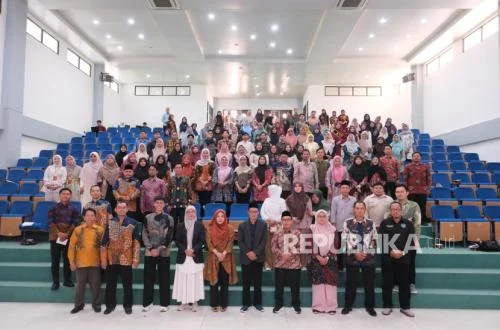
The UPT Library of the State Islamic University of Fatmawati Sukarno (UIN FAS) Bengkulu convened a landmark gathering on July 16, 2026, to address the seismic shifts occurring within the landscape of information science and higher education. This event, titled the "Workshop on Librarian Competency Enhancement 2026," was organized as a pivotal component of the Community Service Program (Pengabdian Masyarakat) spearheaded by the Faculty of Humanities (Fakultas Ilmu Budaya) at the University of Indonesia (UI). As generative Artificial Intelligence (AI) continues to redefine the boundaries of intellectual labor—ranging from student inquiries and literature summarization to the complex synthesis of academic manuscripts—the workshop sought to redefine the professional identity and functional necessity of librarians in an era dominated by automated algorithms.
The workshop, themed "Scientific Writing Training, Information Literacy, and the Ethical Utilization of Artificial Intelligence," served as a strategic forum for librarians, archivists, and library managers from various institutions across the Bengkulu Province. The gathering was underscored by a collective recognition that while technology has fundamentally altered the mechanisms of information retrieval, the demand for verified, high-quality, and ethically sourced data has never been more acute. The central thesis of the day’s deliberations was clear: the library is not an obsolete relic of the pre-digital age, but rather a critical institution in a state of necessary evolution.
A Chronological Overview of the 2026 Workshop
The proceedings commenced on the morning of Thursday, July 16, 2026, at the UIN FAS Bengkulu campus. The event was structured into three distinct phases, designed to provide both theoretical grounding and practical application for the attendees. The first phase focused on the current state of scientific writing, acknowledging that the barriers to entry for academic publishing have shifted. With the proliferation of AI-assisted writing tools, the workshop emphasized the importance of maintaining original thought and rigorous methodology.
The second phase, conducted midday, transitioned into the core issue of information literacy. Experts from the University of Indonesia’s Faculty of Humanities provided insights into the pedagogical shifts required to teach students how to navigate a world where information is abundant but often lacks a "gatekeeper." This session explored the "Human-in-the-Loop" (HITL) philosophy, which posits that while AI can process vast quantities of data, human oversight is essential to ensure accuracy, context, and ethical integrity.
The final phase of the workshop was a hands-on technical session where participants explored various AI tools currently being utilized by students. By understanding the capabilities of these technologies, librarians were better equipped to identify potential misuse and, more importantly, to guide students toward ethical applications of AI in their research. The day concluded with a plenary session where representatives from various Bengkulu-based libraries shared their institutional challenges and potential collaborative solutions for digital transformation.
Redefining the Librarian’s Role in the Age of AI
Dr. Syahril, the Head of the UPT Library at UIN FAS Bengkulu, provided a sobering yet optimistic analysis of the current academic environment. He noted that the traditional "search path" for students has been disrupted. Historically, a student would enter a library, consult a catalog, browse physical or digital volumes, and synthesize information from multiple disparate sources. Today, that process is often condensed into a single "prompt" submitted to a Large Language Model (LLM).
"We are not facing a technology that will replace the library, but rather a technology that demands the library’s adaptation," Dr. Syahril stated during his keynote address. He observed that the shift in student behavior—from browsing to querying—presents a unique challenge. If a student receives a synthesized answer in seconds, they may bypass the critical thinking process inherent in traditional research. However, Dr. Syahril argued that this does not render the librarian redundant. Instead, it elevates the librarian to the role of an "Information Architect" and "Ethical Navigator."
The role of the 2026 librarian involves verifying the outputs generated by AI, which are frequently prone to "hallucinations" or the fabrication of citations. As AI models are trained on vast datasets that may include biased or outdated information, the librarian serves as the ultimate arbiter of source quality. This modernization effort is reflected in UIN FAS Bengkulu’s ongoing initiatives to strengthen electronic catalogs, implement digital-based lending and return systems, and expand access to global electronic resource databases.
Supporting Data and the Digital Landscape of 2026
The necessity of this workshop is supported by emerging data regarding AI adoption in Indonesian higher education. By mid-2026, surveys indicated that over 85% of university students in Sumatra utilized some form of generative AI for their coursework. While this has increased the speed of assignment completion, faculty members have reported a corresponding 30% increase in "homogenized" writing—essays that lack unique perspectives or local context because they rely on generalized AI training data.
Furthermore, the "Digital Divide" remains a significant factor in regional provinces like Bengkulu. While AI is accessible, the literacy required to use it effectively and ethically is not evenly distributed. The 2026 Librarian Competency Workshop addressed this gap by positioning libraries as hubs for digital equity. By training librarians, the program ensures that the benefits of AI are accessible to all students, regardless of their prior technological proficiency, while simultaneously guarding against the erosion of academic standards.
Global trends in library science also reflect the themes discussed in Bengkulu. According to the International Federation of Library Associations and Institutions (IFLA), the "Library 4.0" model emphasizes the integration of AI, Big Data, and the Internet of Things (IoT). The 2026 workshop at UIN FAS Bengkulu aligns with these international benchmarks, ensuring that provincial libraries in Indonesia are not left behind in the global shift toward intelligent information systems.
The UI Partnership and Community Service Impact
The collaboration with the University of Indonesia’s Faculty of Humanities (FIB UI) adds a layer of academic prestige and practical expertise to the initiative. As part of their Community Service Program, UI faculty members brought a multidisciplinary perspective to the workshop, blending the technical aspects of AI with the ethical and cultural considerations of the humanities. This partnership highlights the importance of inter-institutional cooperation in solving regional challenges.
Representatives from FIB UI emphasized that the humanities are more relevant than ever in the age of AI. "Technology provides the ‘how,’ but the humanities provide the ‘why’ and the ‘should,’" noted one visiting lecturer. The program aimed to empower Bengkulu librarians not just as technicians, but as intellectuals who can lead the conversation on how AI should be integrated into the fabric of Indonesian society and education.
The impact of this program extends beyond the walls of UIN FAS Bengkulu. By inviting library managers from across the province, the workshop created a network of professionals who can now implement standardized AI-literacy programs in their respective institutions. This "train-the-trainer" model ensures that the knowledge shared on July 16 will ripple through the local educational ecosystem, benefiting thousands of students and researchers.
Broader Implications for the Future of Academic Libraries
The 2026 workshop serves as a microcosm of the broader challenges facing the global information economy. As AI becomes more sophisticated, the "commodity" of information is becoming cheaper and more accessible. However, the "value" of truth, context, and ethical synthesis is becoming increasingly expensive. Libraries, traditionally the repositories of physical books, are transitioning into the guardians of intellectual integrity.
One of the most significant implications discussed was the shift toward "Prompt Engineering" as a core competency for librarians. In the near future, a librarian’s ability to help a student craft a precise, ethical, and effective query for an AI model will be as important as their ability to navigate a Dewey Decimal System was in the 20th century. This requires a deep understanding of how AI models work, their limitations, and their inherent biases.
Moreover, the workshop highlighted the importance of "Local Wisdom" in the age of global AI. Because most AI models are trained on Western-centric datasets, there is a risk that local history, culture, and Islamic perspectives—central to the mission of UIN FAS Bengkulu—could be marginalized. Librarians are now tasked with ensuring that local digital repositories are robust and accessible, providing the necessary data to "fine-tune" AI models to be more representative of the Indonesian and Islamic context.
Conclusion: The Library as a Beacon of Trust
As the Workshop on Librarian Competency Enhancement 2026 concluded, the sentiment among participants was one of renewed purpose. The rise of AI does not signal the end of the library; rather, it marks the beginning of its most critical chapter. In a world where machines can generate text, humans must be the ones to provide meaning.
The UPT Library of UIN FAS Bengkulu, through its collaboration with the University of Indonesia, has set a benchmark for how regional institutions can proactively engage with disruptive technologies. By focusing on ethics, literacy, and modernization, they are ensuring that the library remains a beacon of trust in an increasingly complex information landscape. The librarians of 2026 are no longer just keepers of books; they are the essential navigators of the digital frontier, ensuring that the pursuit of knowledge remains a human-centered endeavor.