JAKARTA – President Prabowo Subianto on Thursday, July 23, 2026, concluded a critical three-and-a-half-hour limited cabinet meeting (ratas) at the Presidential Palace Complex in Jakarta, focusing on a suite of strategic government programs. The paramount agenda item was the accelerated strengthening and development of the Koperasi Desa/Kelurahan Merah Putih (KDKMP) – Village/Sub-district Merah Putih Cooperatives – and Koperasi Nelayan Merah Putih (KNMP) – Fishermen Merah Putih Cooperatives. The extensive deliberation underscored the government’s unwavering commitment to bolstering the grassroots economy and enhancing national resilience through robust cooperative frameworks.
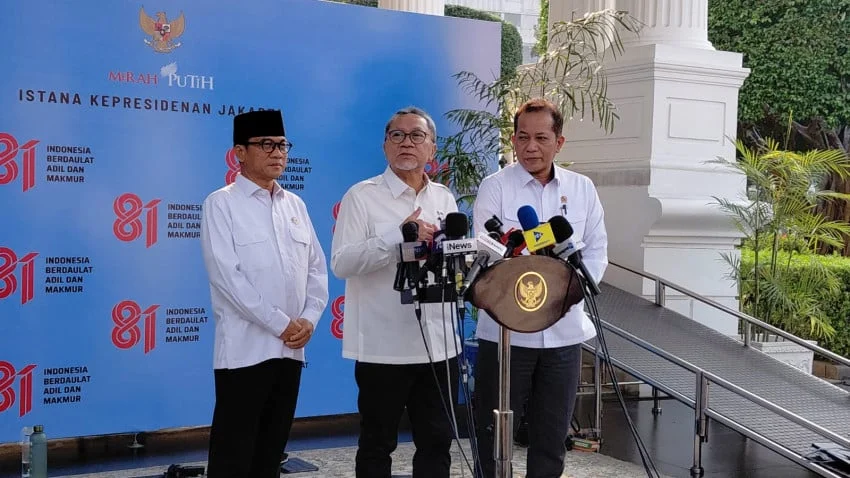
Coordinating Minister for Food Affairs, Zulkifli Hasan, provided a briefing to the media following the lengthy session, which commenced promptly at 12:30 PM Western Indonesian Time (WIB). Ministers began to depart the Palace Complex around 4:00 PM WIB, signaling the conclusion of the intensive discussions. Zulhas, as the minister is commonly known, emphasized President Prabowo’s definitive directive: a mandate for all ministries and state institutions, including the Indonesian National Armed Forces (TNI) and the Indonesian National Police (Polri), to extend their full and unequivocal support to the comprehensive development of these pivotal Merah Putih Cooperatives. "We started the meeting at 12:30 PM, making it a 3.5-hour session. Many crucial matters were discussed, particularly concerning our sector, where the President explicitly ensured that the Village Merah Putih Cooperatives, Sub-district Merah Putih Cooperatives, and Fishermen Merah Putih Cooperatives must receive full support from all ministries and agencies, as well as from the TNI and Polri," Zulkifli Hasan stated to reporters.
The Strategic Imperative: Revitalizing the Cooperative Sector
The renewed focus on cooperatives under President Prabowo’s administration is not merely a policy adjustment but a strategic imperative rooted in Indonesia’s economic philosophy. Cooperatives have historically been envisioned as the backbone of the Indonesian economy, a concept championed by the nation’s founding fathers, most notably Vice President Mohammad Hatta. He posited that cooperatives embody the spirit of gotong royong (mutual cooperation) and serve as a vital instrument for achieving economic equity and social justice. Despite their foundational importance, the cooperative sector has faced persistent challenges, including limited access to capital, managerial deficiencies, market access hurdles, and a lack of innovation, which have often hindered their full potential.
President Prabowo’s emphasis on Koperasi Merah Putih signifies a re-energized commitment to leveraging these community-based organizations as primary drivers for rural and coastal economic development. The "Merah Putih" moniker itself evokes strong nationalistic sentiment, symbolizing unity, sovereignty, and a collective commitment to national prosperity. This initiative is understood to be a cornerstone of the President’s broader economic agenda, aiming to empower small-scale producers, farmers, and fishermen, thereby strengthening the domestic supply chain, fostering food sovereignty, and ensuring more equitable distribution of economic benefits across the archipelago.
Deep Dive into the Koperasi Merah Putih Program
The Koperasi Merah Putih program, as outlined during the ratas, is envisioned to be a multi-faceted initiative extending across villages (desa), sub-districts (kelurahan), and fishing communities. Its strategic importance is underscored by the two principal functions President Prabowo articulated: acting as government infrastructure and serving as an off-taker.
As "government infrastructure," these cooperatives are poised to become critical local hubs for various state functions. This could encompass facilitating the distribution of social aid programs, agricultural subsidies, and essential inputs like fertilizers and seeds to remote communities. They are also expected to serve as data collection points, providing granular insights into local economic conditions, production capacities, and community needs, thereby enhancing the efficacy of government planning and resource allocation. Furthermore, KDKMP could potentially become crucial conduits for extension services, disseminating best practices in farming, fisheries, and sustainable resource management directly to their members. This integration into the governmental apparatus is designed to streamline public service delivery and ensure that state support reaches the intended beneficiaries more effectively.
The role of an "off-taker" is equally, if not more, transformative. By acting as off-takers, Koperasi Merah Putih would guarantee market access for the produce of their members – be it agricultural commodities, fishery products, or local handicrafts. This function directly addresses a perennial challenge faced by small-scale producers: price volatility and exploitation by middlemen. By providing a stable and reliable market, cooperatives can help stabilize income for farmers and fishermen, reduce post-harvest losses, and ensure fair pricing. This mechanism is critical for strengthening the domestic supply chain, enhancing food security by securing consistent supply, and potentially leading to more competitive prices for consumers due to reduced intermediaries. The cooperatives would thus play a vital role in aggregating local produce, processing it if necessary, and connecting it directly to larger markets, including state-owned enterprises or even export channels.
Chronology of the Critical Meeting
The limited cabinet meeting on July 23, 2026, was characterized by its intense focus and extended duration. Commencing precisely at 12:30 PM WIB, the session brought together a select group of key ministers whose portfolios are directly or indirectly linked to rural development, economic affairs, food security, and national stability. While Zulkifli Hasan was the primary spokesperson, it is understood that the attendance likely included the Minister of Cooperatives and Small and Medium Enterprises, the Minister of Home Affairs, the Minister of Finance, the Minister of Agriculture, the Minister of Maritime Affairs and Fisheries, and possibly high-ranking representatives from the TNI and Polri, given their explicitly mentioned role.
The 3.5-hour duration suggests a thorough deliberation on the operational modalities, financial implications, and implementation strategies for the Koperasi Merah Putih program. Discussions would have spanned various facets, from regulatory frameworks to funding mechanisms, capacity-building initiatives, and the precise roles of each stakeholder. The President’s presence and extended engagement signify the high priority accorded to this initiative, indicating that it is perceived as a flagship program for his administration to foster inclusive economic growth and strengthen national resilience from the ground up. The fact that ministers remained in session until 4:00 PM WIB further underscores the depth and breadth of the policy discussions, which likely covered detailed action plans and timelines for the program’s rollout.
Presidential Directives and Inter-Ministerial Synergy
President Prabowo’s directive for comprehensive inter-ministerial and institutional support is a defining feature of this initiative. The explicit inclusion of the TNI and Polri in supporting cooperative development marks a notable expansion of their roles beyond traditional security functions. While their exact involvement will need further elucidation, it is inferred that their support could manifest in several ways: assisting with logistics and infrastructure development in remote areas, ensuring security for cooperative operations, combating illegal activities (such as illegal fishing for fishermen’s cooperatives), and potentially contributing to community development and civic action programs that align with cooperative goals. Their presence could also provide an added layer of stability and trust, particularly in areas prone to security challenges or where government presence might otherwise be limited.
Beyond security forces, the directive mandates active participation from a broad spectrum of government bodies. This implies a coordinated effort, where:
- The Ministry of Cooperatives and SMEs will be responsible for technical guidance, regulatory frameworks, cooperative establishment, and capacity building for members and management.
- The Ministry of Home Affairs will play a crucial role in coordinating with local governments (provincial, district, city, village/sub-district levels) to facilitate the establishment and integration of KDKMP within local administrative structures.
- The Ministry of Finance will be instrumental in allocating budgetary resources, developing financial support schemes, and exploring innovative financing models for cooperatives, potentially involving micro-credit programs or guarantee funds.
- The Ministry of Agriculture and the Ministry of Maritime Affairs and Fisheries will provide sector-specific expertise, promote best practices, facilitate access to technology, and ensure the cooperatives align with national food security and sustainable resource management objectives.
This multi-pronged approach reflects an understanding that the success of Koperasi Merah Putih hinges on a holistic strategy that transcends individual ministerial silos.
Supporting Data and Economic Context
Indonesia’s cooperative sector, while vast in number, has historically struggled to maximize its economic impact. As of recent data (pre-2026, though specific 2026 data isn’t available, general trends persist), Indonesia boasts hundreds of thousands of cooperatives with millions of members, yet their collective contribution to the national Gross Domestic Product (GDP) remains relatively modest compared to other sectors. For instance, in previous years, cooperatives contributed only a small percentage to the national GDP, often struggling with issues of scale, market integration, and professional management.
Rural poverty remains a persistent challenge in many parts of Indonesia, with a significant portion of the population engaged in small-scale farming and fishing, sectors often characterized by low productivity, vulnerability to climate change, and weak market linkages. The Koperasi Merah Putih initiative is designed to directly address these systemic issues. By acting as off-takers, cooperatives can help reduce the income gap between producers and consumers, estimated to be substantial due to multi-layered supply chains. By serving as government infrastructure, they can facilitate the flow of aid and services, which are critical in a country where geographical dispersion often complicates outreach. The program aims to increase the value added at the local level, fostering local processing and marketing capabilities that keep more wealth within the communities.
Anticipated Roles and Responsibilities of Stakeholders
The broad mandate issued by President Prabowo necessitates a clear delineation of roles and responsibilities across various governmental and security bodies:
- Ministry of Cooperatives and SMEs: Will lead the technical implementation, offering training modules on cooperative governance, financial management, marketing strategies, and legal compliance. They will likely be tasked with establishing performance metrics and monitoring the progress of KDKMP.
- Ministry of Home Affairs: Crucial for local government engagement. This ministry will ensure that local regulations support cooperative formation and operation, facilitate land access where necessary, and integrate KDKMP into village and sub-district development plans.
- Ministry of Finance: Beyond budget allocation, this ministry could explore innovative financing tools such as matching grants, subsidized loans, or public-private partnerships to ensure the financial sustainability and growth of these cooperatives.
- Ministry of Agriculture/Maritime Affairs and Fisheries: These ministries will provide sector-specific expertise, introduce modern farming and fishing techniques, promote sustainable practices, and connect cooperatives to national food security programs and export markets. They might also facilitate access to relevant technologies and research.
- TNI and Polri: Their unique role, as specified by President Prabowo, is anticipated to involve more than just security. For instance, in remote or conflict-prone areas, they might help establish safe corridors for product transportation, protect cooperative assets, or assist in disaster relief efforts that impact cooperative operations. Their presence could also deter illegal activities that undermine the economic viability of cooperative members, such as illegal fishing or agricultural land encroachment. Furthermore, their extensive networks and logistical capabilities could be leveraged for broader community outreach and support, ensuring the smooth functioning and security of the cooperative ecosystem.
Potential Impact: A Vision for Grassroots Prosperity
The successful implementation of the Koperasi Merah Putih program holds the promise of significant positive impacts across economic, social, and food security dimensions. Economically, it could lead to substantial rural revitalization, generating new jobs through local processing and value-added activities, and stabilizing incomes for millions of small-scale producers. By reducing the reliance on middlemen, a larger share of the profit margin will remain with the producers, fostering greater economic equity. Socially, the program could strengthen community cohesion and empowerment, as cooperatives inherently promote collective action and shared decision-making. It could also improve access to essential services and infrastructure, leading to better living standards in underserved areas.
From a food security perspective, the KDKMP and KNMP could significantly enhance the efficiency and resilience of Indonesia’s food supply chains. By aggregating local produce and linking directly to markets, the program aims to minimize waste, ensure consistent supply, and potentially reduce food prices for consumers. This local-to-national approach to food production and distribution would bolster Indonesia’s self-sufficiency and reduce its vulnerability to global supply chain disruptions.
Navigating the Path Forward: Challenges and Opportunities
While the vision for Koperasi Merah Putih is ambitious and transformative, its path is not without challenges. Key hurdles include ensuring robust governance and transparent financial management within the cooperatives, overcoming the limited managerial capacity often found in grassroots organizations, and navigating complex market dynamics. The sheer scale of the initiative, covering villages, sub-districts, and fishing communities nationwide, demands an intricate coordination mechanism and substantial resources. Potential issues such as political interference, ensuring sustainability beyond initial government funding, and adapting to diverse local contexts will require careful strategic planning and flexible implementation.
However, these challenges are matched by significant opportunities. The program offers a unique chance to institutionalize a bottom-up approach to national development, leveraging the inherent strengths of local communities. By integrating technology for market linkages, financial transactions, and information dissemination, KDKMP can leapfrog traditional development hurdles. The explicit inclusion of TNI and Polri, while unusual, presents an opportunity for a truly integrated, whole-of-government approach to community development and security. If successfully implemented, Koperasi Merah Putih could serve as a powerful model for inclusive economic growth, demonstrating how a nation can empower its most vulnerable populations to become active participants and beneficiaries of national prosperity.
Conclusion
President Prabowo Subianto’s decisive leadership in the July 23, 2026, limited cabinet meeting underscores his administration’s profound commitment to fostering a robust, equitable, and resilient national economy anchored in grassroots strength. The Koperasi Merah Putih initiative, with its dual functions as government infrastructure and off-taker, represents a strategic pivot towards empowering local communities, enhancing food security, and driving inclusive growth. The mandate for comprehensive support from all government ministries and security forces signals a unified national effort to realize the transformative potential of cooperatives. As the program moves from policy formulation to implementation, its success will be a critical determinant of Indonesia’s ability to build a truly prosperous and self-reliant future, where the benefits of development are shared by all citizens, from the bustling cities to the remotest villages and coastal areas.