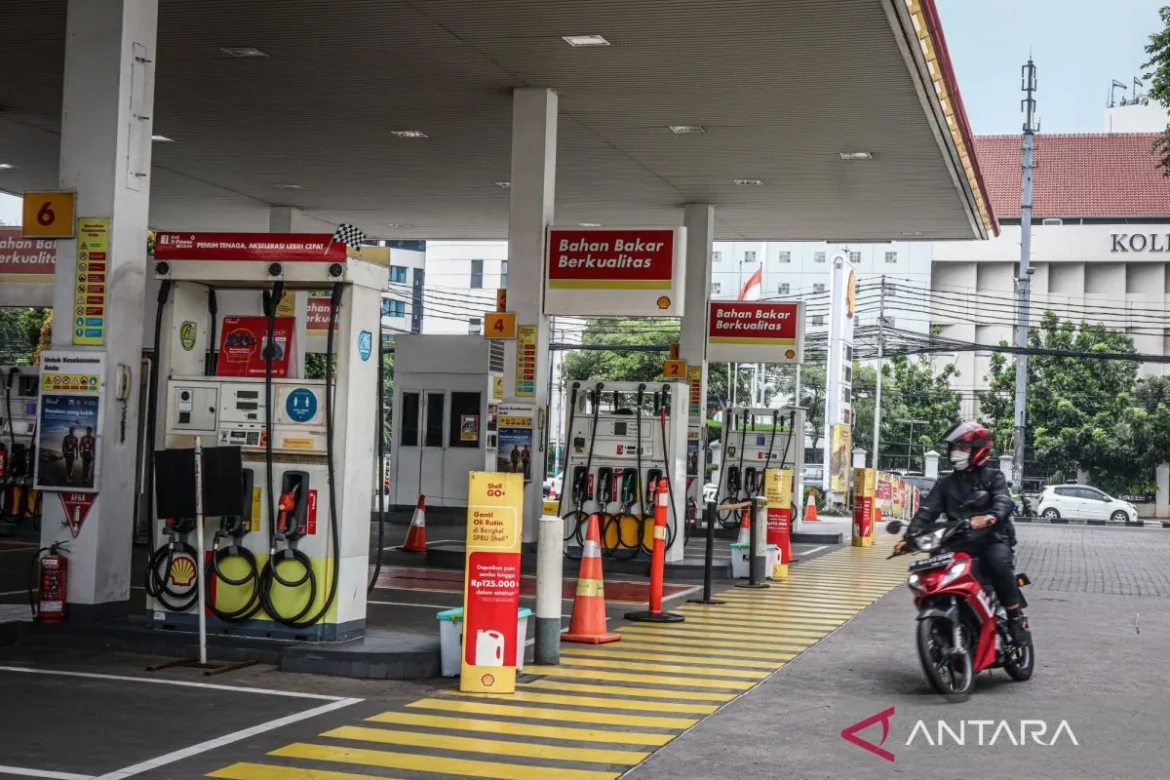
Jakarta, Indonesia – Shell Indonesia has announced a significant adjustment to its fuel prices across all its service stations, effective December 1, 2025. This move, impacting a range of its offerings from Shell Super to the premium V-Power Series, underscores the dynamic nature of the energy market and the company’s commitment to providing tailored fuel solutions for modern vehicles. The price revisions, which see increases across several key products, prompt a renewed focus on the distinct characteristics and benefits of each fuel type, empowering consumers to make informed choices for optimal vehicle performance and economic efficiency.
The revised pricing structure includes Shell Super now retailing at approximately Rp13,000 per liter, Shell V-Power at around Rp13,630 per liter, and V-Power Diesel at approximately Rp15,250 per liter. The highest octane variant, V-Power Nitro+, will also see a price adjustment, settling around Rp13,890 per liter. These adjustments are attributed to evolving supply conditions and updated operational policies within Shell Indonesia’s extensive network.
Understanding the nuances of each fuel offering is no longer merely a matter of preference but has become a strategic imperative for vehicle owners. Each Shell fuel is meticulously formulated to cater to specific engine requirements, daily driving demands, and long-term efficiency goals. As prices fluctuate, a deeper comprehension of these product differentiators can translate into tangible savings and enhanced vehicle longevity.
Understanding the Shell Fuel Portfolio: A Deeper Dive
Shell Indonesia’s commitment to innovation and performance is reflected in its diverse range of fuel products, each designed with specific technological advantages and intended benefits. The company’s official website provides detailed insights into these offerings, which can be broadly categorized as follows:
1. Shell Super: The Foundation of Efficient Driving
Shell Super is engineered to deliver optimal efficiency, balancing engine performance with fuel economy. Its core technology, Dynaflex, plays a crucial role in minimizing internal engine friction. This reduction in friction ensures that the engine operates smoothly and maintains stable performance, whether navigating the smooth flow of highway traffic or enduring the stop-and-go nature of urban congestion.
With a Research Octane Number (RON) of 92, Shell Super is recommended for engines with a compression ratio ranging from 9:1 to 10:1. This makes it a suitable choice for a wide spectrum of vehicles, including the popular Low Cost Green Cars (LCGC) segment and motorcycles with engine capacities exceeding 125cc. For drivers prioritizing fuel savings without compromising daily driving needs, Shell Super has established itself as a reliable and cost-effective RON 92 gasoline option. Its consistent performance contributes to a more predictable fuel consumption pattern, a valuable attribute in an era of fluctuating fuel prices.
2. Shell V-Power: Enhanced Cleaning and Performance
Shell V-Power is formulated for vehicles with higher compression ratios, typically between 11:1 and 12:1, owing to its higher octane rating of RON 95. The key differentiator for V-Power lies in its advanced Dynaflex technology, which incorporates three times the number of cleaning molecules compared to standard fuels. This enhanced cleaning capability is paramount in maintaining the cleanliness of the combustion chamber, a critical factor in optimizing the energy extracted from fuel combustion.
By reducing friction and preventing the buildup of deposits, Shell V-Power helps to keep engine components clean, thereby improving responsiveness and overall efficiency. Studies have indicated that advanced fuel formulations like V-Power can significantly reduce deposit formation – often by as much as 80% – allowing the engine to operate closer to its optimal design parameters. This translates to a more spirited driving experience and potentially lower maintenance costs over the vehicle’s lifespan.
3. Shell V-Power Nitro+: Unleashing Peak Performance
For drivers who demand the utmost in performance, Shell V-Power Nitro+ presents a premium gasoline option fortified with advanced friction-reducing technology. This fuel is specifically designed to unlock greater engine power, accelerate responsiveness, and deliver a smoother, more immediate engine reaction. Introduced to the Indonesian market in April 2021, V-Power Nitro+ targets discerning vehicle owners who aim to not only maintain but actively enhance their vehicle’s performance capabilities.
4. Shell V-Power Nitro+ (Highest Octane Variant): The Pinnacle of Engine Care
Representing the highest octane rating available at Shell service stations, this iteration of V-Power Nitro+ is ideally suited for high-performance engines with compression ratios between 11.3:1 and 12:1, including those equipped with sophisticated fuel injection systems. Its cutting-edge technology is capable of removing up to 100% of engine deposits, effectively restoring the engine’s performance to its factory-new condition. Beyond its cleaning prowess, this premium fuel offers superior protection against corrosion and ensures the long-term cleanliness of critical engine components, leading to more potent power delivery and a noticeably lighter feel during acceleration.
5. Shell V-Power Diesel: Optimizing Diesel Engine Efficiency and Longevity
Shell V-Power Diesel is meticulously crafted for the demands of modern diesel engines. Boasting a cetane number of 51 and a remarkably low sulfur content of just 10 parts per million (ppm), this fuel meets the stringent Euro 5 emission standards. Its advanced cleaning technology targets and removes deposits not only from the Internal Diesel Injector Deposits (IDID) but also from the Exhaust Gas Recirculation (EGR) system. This comprehensive cleaning action enhances combustion efficiency and safeguards the engine against performance-degrading deposits.
The Dynaflex technology present in V-Power Diesel also contributes to maintaining the cleanliness of vital fuel system components, thereby extending engine life and ensuring consistent responsiveness. For diesel vehicle owners, this translates to a cleaner-running engine, improved fuel economy, and a reduced likelihood of costly repairs associated with deposit buildup.
The Broader Context: Fuel Prices, Market Dynamics, and Consumer Impact
The price adjustments by Shell Indonesia are reflective of broader global and national trends influencing the fuel market. Several factors contribute to these shifts:
Global Oil Market Volatility: The price of crude oil, the primary feedstock for gasoline and diesel, is subject to geopolitical events, supply and demand dynamics, and the production decisions of major oil-producing nations. Fluctuations in the international market directly impact the cost of imported refined fuels.
Exchange Rates: As a significant portion of refined fuels are imported, the Indonesian Rupiah’s exchange rate against the US Dollar plays a crucial role in determining the landed cost of these products. A weaker Rupiah generally translates to higher import costs.
Government Policies and Subsidies: While Shell operates in the non-subsidized fuel segment, broader government policies regarding fuel pricing and environmental regulations can indirectly influence market conditions and operational costs for all fuel providers.
Operational Costs: The cost of logistics, refining, distribution, and retail operations, including labor, energy, and infrastructure maintenance, are subject to inflationary pressures and can contribute to price adjustments.
Timeline of Fuel Price Adjustments in Indonesia (Recent Context):
- Pre-December 2025: Fuel prices in Indonesia have historically seen periodic adjustments, often linked to global oil price movements and government policy reviews. Private fuel retailers like Shell, BP, and Vivo typically follow market-driven pricing, while state-owned Pertamina adjusts prices for subsidized fuels and its commercial offerings with varying frequencies.
- December 1, 2025: This specific date marks a significant synchronized adjustment across multiple fuel providers, including Shell, Pertamina (for certain products), and potentially others. This coordinated timing suggests a response to prevailing market conditions and operational considerations. For instance, reports indicate Pertamax, Pertamina’s premium gasoline, is set to increase to Rp12,750 per liter on the same date. The news also highlights that certain Pertamina fuel prices will remain unchanged in specific regions like Aceh, North Sumatra, and West Sumatra, illustrating localized pricing strategies.
Analysis of Implications: Beyond the Pump Price
The decision by Shell Indonesia to adjust fuel prices, coupled with its detailed product education, carries several implications for consumers and the broader automotive landscape:
- Increased Consumer Awareness: The emphasis on understanding fuel types encourages consumers to move beyond price as the sole decision-making factor. This educational push empowers drivers to consider how different fuels impact their vehicle’s health and performance, potentially leading to more cost-effective long-term ownership.
- Reinforcing Brand Differentiation: By highlighting the unique technological advantages of each fuel variant, Shell aims to solidify its position as a provider of premium, performance-oriented fuels. This strategy can attract and retain customers who value these benefits, even at a higher price point.
- Economic Impact on Consumers: For many households, fuel expenditure is a significant portion of their budget. Price increases necessitate a re-evaluation of driving habits and vehicle maintenance. Consumers may explore options for improving fuel efficiency, such as carpooling, optimizing routes, or ensuring their vehicles are properly maintained.
- Environmental Considerations: The mention of Euro 5 standards for V-Power Diesel underscores the industry’s move towards cleaner fuels. As emissions regulations become more stringent globally, the availability and adoption of such fuels are crucial for reducing the environmental footprint of transportation.
- Competitive Landscape: Price adjustments by major players like Shell and Pertamina set benchmarks for the market. This can influence pricing strategies of other fuel retailers and may lead to increased competition based on product quality, service, and loyalty programs.
Conclusion: Navigating the Future of Fuel
In conclusion, Shell Indonesia’s recent fuel price adjustments, effective December 1, 2025, serve as a timely reminder of the complex factors influencing energy costs and the critical importance of informed consumer choices. By clearly articulating the distinct benefits and technological advancements embedded within each of its fuel offerings, Shell empowers vehicle owners to align their fuel selection with their specific needs, driving habits, and long-term vehicle care objectives.
The company’s commitment to innovation, as exemplified by the Dynaflex technology and advanced cleaning formulations across its Super and V-Power series, aims to provide more than just combustion. It aims to enhance engine efficiency, prolong component life, and optimize performance. As the automotive industry continues its evolution towards greater efficiency and reduced emissions, understanding the nuances of fuel technology will become increasingly vital for both individual vehicle owners and the broader transportation sector. The strategic pricing adjustments, viewed within the context of global market dynamics and operational realities, underscore Shell’s ongoing engagement in providing tailored solutions for the Indonesian market, fostering a more conscious and potentially more economical approach to vehicle operation.