
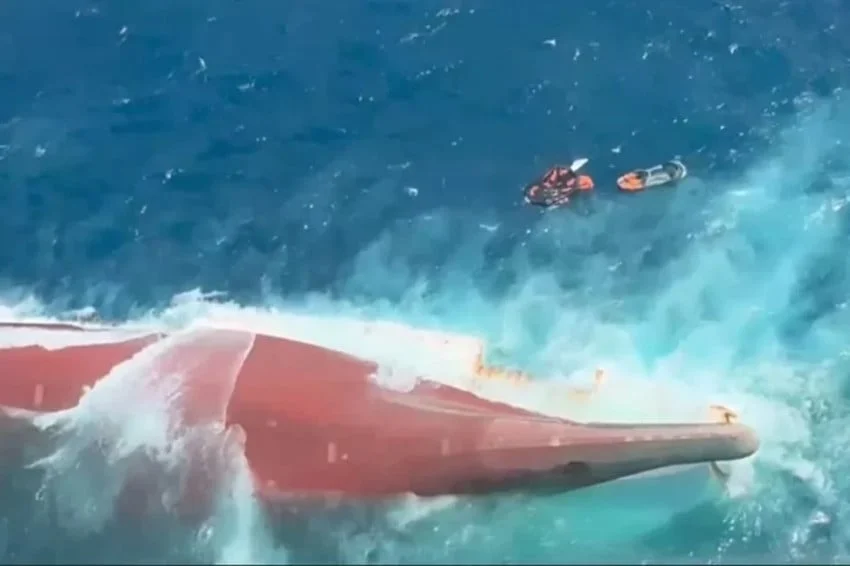
The National Search and Rescue Agency (Basarnas) has officially announced a suspension of underwater search and recovery operations for victims of the KM Virgo Transport 8 tragedy. The vessel, which sank under circumstances currently under investigation, remains a focal point of a massive multi-agency search effort. The decision to halt the deployment of specialized divers was finalized on Monday, September 14, 2026, as meteorological conditions at the site rendered physical underwater intervention too hazardous for rescue personnel.
Head of Basarnas, Air Marshal Mohammad Syafii, confirmed that the highly trained recovery teams—comprising personnel from the Indonesian Air Force’s Special Operations Corps (Korpasgat), the Indonesian Navy (TNI AL), and Basarnas’ own elite diving units—remained on standby but could not be deployed. The maritime environment, characterized by high-velocity currents and limited visibility caused by ongoing turbulent weather, posed a significant risk to the safety of the divers.
A Complex Maritime Emergency
The sinking of the KM Virgo Transport 8 has emerged as one of the most challenging maritime search and rescue operations in recent years. Initial reports indicated that the vessel was carrying a significant number of passengers and crew when it encountered distress. As of the latest official update, the casualty toll stands at six confirmed fatalities, while 108 individuals have been successfully rescued. However, the most concerning figure remains the 129 passengers and crew members who are still unaccounted for, fueling urgency in the recovery efforts.
The tragedy has prompted a nationwide response, drawing resources from various military and civilian agencies. The coordination of such a massive search operation involves intricate logistics, particularly given the location of the wreckage and the depth of the surrounding seabed. The shift from human-led underwater search to technology-assisted operations represents a strategic pivot aimed at balancing the necessity of recovery with the preservation of responder safety.
Technological Shift: The Role of KRI Canopus
In lieu of manual diving, Basarnas is pivoting toward advanced sonar and underwater scanning capabilities. The agency has redirected the KRI Canopus, a specialized Indonesian Navy survey ship, to the site of the wreckage. The vessel is equipped with sophisticated underwater search technology capable of mapping the seabed and identifying physical obstructions or anomalies, such as the submerged hull of the KM Virgo Transport 8.
Air Marshal Syafii stated that the KRI Canopus is currently in transit and is projected to arrive at the coordinate site on Tuesday morning, September 15, 2026. “We are banking on the technological assets aboard the KRI Canopus to provide us with a clearer picture of the wreckage’s orientation and depth,” Syafii explained. “Once the ship is on-site, we will transition to an underwater scanning phase. This will allow us to assess the integrity of the vessel and determine the safest path forward for recovery efforts, minimizing further risks to our teams.”
Chronology of the Incident
The timeline of the KM Virgo Transport 8 incident highlights the rapid escalation of the crisis.
- Initial Distress Signal: The vessel issued a distress call following reports of mechanical failure and water ingress during a period of inclement weather.
- Emergency Response: Within hours of the signal, local maritime authorities and neighboring vessels mobilized to the scene, facilitating the rescue of the 108 survivors.
- SAR Mobilization: Basarnas launched a full-scale Search and Rescue (SAR) mission, deploying naval assets, aircraft for aerial reconnaissance, and specialized diving teams.
- Weather Deterioration: By September 14, deteriorating sea states forced the suspension of manned diving operations.
- Transition to Remote Sensing: The decision to utilize the KRI Canopus was finalized to maintain operational momentum despite environmental constraints.
The Broader Context of Maritime Safety
The sinking of the KM Virgo Transport 8 has reignited public and governmental debates regarding maritime safety regulations in Indonesian waters. Critics and maritime safety experts have pointed to the inherent dangers of operating passenger vessels during the peak monsoon or transition seasons, where sudden weather shifts can compromise the stability of aging or overloaded ships.
While the primary focus remains the recovery of the missing, the National Transportation Safety Committee (KNKT) is expected to launch a comprehensive investigation into the seaworthiness of the vessel, the adherence to safety protocols, and the influence of weather forecasts on the decision to embark on the voyage. The high number of missing persons highlights potential gaps in passenger manifest management and emergency evacuation procedures, which will likely be subject to intense scrutiny in the coming months.
Logistical and Humanitarian Challenges
The humanitarian impact of the incident is profound, with families of the missing gathered at regional command posts, waiting for updates. Basarnas has committed to maintaining transparent communication with the families, providing daily briefings on the progress of the search. However, the physical reality of the ocean environment presents a significant barrier. Searching for a sunken vessel in deep or murky waters is a painstaking process that requires precision, patience, and stable conditions.
The involvement of multiple agencies, including the TNI AL and Korpasgat, underscores the gravity of the situation. The Indonesian government has signaled that no efforts will be spared in the recovery process, but authorities are also urging the public to exercise patience as the search teams navigate the limitations imposed by the sea.
Analysis of Future Implications
The implications of the KM Virgo Transport 8 tragedy are multifaceted:
- Safety Policy Overhaul: The disaster is likely to prompt stricter enforcement of vessel capacity limits and real-time weather monitoring requirements for commercial sea travel.
- Investment in SAR Infrastructure: The reliance on specialized vessels like the KRI Canopus demonstrates the necessity for further investment in remote sensing technology for maritime emergencies. The ability to scan large areas of the seafloor without exposing human divers to high-risk environments is becoming a critical component of modern search and rescue doctrine.
- Legal Accountability: The investigation into the incident will likely lead to legal proceedings concerning the ship’s operator, focusing on potential negligence regarding maintenance or load management.
As the KRI Canopus nears the site, the atmosphere at the command center remains one of cautious anticipation. The transition to underwater technology is a necessary compromise in an increasingly difficult environment. For the families of the 129 missing, the arrival of the vessel on Tuesday represents a glimmer of hope that the search will yield answers, providing closure to a tragedy that has left a somber mark on the nation’s maritime history.
Basarnas continues to coordinate with regional maritime bureaus to ensure that all survivor data and passenger manifests are reconciled. The priority remains the search, but as the days pass, the logistical complexities of deep-sea recovery will continue to test the limits of the nation’s search and rescue capabilities. The international community and regional partners continue to monitor the situation, as the incident serves as a stark reminder of the dangers of seafaring in the region and the ongoing challenges of ensuring safety on the high seas.
With the weather expected to remain unpredictable, the mission will continue to adapt. The dedication of the search teams, despite the frustration of being grounded by nature, remains high, reflecting the gravity of their mission to bring as many individuals home as possible. As Tuesday morning approaches, the focus shifts from the uncertainty of the sea to the precision of the technology that will hopefully unlock the secrets of the KM Virgo Transport 8’s final moments.
