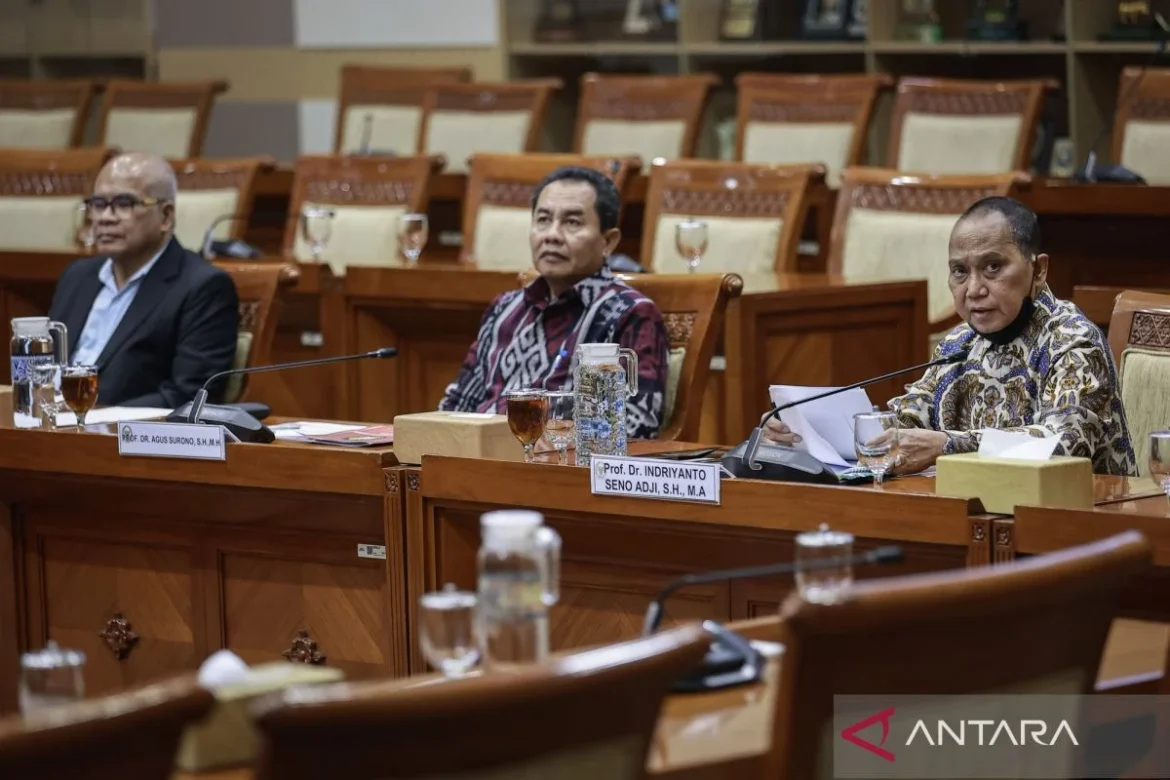
The ongoing discourse surrounding transparency, governance, and the rule of law in Indonesia has once again brought the long-stalled Asset Forfeiture Bill (Rancangan Undang-Undang Perampasan Aset) to the forefront of the national legislative agenda, with the House of Representatives (DPR) targeting its final passage by December 2026. For more than a decade, the legislative initiative has faced extensive debates, bureaucratic hurdles, and political friction. However, mounting pressure from civil society organizations, law enforcement agencies, and international commitments has breathed new life into the discussions. At its core, the proposed legislation aims to fundamentally transform how the state combats white-collar crime by shifting the focus from merely punishing offenders through incarceration to aggressively tracking, seizing, and recovering state assets siphoned off through illicit activities.
As financial crimes grow increasingly sophisticated, traditional punitive measures—such as imprisonment and conventional fines—have proven insufficient in repairing the extensive fiscal damage inflicted on the public purse. Consequently, state institutions, including the Corruption Eradication Commission (KPK), the Attorney General’s Office, and the Indonesian National Police, have intensified their advocacy for a comprehensive legal framework that empowers the state to reclaim stolen wealth efficiently. With the target date set for late 2026, stakeholders across the political and legal spectrum are scrutinizing the text of the bill to ensure it provides robust mechanisms for asset recovery while incorporating rigorous safeguards against executive overreach and arbitrary enforcement.
A Decade-Long Legislative Journey and the 2026 Target
The genesis of the Asset Forfeiture Bill traces back to 2008, when legal experts and anti-corruption advocates first conceptualized a specialized legal instrument to target the proceeds of crime independently of criminal convictions. Despite being intermittently listed in the National Legislation Program (Prolegnas) over the subsequent years, the bill languished in parliamentary committees due to varying political alignments, concerns over constitutional rights, and fears of potential misuse by authorities.
The momentum shifted dramatically heading into 2026. Recognizing the limitations of current laws in capturing hidden offshore assets and complex money-laundering networks, the Indonesian legislature, specifically House Commission III overseeing legal affairs, reaffirmed its commitment to passing the bill. Lawmakers have set a strict internal deadline of December 2026 to resolve remaining debates, harmonize conflicting statutes, and enact the law. This renewed push reflects a broader governmental strategy to align Indonesia’s domestic enforcement mechanisms with global anti-corruption standards, most notably the United Nations Convention Against Corruption (UNCAC).
Financial Imperatives: The Scale of Asset Recovery in Indonesia
The urgency driving the 2026 legislative push is anchored in compelling financial data regarding state losses and recovery rates. While sending corrupt officials to prison remains a cornerstone of criminal justice, incarceration alone does not automatically replenish the state treasury. According to official performance metrics released by the KPK, asset recovery figures reached Rp1.53 trillion throughout 2025, marking a significant increase from the Rp739.6 miliar recorded in 2024.
When factoring in broader law enforcement operations coordinated across the Attorney General’s Office, the KPK, and the National Police, the total recovered assets from corruption cases reached an impressive Rp28.6 trillion over the course of 2025. Despite these substantial sums, billions of rupiah remain unrecovered, hidden behind corporate veils, luxury real estate, and foreign bank accounts. Proponents of the Asset Forfeiture Bill argue that these staggering figures underscore the necessity of an advanced legal framework designed expressly for asset tracing and recovery, ensuring that the financial incentive behind corruption is systematically dismantled.
Bridging Legal Loopholes: The Need for Non-Conviction Based Forfeiture
Under the prevailing Indonesian legal framework, the confiscation of assets is predominantly tied to a definitive criminal court verdict against an individual, a paradigm known in legal terminology as conviction-based forfeiture. While effective in straightforward cases, this system encounters severe bottlenecks when suspects flee the jurisdiction, pass away before trial, become medically unfit, or successfully shield their identities behind a network of proxies.
To address these vulnerabilities, the proposed Asset Forfeiture Bill introduces the concept of non-conviction based forfeiture (NCBF). This mechanism allows the state to initiate civil or in rem proceedings directly against property or assets suspected of being derived from criminal acts, independent of whether a specific individual has been successfully prosecuted and convicted. By targeting the tainted property itself rather than the person, the state can neutralize illegal wealth even when the perpetrator is beyond the reach of local law enforcement.
Legal scholars note that NCBF is already a recognized tool in numerous international jurisdictions and is strongly endorsed by global bodies such as the Financial Action Task Force (FATF). However, its introduction in Indonesia requires meticulous legislative drafting to prevent legal ambiguities and ensure that state power is exercised justly.
Safeguards, Human Rights, and the Rule of Law
The inclusion of non-conviction based forfeiture has inevitably sparked rigorous debates concerning civil liberties, constitutional rights, and the potential for abuse. Responding to these concerns, members of House Commission III and independent legal experts have repeatedly emphasized that the Asset Forfeiture Bill must not become an instrument of political oppression or arbitrary state power.
To maintain the integrity of the law, the legislative framework incorporates strict evidentiary standards, judicial oversight, and clearly defined channels for legal recourse. Paramount among these safeguards is the absolute protection of third parties who possess a bona fide (good faith) interest in the property—such as innocent spouses, business partners, or lenders who acquired assets without knowledge of their illicit origin. Furthermore, civil society organizations have advocated for absolute transparency throughout the drafting process, demanding open access to draft iterations and opportunities for public participation to ensure accountability and balance state interests with constitutional protections.
Alignment with International Commitments: The UNCAC Framework
Indonesia’s legislative push is not merely a domestic endeavor; it is part of a broader international obligation. By ratifying the United Nations Convention Against Corruption (UNCAC) via Law Number 7 of 2006, the Indonesian government formally committed to implementing robust asset recovery measures as a fundamental pillar of international anti-corruption cooperation.
Cross-border corruption often involves multi-jurisdictional complexities, where ill-gotten gains are rapidly transferred across international borders to obscure their origins. The absence of a domestic non-conviction based forfeiture law has historically hampered Indonesia’s ability to cooperate effectively with foreign governments seeking to repatriate assets hidden within the archipelago, or vice versa. Enacting the Asset Forfeiture Bill will bridge this legislative gap, providing Indonesian authorities with the legal standing required to engage in international asset tracing, mutual legal assistance (MLA), and the successful repatriation of state wealth from foreign havens.
Institutional Support and Stakeholder Perspectives
As the December 2026 deadline approaches, the legislative process has garnered widespread backing from key law enforcement agencies and anti-corruption watchdogs. The National Police, through the Corruption Crime Eradication Directorate (Kortastipidkor), has openly voiced its support for the enactment of the bill, noting that existing laws often leave investigators empty-handed when facing organized criminal syndicates that separate criminals from their physical assets.
Similarly, economic policymakers and regulatory bodies have weighed in on the scope of the bill. Discussions have extended to addressing financial crimes such as tax evasion and illicit enrichment within the broader framework of asset recovery. Experts stress that for the law to succeed, its application must be strictly governed by principles of economic justice, administrative transparency, and institutional professionalism.
Conclusion and Broader Implications
The Asset Forfeiture Bill represents a critical turning point in Indonesia’s ongoing battle against systemic corruption. Beyond the immediate objective of recovering state financial losses, the legislation serves as a deterrent that fundamentally alters the cost-benefit analysis for potential offenders. By cutting off access to accumulated wealth, the state removes the primary motivation for engaging in corrupt practices.
Nevertheless, the true test of the legislation will lie not only in its formal enactment by December 2026, but in its meticulous implementation. The effectiveness of the future law will ultimately depend on the professionalism of judges, prosecutors, and investigators, the rigorous enforcement of oversight mechanisms, and the unwavering protection of civil liberties. If properly balanced, the Asset Forfeiture Bill will fortify Indonesia’s legal architecture, ensuring that justice is measured not only by time spent behind bars, but by the restoration of public resources to the nation.