
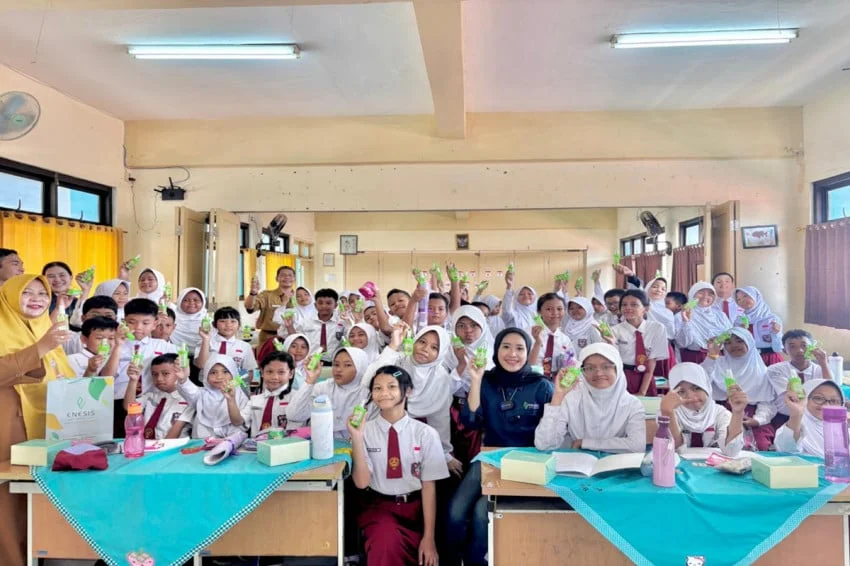
The global observance of Global Handwashing Day in October 2026 served as a vital reminder of the fundamental role that basic hygiene plays in public health, prompting targeted interventions in educational institutions across Indonesia. Recognizing that the foundation of a healthy society is built during early childhood, the Enesis Group—operating through its prominent antiseptic brand Antis—executed a targeted Corporate Social Responsibility (CSR) initiative titled the "Gerakan Tangan Bersih" (Clean Hands Movement). This multi-school campaign was deliberately designed to transition theoretical knowledge about personal hygiene into practical, everyday habits among elementary school students in Jakarta.
The initiative unfolded across two key educational facilities in the nation’s capital: SDN 20 Utan Kayu Selatan in East Jakarta, where the program was launched on October 13, 2026, and SDN 02 Mampang Prapatan in South Jakarta, which hosted the event on the official Global Handwashing Day itself, October 15, 2026. By engaging directly with young learners through interactive education, the appointment of student hygiene representatives known as "Class Ambassadors" (Duta Kelas), and the provision of essential sanitation infrastructure, the campaign sought to foster a lasting culture of cleanliness within the school environments.
The Chronology and Implementation of the 2026 Campaign
The rollout of the "Gerakan Tangan Bersih" program was meticulously planned to coincide with the global momentum of Handwashing Day celebrations, maximizing educational impact and public awareness.
The campaign commenced on Monday, October 13, 2026, at SDN 20 Utan Kayu Selatan. Representatives from Enesis Group and the Antis brand team arrived early in the morning to conduct interactive educational sessions. Rather than relying solely on traditional lectures, facilitators utilized engaging storytelling, visual demonstrations, and participatory games to teach students the proper, step-by-step method of handwashing as recommended by global health authorities. Children were shown how to thoroughly clean the palms, the backs of the hands, between the fingers, and under the fingernails using soap and running water, as well as the correct application of hand sanitizer when water was temporarily unavailable.
Following the initial launch in East Jakarta, the campaign moved to South Jakarta on Wednesday, October 15, 2026—the actual date designated globally for Global Handwashing Day. The event at SDN 02 Mampang Prapatan mirrored the successful framework established two days prior, incorporating assembly-style demonstrations, hygiene quizzes, and the distribution of sanitation kits.
A critical component of the chronology in both schools was the establishment of peer leadership. At the conclusion of the educational workshops, select students were officially appointed as Class Ambassadors. These young leaders were tasked with championing daily hygiene practices among their peers, reminding classmates to wash their hands before consuming meals after recess, and after using restroom facilities. This peer-to-peer approach was engineered to ensure the messaging endured long after the corporate representatives departed the school grounds.
Background Context and Public Health Imperatives
Global Handwashing Day is an international advocacy day dedicated to increasing awareness and understanding about the importance of handwashing with soap as an easy, effective, and affordable way to prevent diseases and save lives. First initiated in 2008 by the Global Public-Private Partnership for Handwashing, the annual event targets communities, policymakers, and educational institutions worldwide.
In developing nations and densely populated urban centers like Jakarta, maintaining rigorous hand hygiene among school-aged children remains a critical public health priority. Elementary schools are high-contact environments where children frequently touch shared surfaces—such as desks, playground equipment, and learning materials—before touching their faces, eyes, and mouths. Consequently, schools can inadvertently become vectors for the rapid transmission of communicable illnesses, including common gastrointestinal infections, diarrheal diseases, and respiratory viruses.
Public health research consistently demonstrates that hand hygiene education significantly reduces absenteeism in schools. When children fall ill less frequently, their educational continuity improves, allowing them to remain engaged in their academic development. Furthermore, health habits formed during formative primary school years tend to persist into adolescence and adulthood, creating generational improvements in community health literacy.
Bridging the Gap Between Knowledge and Habit
A central premise of the Enesis Group and Antis CSR initiative is addressing the well-documented gap between health awareness and actual behavioral execution. Public health surveys frequently indicate that a high percentage of children and adults understand they should wash their hands; however, consistent execution—especially at critical junctures such as before eating and after using the restroom—remains low without adequate infrastructure and daily reinforcement.
To bridge this gap, the program integrated a twofold strategy: cognitive reinforcement and environmental enablement. Cognitively, the interactive sessions and the appointment of Class Ambassadors ensured that hygiene remained a frequent topic of conversation and peer accountability within the classrooms. Environmentally, the campaign provided tangible support by supplying necessary sanitation facilities and products, such as portable handwashing stations, liquid soap, and Antis hand sanitizer bottles for classroom use.
By placing the tools for cleanliness directly within the students’ daily sphere of activity, the initiative removed physical barriers to hygiene compliance. When soap and hand sanitizer are readily accessible, the friction of executing the behavior is dramatically reduced, transforming an occasional chore into an automatic, reflexive habit.
Corporate Social Responsibility and Community Engagement
The execution of the "Gerakan Tangan Bersih" campaign highlights a growing trend among fast-moving consumer goods (FMCG) corporations in Indonesia to leverage their brand equity for targeted public health education. Corporate Social Responsibility initiatives centered around hygiene not only fulfill corporate citizenship objectives but also align brand missions with tangible societal benefits.
By utilizing Antis—a market leader in antiseptic products—the Enesis Group was able to deploy specialized sanitation assets and expert personnel directly to the grassroots level. School administrators, teachers, and parents at both SDN 20 Utan Kayu Selatan and SDN 02 Mampang Prapatan expressed strong support for the initiative, noting that corporate partnerships provide valuable resources that complement the formal school curriculum.
Teachers observed that children respond enthusiastically to external engagement programs that break the monotony of standard classroom routines. The incorporation of visual aids, games, and gifts of hygiene products created a positive psychological association with cleanliness, framing handwashing not as a tedious rule imposed by authority figures, but as a fun, empowering personal choice linked to health and well-being.
Broader Implications and Future Outlook
The long-term implications of targeted school hygiene programs extend far beyond individual classroom walls. When children internalize clean hand practices, they frequently act as health change agents within their own households. Habits learned at school—such as washing hands immediately upon returning home from public spaces or before assisting with family meals—are routinely communicated to parents and younger siblings, effectively multiplying the educational impact across entire communities.
Public health analysts emphasize that sustained reductions in preventable illnesses rely heavily on such decentralized, community-level interventions. While governmental bodies and health ministries establish macro-level health policies, the operationalization of these policies at the neighborhood and school level requires active collaboration between civil society, educational authorities, and the private sector.
As Indonesia continues to prioritize human capital development and public health resilience, initiatives like the Enesis Group’s Global Handwashing Day campaign provide a scalable model for future interventions. By combining educational outreach, physical infrastructure support, and peer-led accountability, programs of this nature successfully lay the groundwork for a healthier, more resilient generation of students capable of sustaining lifelong practices of personal hygiene and disease prevention.
