
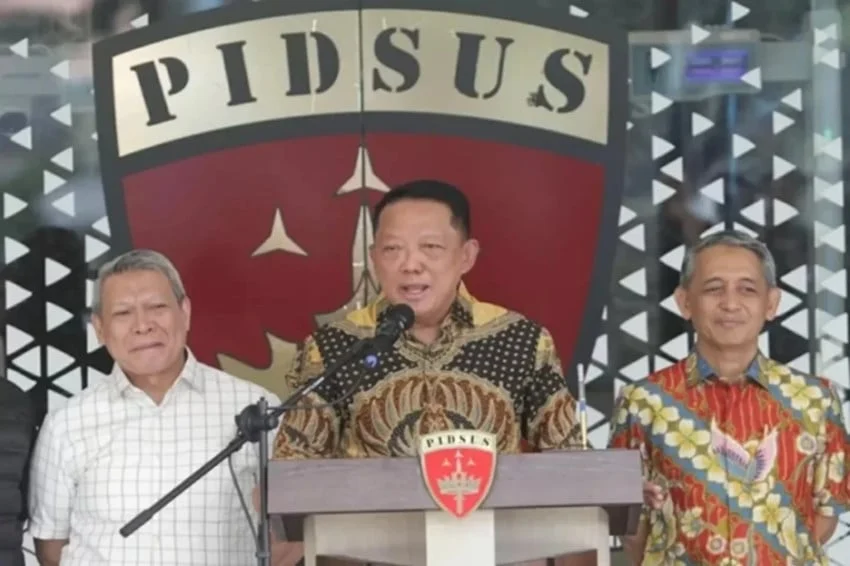
Jakarta – Febrie Adriansyah, the former Junior Attorney General for Special Crimes (Jampidsus) at the Attorney General’s Office (Kejagung), has reportedly appeared before the special investigation team designated as "Tim 9" for questioning on Friday, July 24, 2026. The appearance comes after Adriansyah previously missed a scheduled examination on Wednesday, July 22, 2026.
The confirmation of Adriansyah’s attendance was provided by the Head of the Legal Information Center (Kapuspenkum) of the Attorney General’s Office, Anang Supriatna. "He has attended the examination," Supriatna stated in a brief message received on Friday, July 24, 2026. According to Supriatna, Adriansyah arrived at the main building of the Attorney General’s Office at approximately 1:00 PM Western Indonesian Time (WIB) and the examination commenced shortly thereafter.
This development marks a significant step in an ongoing internal inquiry within the Attorney General’s Office, the specifics of which have been the subject of considerable media attention and public speculation. The "Tim 9" is reportedly investigating matters related to a new investigation order (sprindik) concerning a money laundering case (TPPU).
Background of the Investigation and Febrie Adriansyah’s Role
Febrie Adriansyah held the pivotal position of Jampidsus, a role responsible for overseeing all special crimes investigations, including corruption, terrorism financing, and money laundering, at the Attorney General’s Office. His tenure in this position was marked by a series of high-profile investigations and arrests, aimed at bolstering the fight against economic crimes in Indonesia. The nature of his responsibilities meant that he was privy to sensitive information and was a key decision-maker in the prosecution of complex financial crimes.
The current examination of Adriansyah by Tim 9 is understood to be connected to the issuance of a new investigation order (sprindik) pertaining to a money laundering case. The precise details of this case and the reasons for the issuance of a new sprindik, particularly after Adriansyah’s departure from his Jampidsus role, have not been fully disclosed by the Attorney General’s Office. However, reports suggest that the investigation may be delving into procedural aspects or potential irregularities that arose during the handling of the case.
Chronology of Events
The timeline leading up to Adriansyah’s appearance is crucial for understanding the context of the examination:
- Wednesday, July 22, 2026: Febrie Adriansyah was initially scheduled to be questioned by Tim 9. However, he did not appear for this scheduled examination, leading to the rescheduling of his summons.
- Friday, July 24, 2026: Adriansyah was again summoned for questioning. He reportedly arrived at the Attorney General’s Office at 1:00 PM WIB and subsequently underwent examination by the special investigation team.
The missed appointment on Wednesday, July 22, likely intensified scrutiny and raised questions about the reasons for his absence. His subsequent compliance with the rescheduled summons suggests a willingness to address the concerns raised by the investigation team.
Supporting Data and Legal Framework
The Attorney General’s Office operates under Law Number 16 of 2004 concerning the Attorney’s Office of the Republic of Indonesia, which grants broad powers in prosecution and investigation. The establishment of special investigative teams, such as "Tim 9," is often a procedural mechanism employed by the institution to conduct internal reviews or to investigate complex cases requiring specialized attention.
Money laundering (TPPU) is a serious offense in Indonesia, governed by Law Number 8 of 2010 on the Prevention and Eradication of Money Laundering Crimes. This law outlines stringent penalties for individuals and entities involved in concealing or disguising the origins of illegally obtained funds. The investigation of such cases often involves intricate financial tracing and analysis, requiring meticulous attention to procedural correctness.
The issuance of a "sprindik" (surat perintah penyidikan) is a formal document that initiates an investigation into a specific alleged crime. Its validity and the process surrounding its issuance are critical components of due process. Any review of a sprindik, particularly one issued in a high-stakes case, would naturally involve examining the evidence, legal basis, and procedural steps taken by the investigators.
Potential Implications and Analysis
The examination of a former high-ranking official like Febrie Adriansyah by an internal team within the Attorney General’s Office carries significant implications.
Firstly, it underscores the Attorney General’s Office’s commitment to internal oversight and accountability. Even former leaders are subject to scrutiny if their actions or decisions during their tenure are deemed to warrant investigation. This can foster public trust by demonstrating that no individual is above reproach.
Secondly, the investigation into a money laundering case and the related sprindik could shed light on potential challenges or complexities within the Indonesian judicial system’s handling of financial crimes. It might reveal issues related to evidence gathering, inter-agency cooperation, or the legal interpretation of money laundering statutes.
Thirdly, the outcome of this investigation could have broader implications for the ongoing fight against corruption and financial crimes in Indonesia. If the investigation uncovers systemic issues or procedural flaws, it could lead to reforms aimed at strengthening the effectiveness and integrity of the prosecution service. Conversely, if the investigation concludes without significant findings, it could serve to reinforce the existing processes.
Official Responses and Public Reaction
While the Attorney General’s Office has confirmed Adriansyah’s appearance, detailed statements regarding the substance of the examination or the specific allegations being investigated remain limited. This is a common practice in ongoing investigations to avoid jeopardizing the process or prejudicing potential outcomes.
The public and legal community will likely be awaiting further updates from the Attorney General’s Office. Reactions are expected to range from support for the investigation as a necessary measure for transparency to concerns about potential political interference or undue pressure on the institution.
Previous instances of high-profile investigations within law enforcement agencies in Indonesia have often generated intense public interest and media coverage. The role of Febrie Adriansyah as a former Jampidsus, a position of considerable authority, naturally amplifies this attention.
Broader Context of Anti-Corruption Efforts
Indonesia has been actively engaged in combating corruption and financial crimes for many years. The Attorney General’s Office, along with other agencies like the Corruption Eradication Commission (KPK), plays a crucial role in these efforts. The effectiveness of these institutions is often measured by their ability to prosecute high-profile cases, recover stolen assets, and implement reforms that prevent future corruption.
The current examination of Adriansyah, while an internal matter, occurs within this broader context. It serves as a reminder that the fight against corruption is an ongoing process that requires constant vigilance and a commitment to upholding the highest standards of integrity within the very institutions tasked with enforcing the law. The transparency and thoroughness with which this investigation is conducted will undoubtedly be observed closely by both domestic and international stakeholders invested in Indonesia’s progress in good governance.
