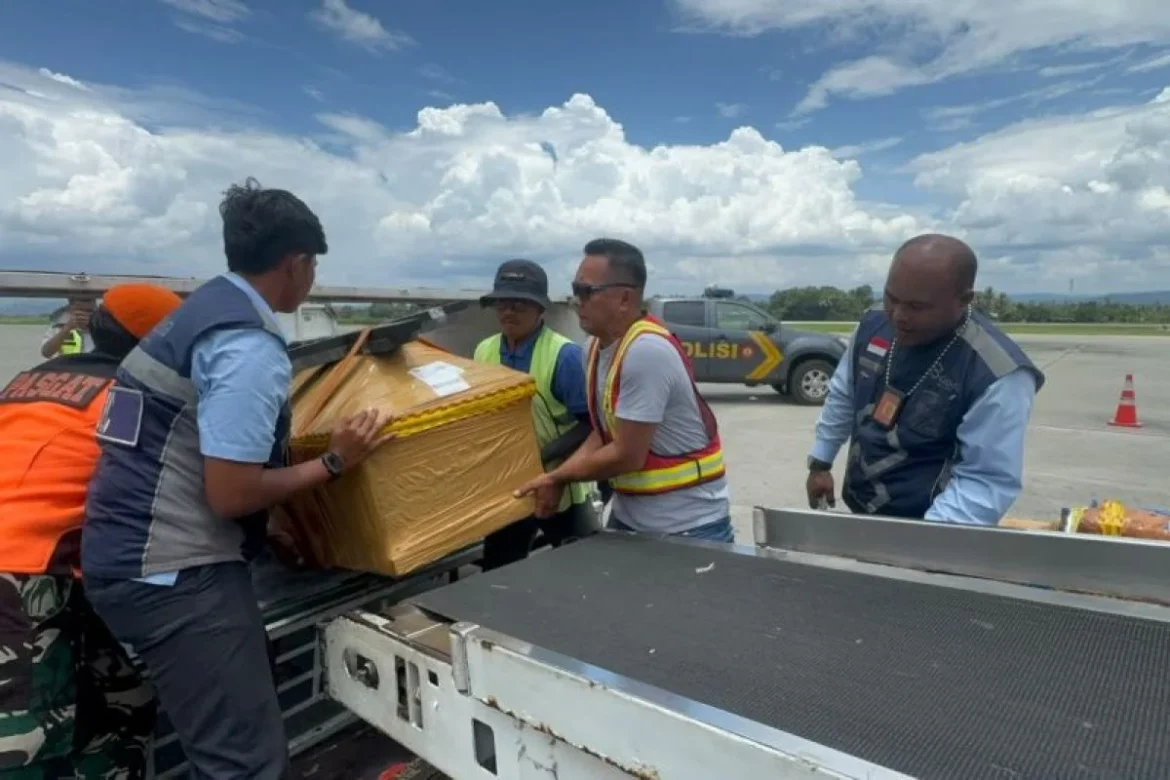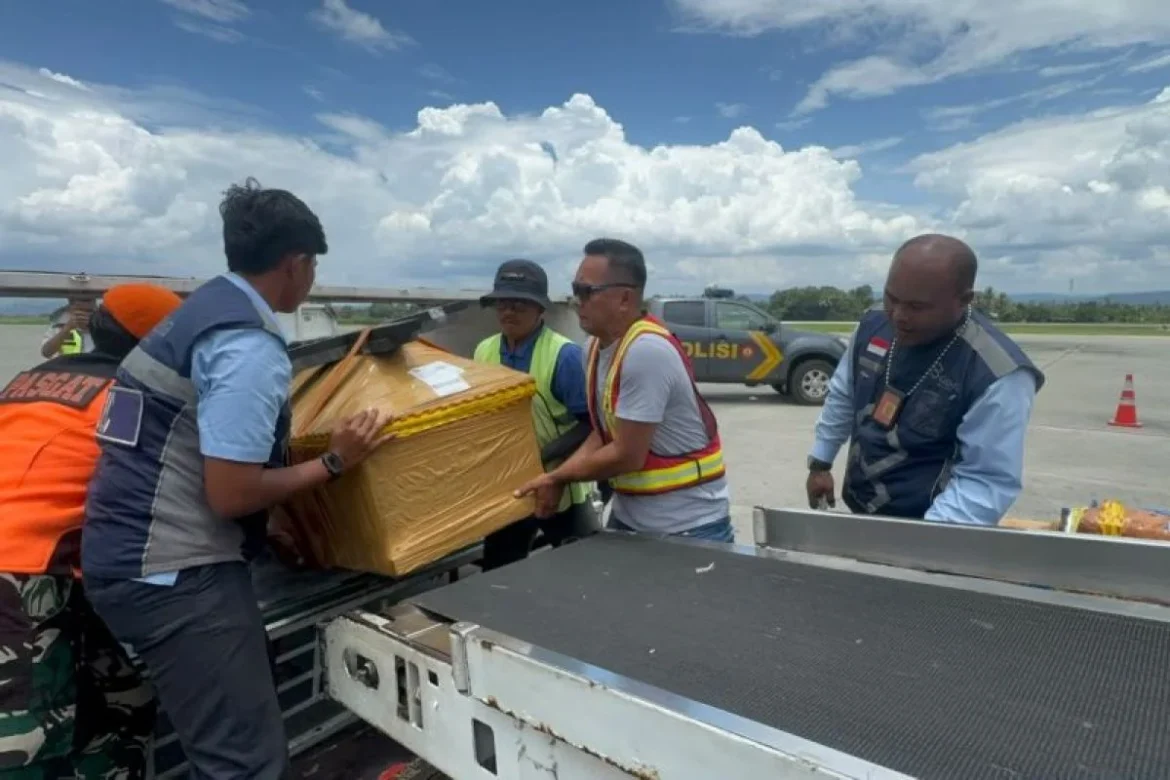
The fragile security situation in Indonesia’s easternmost provinces has claimed yet another civilian life, highlighting the persistent dangers faced by transport workers operating in remote highland regions. Aris Sanda, a long-distance travel driver originally from Toraja, South Sulawesi, and affectionately known as Bapak Tasya, met a tragic fate in the rugged terrain of Papua Pegunungan. His journey—a routine professional trip transporting passengers and logistics from Wamena toward Mbua—was violently disrupted by an unidentified armed group. What began as a standard transit operation culminated in an abduction, a gruesome execution, and the destruction of evidence via vehicle arson near the iconic Lake Habema.
This incident has once again thrust the complex security matrix of the Papua conflict into the national spotlight, drawing condemnation from lawmakers, reigniting debates regarding the safety of civilian infrastructure workers, and prompting intense scrutiny from security forces tasked with maintaining law and order in the region. As investigators piece together the sequence of events, the broader implications of targeted violence against civilian service providers continue to resonate deeply across the archipelago.
Main Facts and Incident Overview
The harrowing sequence of events unfolded along the critical transport corridor connecting Wamena, the economic hub of Jayawijaya Regency, to the interior district of Mbua. Aris Sanda was operating a commercial public transport vehicle, locally referred to as a "lajuran," carrying a full load of passengers. Lajuran drivers serve as vital lifelines for remote communities, transporting not only people but also essential goods, foodstuffs, and small-scale logistical supplies across treacherous mountain passes where formal public transport infrastructure remains sparse or entirely absent.
According to official briefings provided by the Indonesian Military (TNI) Command Operations (Koops) Habema, the vehicle was intercepted on Tuesday, September 15, at approximately 06:00 Eastern Indonesia Time (WIT). The interception occurred near the Lake Habema intersection in Gunung Boy, Trikora District, Jayawijaya Regency. An armed faction stopped the convoy, proceeded to interrogate the driver and passengers, and eventually ordered the passengers to turn back toward Wamena.
However, the armed individuals singled out Aris Sanda, separating him from the rest of the traveling party. He was subsequently dragged deeper into the remote areas surrounding Lake Habema, where he was subjected to captivity before being killed. The following day, military sweeps uncovered his charred remains locked inside his thoroughly burned vehicle.
Detailed Chronology of Events
A meticulous reconstruction of the timeline highlights the rapid and violent evolution of the crisis from a routine transit stop into a fatal hostage scenario:
- Tuesday, September 15, 06:00 WIT: Aris Sanda departs Wamena for Mbua carrying passengers in his commercial transport vehicle.
- Tuesday, September 15, Morning: The vehicle is intercepted at the Gunung Boy intersection near Lake Habema by an armed group. Passengers are interrogated and sent back toward Wamena on foot or via alternative means, while Aris is detained and led away.
- Tuesday, September 15, Afternoon/Evening: Unverified video footage begins circulating across digital platforms and local media outlets. The footage depicts Aris Sanda standing in the middle of a roadway surrounded by armed individuals, forced to hold the separatist Bintang Kejora (Morning Star) flag and deliver coerced statements concerning political dynamics in Papua.
- Wednesday, September 16, Morning: Koops TNI Habema personnel launch a search and rescue, transitioning into a tactical security sweep of the rugged terrain. Initial search efforts face severe environmental impediments, notably heavy fog, freezing highland temperatures, and dense cloud cover that severely restrict visibility around Lake Habema.
- Wednesday, September 16, Afternoon: Joint security forces successfully locate the target area, discovering a completely gutted, burnt-out vehicle. Aris Sanda’s remains are found inside the wreckage.
- Wednesday, September 16, Evening: Forensic recovery teams extract the remains, transporting them to the Wamena Regional General Hospital (RSUD) for post-mortem examinations and identification procedures.
- Thursday, September 17: Joint investigative teams—comprising military investigators and the Indonesian National Police (Polri)—commence formal crime scene investigations (Olah TKP), gathering physical evidence, interviewing surviving passengers, and analyzing digital media trails. Preparations are simultaneously made to repatriate the victim’s body to his home region in Makassar and ultimately Toraja for final funeral rites.
Background Context: The Strategic and Perilous Geography of Jayawijaya and Ndugama
To fully understand the gravity of the incident, one must examine the geopolitical and geographical realities of Papua Pegunungan (Highland Papua). The route from Wamena to Mbua serves as a critical economic artery linking major administrative towns with isolated interior settlements in neighboring regencies such as Ndugama. However, navigating these highlands requires traversing extreme topographical features, including dense rainforests, steep cliffs, and high-altitude alpine zones like the Lake Habema plateau, which sits at over 3,200 meters above sea level.
For years, this region has been a stronghold for armed separatist factions, specifically components operating under the umbrella of the West Papua National Liberation Army (TPNPB), historically linked to the Free Papua Organization (OPM)—specifically identified by security analysts in this case as elements of Kodap III Ndugama. These groups frequently target infrastructure projects, commercial supply lines, and non-indigenous or migrant workers whom they accuse of acting as intelligence assets or participating in the economic integration of the region into the Indonesian state.
Transport workers like Aris Sanda occupy an extraordinarily vulnerable position in this ongoing conflict. Operating out of necessity to earn a livelihood, they traverse hostile zones where state authority is periodically contested. The targeting of civilian drivers not only terrorizes local communities dependent on logistical lifelines but also disrupts supply chains, leading to localized shortages of basic commodities and skyrocketing transportation costs throughout the interior districts.
Investigation, Digital Footprints, and Official Responses
The investigation into Aris Sanda’s murder has moved across multiple fronts, encompassing physical forensics, digital intelligence, and military counter-operations. Following the discovery of his remains, police and military investigators secured the crime scene to recover ballistic evidence, vehicular remnants, and personal belongings. The primary objective has been to establish the precise cause of death—differentiating between injuries sustained during a potential execution-style shooting and those caused by the subsequent vehicle fire.
Crucial to the investigative puzzle is the digital footprint left by the perpetrators. The emergence of video footage showing Aris Sanda surrounded by armed combatants and forced to handle separatist symbols points to a calculated propaganda effort by the armed group. Law enforcement agencies and cyber-crime units are thoroughly examining these recordings to identify individual perpetrators visible in the frames, trace the dissemination networks, and verify the timeline of the coercion leading up to his execution.
Colonel Inf M. Wirya Arthadiguna, speaking on behalf of Koops TNI Habema, confirmed that military and police units are intensifying pursuit operations against the responsible factions. Authorities have underscored that the deliberate targeting of an unarmed civilian engaged in public transport constitutes a serious violation of human rights and an act of terrorism directed against innocent members of the public.
Broader Socio-Political Implications and Reactions
The violent death of the Toraja travel driver has reverberated far beyond the borders of Papua Pegunungan, triggering national concern and drawing sharp rebukes from high-ranking political institutions in Jakarta.
Within the Indonesian House of Representatives (DPR RI), members of Commission I—which oversees defense, foreign affairs, and information—issued strong statements condemning the escalation of violence against civilian workers. Lawmakers emphasized that the continuous targeting of transport workers, health professionals, and agricultural civil servants undermines civil security and stalls regional development initiatives. They urged the central government and security apparatus to adopt a more robust, preventative security framework that secures vital arterial roads without compromising human rights.
Concurrently, regional representative bodies, including the Regional Representative Council (DPD RI) special committees monitoring Papua, have renewed calls for a comprehensive evaluation of the state’s conflict resolution strategies in the region. Critics and analysts argue that while military security operations are necessary to neutralize armed threats, a purely kinetic approach fails to address the deep-seated grievances, socioeconomic disparities, and governance deficits that fuel the protracted conflict.
For the family and community of Aris Sanda, the political debates in Jakarta offer little solace. The repatriation of his body to Makassar and onward to Toraja marks a sorrowful homecoming for a hardworking father whose life was cut short simply for navigating the roads of his livelihood. As legal proceedings, forensic analyses, and security manhunts continue, the tragedy serves as a grim reminder of the high human toll exacted by the unresolved conflict in Papua—a cost borne disproportionately by ordinary civilians striving to make an honest living in an unforgiving landscape.