
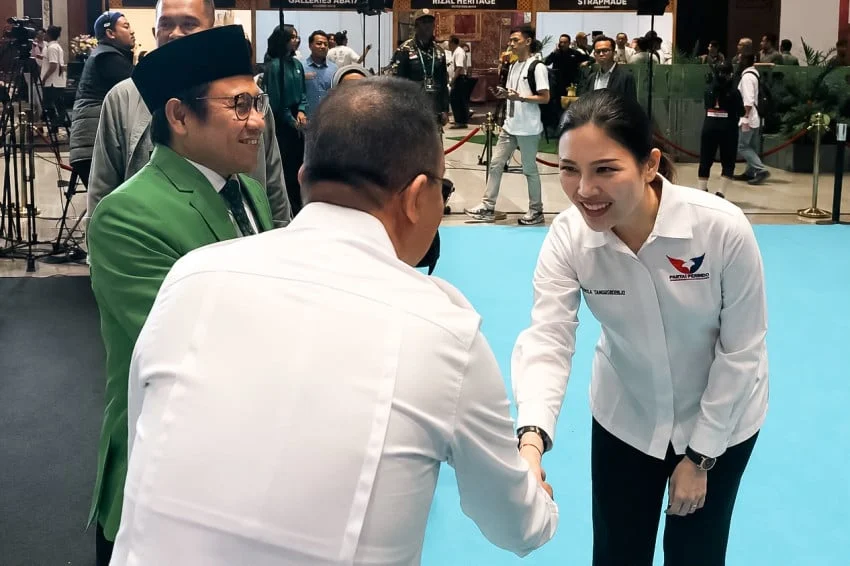
JAKARTA – The Puncak Harlah (Grand Anniversary Celebration) of the National Awakening Party (PKB) at the Jakarta Convention Centre (JCC) on Thursday evening, July 23, 2026, played host to a significant convergence of political figures, most notably the presence of Angela Tanoesoedibjo, the Chairperson of the People’s Welfare Party (Perindo). Her attendance, alongside Perindo Secretary-General Ferry Kurnia Rizkiyansyah, marked a visible display of inter-party engagement, further amplified by a cordial interaction with Muhaimin Iskandar, the Chairman of PKB, and Sufmi Dasco Ahmad, the Daily Chairman of the Great Indonesia Movement Party (Gerindra). This high-profile gathering, set against the backdrop of PKB’s 28th anniversary, underscored the dynamic and often fluid nature of Indonesian political alliances as the nation navigates its electoral landscape.
The atmosphere within the JCC was palpably warm and collegial as the leaders of these prominent political parties exchanged greetings, handshakes, and engaged in relaxed conversation. Chairman Muhaimin Iskandar, affectionately known as Cak Imin, expressed his appreciation for the Perindo delegation’s presence, acknowledging the significance of their participation in this milestone event for PKB. This gesture of mutual respect and acknowledgment between party leaders, particularly from different political entities, often serves as an early indicator of potential future collaborations or endorsements, especially in the lead-up to significant electoral cycles.
Angela Tanoesoedibjo, known for her strategic acumen and leadership within Perindo, offered brief but cordial remarks, stating, "Selamat, selamat ya" (Congratulations, congratulations). Cak Imin reciprocated with a warm acknowledgment, "Eh, terima kasih ya, terima kasih" (Oh, thank you, thank you). These exchanges, though brief, are often imbued with political subtext in Indonesia, where public displays of unity and camaraderie among party leaders can signal shifts in political strategies and coalition building.
Following these initial pleasantries, Cak Imin extended an invitation to Angela, Dasco, and Ferry to a VIP transit lounge, a move that further solidified the sense of an informal, yet significant, political dialogue taking place. Their journey to the transit area was characterized by what was described as an "akrab" (close and intimate) conversation, suggesting a comfortable and open exchange of ideas. This interaction, occurring away from the main event and in a more private setting, provided an opportunity for deeper discussions beyond the perfunctory greetings of a public ceremony.
Background and Context of the Event
The Puncak Harlah ke-28 PKB is not merely a celebratory occasion; it is a significant political platform. PKB, founded in 1998, has consistently been a formidable force in Indonesian politics, often drawing its support base from Nahdlatul Ulama (NU), the largest Islamic organization in Indonesia. Its anniversary celebrations typically serve as a barometer of its political strength, a forum for policy pronouncements, and an opportunity to showcase its leadership and its vision for the nation. For 2026, the 28th anniversary held particular weight as it falls within a critical period leading up to future general elections, where the positioning and consolidation of political parties are paramount.
The presence of a high-ranking representative from Perindo, a party often seen as a contender in its own right, at the heart of PKB’s celebrations is noteworthy. Perindo, founded by Hary Tanoesoedibjo, has been actively working to expand its political footprint and has been a vocal participant in national political discourse. Its involvement in PKB’s Harlah suggests a potential alignment of interests or a mutual recognition of each other’s political significance.
The inclusion of Sufmi Dasco Ahmad from Gerindra further adds layers of complexity and interest to the gathering. Gerindra, a major political force led by Prabowo Subianto, has its own established political alliances and ambitions. His presence alongside representatives from PKB and Perindo hints at the broader political maneuvering and coalition-building discussions that may be underway within the Indonesian political elite. Such high-level inter-party dialogues often precede significant political announcements or shifts in strategic alliances.
Timeline of Engagements
The evening’s engagements can be chronologically understood as follows:
- Arrival at JCC: Angela Tanoesoedibjo and Ferry Kurnia Rizkiyansyah arrive at the Jakarta Convention Centre.
- Initial Greetings and Interactions: They are met by PKB Chairman Muhaimin Iskandar and Gerindra Daily Chairman Sufmi Dasco Ahmad. A warm exchange of greetings and handshakes ensues.
- Public Acknowledgment: Muhaimin Iskandar expresses his appreciation for the Perindo delegation’s presence during the anniversary celebration. Angela Tanoesoedibjo offers congratulatory remarks.
- Private Discussion: Cak Imin invites Angela, Dasco, and Ferry to a VIP transit lounge for a more private conversation.
- Cordial Dialogue: The group engages in an "akrab" (close) conversation during their transit to the main event area.
This sequence of events, from public acknowledgment to a more private discussion, illustrates a progression in the political engagement between the parties involved.
Supporting Data and Political Landscape
To understand the implications of this meeting, it’s crucial to consider the political standing of the parties involved. As of recent polling data available for the period leading up to 2026, PKB has consistently maintained a significant presence, often hovering in the single digits to low double digits in national legislative election simulations. Its electoral strength is particularly pronounced in certain regions and among specific demographic groups, largely due to its deep roots within the NU network. The party’s leadership under Muhaimin Iskandar has been actively working to consolidate its base and expand its appeal, often positioning itself as a voice for moderate Islamic values and social welfare.
Perindo, while a newer entrant into the parliamentary landscape compared to PKB and Gerindra, has been investing heavily in its organizational structure and outreach. Its electoral performance in past elections has shown a gradual, though not yet dominant, increase in support. The party’s strategy often involves leveraging its media affiliations and focusing on economic empowerment programs. Angela Tanoesoedibjo’s leadership has been instrumental in steering the party’s direction and enhancing its public profile.
Gerindra, on the other hand, is one of Indonesia’s largest political parties, consistently polling among the top contenders in national elections. Its strong organizational base and charismatic leadership have solidified its position as a major political force. The party’s engagement with both PKB and Perindo, even in informal settings, suggests a strategic interest in exploring potential alliances or understanding the political currents within these parties.
The date of the event, July 23, 2026, is significant. It is a period that would typically be characterized by intensified political maneuvering and strategic planning as parties assess their strengths, weaknesses, and potential coalition partners in anticipation of upcoming electoral contests, which often culminate in presidential and legislative elections in the following years. The Indonesian political system is highly coalition-dependent, especially for presidential nominations, requiring parties to form alliances to secure sufficient parliamentary support.
Inferred Statements and Reactions
While the provided text focuses on the direct interactions, it is logically inferable that such high-level meetings would elicit various reactions and analyses within the political sphere.
- From PKB: It is reasonable to assume that PKB leadership viewed Perindo’s presence as a positive affirmation of PKB’s political standing and its role as a significant political entity capable of drawing attention from other major parties. The cordial reception and invitation to a private lounge suggest an openness to dialogue and potential collaboration. Cak Imin’s appreciation likely stems from the recognition of Perindo’s growing influence and the potential benefits of engaging with their leadership.
- From Perindo: Perindo’s delegation, led by Angela Tanoesoedibjo, likely saw the attendance as an opportunity to strengthen their inter-party relationships, demonstrate their political maturity, and project an image of being a key player in national political discussions. Engaging with established parties like PKB and Gerindra at such events serves to enhance Perindo’s visibility and signal its readiness to participate in broader political coalitions.
- From Gerindra: Sufmi Dasco Ahmad’s presence alongside representatives from PKB and Perindo could indicate Gerindra’s active interest in monitoring and engaging with potential allies or understanding the evolving political dynamics. Gerindra, being a major party, often plays a role in shaping coalition landscapes, and their participation in such a convergence suggests an effort to stay abreast of political developments and maintain relationships with other significant political actors.
These inferred reactions are based on typical political behavior and communication strategies employed by Indonesian political parties during such high-profile events.
Broader Impact and Implications
The convergence of leaders from Perindo, PKB, and Gerindra at the PKB anniversary gala carries several potential implications for the Indonesian political landscape:
- Coalition Formation: The most immediate implication is the potential for strengthened relationships that could lead to future coalition formations. In Indonesia’s fragmented political system, alliances are crucial for electoral success, particularly for presidential candidacies, which require a minimum parliamentary threshold. The cordial interactions suggest that these parties are at least open to dialogue, which is the first step in any potential alliance.
- Electoral Strategy: The meeting could signal a strategic alignment or a shared understanding of electoral challenges and opportunities. As parties prepare for future elections, they often seek partners who can complement their strengths or broaden their appeal to different voter segments.
- Political Messaging: The public appearance and interaction between these leaders serve as a form of political messaging to their respective constituencies and the broader electorate. It conveys an image of political unity, cooperation, and forward-thinking leadership. For Perindo, it demonstrates their ability to engage with established political heavyweights. For PKB, it reinforces their importance as a party that attracts attention from other major players. For Gerindra, it showcases their engagement across the political spectrum.
- Shifting Alliances: The Indonesian political scene is known for its dynamism, with alliances often shifting based on strategic considerations. The meeting could be a precursor to more formal collaborations or a signal that existing alignments are being re-evaluated. The presence of Gerindra, a party with its own significant presidential aspirations, alongside PKB and Perindo, adds an interesting dimension to these potential shifts.
In conclusion, the attendance of Angela Tanoesoedibjo at the PKB’s 28th Anniversary Gala, marked by warm interactions with leaders from PKB and Gerindra, is more than just a social courtesy. It represents a significant moment in the ongoing narrative of Indonesian politics, underscoring the fluid nature of party relations and the strategic importance of inter-party dialogue in shaping future political landscapes and electoral outcomes. The implications of this gathering will likely unfold in the months and years to come as political parties solidify their positions and forge alliances in anticipation of crucial electoral contests.
