
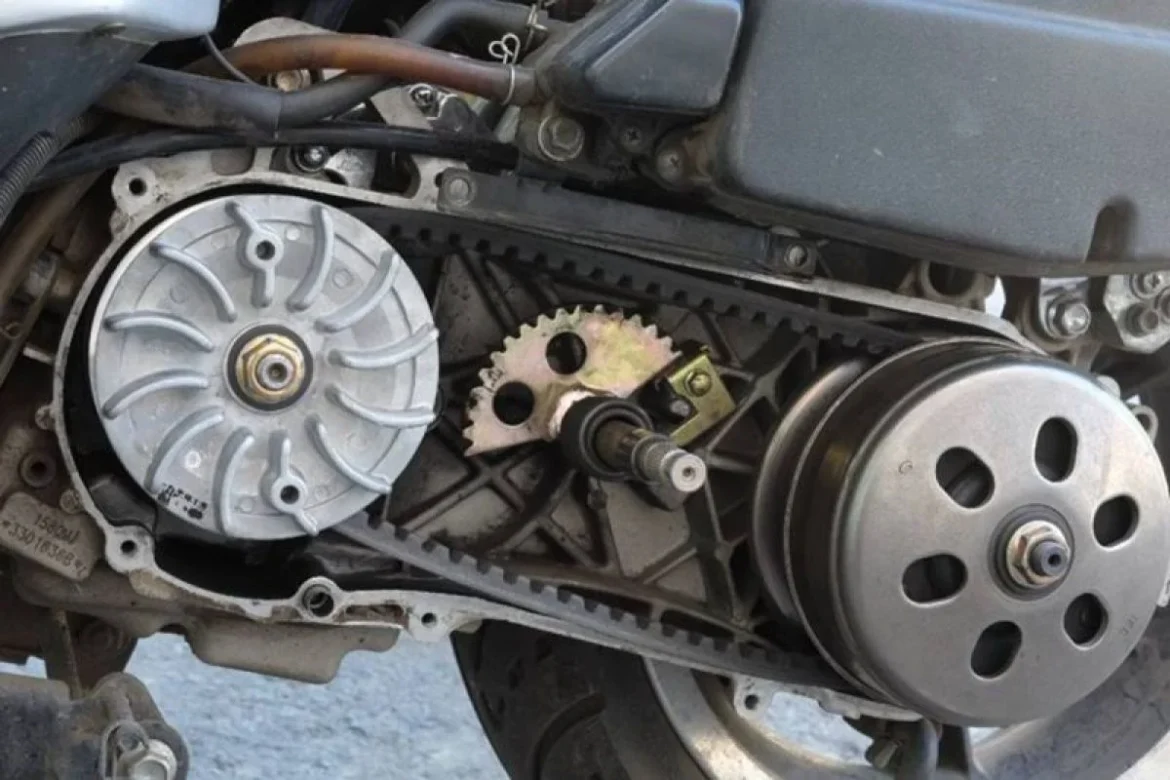
Routine maintenance stands as a cornerstone for ensuring automatic motorcycles, or "matic" bikes, maintain their peak operational performance. Beyond the essential engine oil changes and scheduled periodic servicing, vehicle owners must not overlook the critical upkeep of the Continuously Variable Transmission (CVT) system. This sophisticated automatic transmission is the central component that dictates the smooth, seamless ride characteristic of automatic motorcycles.
The CVT’s fundamental function is to efficiently transfer the power generated by the engine to the rear wheel, enabling the motorcycle to accelerate and cruise without the need for manual gear shifting. Because the CVT operates continuously every time the motorcycle is in motion, its internal components, including the V-belt, rollers, clutch shoes, and pulleys, are subject to gradual wear and tear over time. Neglecting regular maintenance of this vital system can lead to a significant decline in performance, directly impacting both rider comfort and, more critically, riding safety. Therefore, it is imperative for automatic motorcycle owners to be aware of the tell-tale signs indicating that their CVT requires immediate servicing.
Understanding the Mechanics of CVT Wear and Tear
The CVT system is a marvel of engineering, designed to provide an infinite range of gear ratios, optimizing engine performance across various speeds and loads. At its heart are two main pulley systems: a drive pulley connected to the engine crankshaft and a driven pulley connected to the transmission output shaft. These pulleys are not fixed in diameter; instead, their effective diameter can change, allowing for the continuous variation of the gear ratio. This change is typically achieved by the opposing movement of the pulley halves, driven by a hydraulic system or spring tension.
The V-belt, often made of reinforced rubber or a composite material, is the crucial link that transmits power between the drive and driven pulleys. As the pulleys adjust their diameters, the V-belt moves up or down their respective grooves, effectively altering the gear ratio. The rollers, housed within the drive pulley, play a pivotal role in this diameter adjustment. Under acceleration, centrifugal force pushes the rollers outwards, forcing the drive pulley halves closer together and increasing its diameter. Conversely, as speed increases and acceleration decreases, the rollers move inwards, allowing the drive pulley halves to separate and decrease its diameter.
The clutch shoes, typically located within the driven pulley assembly, engage and disengage the transmission at low speeds. At idle or very low speeds, the clutch shoes are retracted, allowing the engine to run without transmitting power to the rear wheel. As engine RPM increases, centrifugal force causes the clutch shoes to expand outwards, making contact with the clutch bell (part of the driven pulley assembly) and thus engaging the transmission.
Given this intricate interplay of components, it is unsurprising that wear is an inevitable consequence of operation. The V-belt can stretch, crack, or develop uneven wear patterns. Rollers can flat-spot or wear down unevenly, leading to inconsistent pulley movement. Clutch shoes can wear down, reducing their engagement effectiveness, and the clutch bell can develop heat spots or scoring. Pulleys themselves can experience wear in their grooves, affecting the smooth travel of the V-belt.
Key Indicators Requiring Immediate CVT Inspection and Servicing
Based on insights from automotive maintenance experts and manufacturers, here are eight critical signs that indicate your automatic motorcycle’s CVT is due for a thorough inspection and potential servicing:
1. Exceeding Recommended Service Intervals Based on Mileage
The most straightforward and universally accepted indicator for CVT servicing is the vehicle’s odometer reading. Motorcycle manufacturers typically provide specific mileage intervals for CVT maintenance, often ranging from 8,000 to 10,000 kilometers (approximately 5,000 to 6,200 miles). During these scheduled services, technicians perform essential tasks such as cleaning the CVT housing to remove accumulated dust and debris. They also conduct a comprehensive inspection of key components, including the rollers, V-belt for signs of wear or damage, clutch shoes for material loss, clutch bell for scoring, and pulleys for any irregularities in their grooves.
It is crucial for owners to consult their motorcycle’s owner’s manual or service booklet, as these recommended intervals can vary significantly between different makes and models. Factors such as engine displacement, intended use (e.g., city commuting vs. long-distance touring), and specific design characteristics of the CVT system all influence these recommendations. Adhering to the manufacturer’s prescribed schedule is the most proactive way to prevent premature component failure and maintain optimal CVT performance.
2. High-Intensity Usage Patterns
Motorcycles used daily for extensive commutes, particularly those navigating congested urban environments with frequent stop-and-go traffic, place a considerably higher demand on the CVT system. This intensive usage accelerates the wear and tear on components like the V-belt and clutch assembly, as they are engaged and disengaged more frequently and subjected to prolonged periods of operation under varying loads.
In such demanding scenarios, it is advisable to consider a more frequent inspection of the CVT, potentially every 5,000 kilometers (approximately 3,100 miles) or even sooner, depending on the specific recommendations of a trusted workshop or the manufacturer’s guidance for high-stress applications. This proactive approach can help identify potential issues before they escalate, preventing costly repairs and ensuring continued reliability.
3. Audible Anomalies Emanating from the CVT Area
A well-maintained CVT system typically operates with a near-silent hum. Any deviation from this smooth operation, manifesting as unusual noises from the transmission area, should be treated as a warning sign. Common audible complaints include squealing, grinding, rattling, or a distinct "clattering" sound, especially during acceleration or deceleration.
These noises can originate from various sources within the CVT. A squealing sound might indicate a worn or improperly tensioned V-belt, or potentially an issue with the pulley bearings. Grinding or rattling noises could point to worn rollers, damaged bearings within the pulley assemblies, or loose components. Worn clutch shoes may also produce a distinct chattering sound as they engage or disengage. Prompt investigation of these auditory cues is essential to diagnose the underlying problem and prevent further damage.
4. Vibrations During Acceleration
Experiencing unusual or excessive vibrations when the throttle is applied, particularly when initiating movement from a standstill or during initial acceleration, is a significant indicator of CVT malfunction. This phenomenon is often a direct consequence of uneven wear or improper functioning of key CVT components.
For instance, worn or flat-spotted rollers can cause the drive pulley to move erratically, leading to jerky acceleration and vibrations. Similarly, unevenly worn clutch shoes may not engage smoothly and consistently, resulting in a juddering sensation. A V-belt that has started to fray or develop an uneven surface can also transmit vibrations as it moves across the pulleys. If left unaddressed, these vibrations can not only diminish rider comfort but also exacerbate wear on other related components, potentially leading to more severe mechanical issues.
5. Perceptible Decrease in Acceleration and Power Delivery
A noticeable decline in the motorcycle’s overall performance, characterized by sluggish acceleration, a feeling of reduced power, or a delayed throttle response, strongly suggests an issue within the CVT system. This symptom indicates that the engine’s power is not being transmitted efficiently to the rear wheel, which is the primary role of the CVT.
Several CVT component failures can contribute to this loss of performance. Significantly worn V-belts may slip within the pulley grooves, failing to maintain optimal grip and power transfer. Worn rollers can cause the pulleys to operate at incorrect ratios, hindering acceleration. Damaged clutch shoes may not engage fully, leading to a situation where the engine revs but the motorcycle doesn’t gain speed as expected. If the pulleys themselves are worn in their grooves, the V-belt may not be able to achieve the full range of motion, limiting the effective gear ratios available. This reduction in efficiency ultimately manifests as a heavier, less responsive ride.
6. Difficulty Starting the Motorcycle
While difficulty starting a motorcycle can stem from various issues, including battery problems or electrical system faults, it can also be indirectly linked to an underperforming CVT. In normal operation, the CVT allows the engine to idle smoothly without engaging the transmission. However, if the CVT components are malfunctioning, they might create an unexpected drag on the engine during the starting process.
For example, if the clutch shoes are sticking or not retracting properly, they might create a slight resistance that makes it harder for the starter motor to crank the engine. In some cases, a severely worn CVT might even lead to an inefficient transfer of power from the starter motor itself if there’s an internal connection that’s being affected. Therefore, if a motorcycle becomes noticeably harder to start, especially if accompanied by weak or labored engine sounds during the starting sequence, a CVT inspection should be considered as part of a comprehensive diagnostic process.
7. Increased Fuel Consumption
An inefficient CVT system can lead to a surprising increase in fuel consumption. When the CVT components are worn or not functioning optimally, the engine has to work harder and rev higher to achieve the desired speed and acceleration. This increased effort translates directly into a greater demand for fuel.
For instance, if the V-belt is slipping or the pulleys are not adjusting their ratios correctly, the engine might be operating outside its most efficient RPM range for extended periods. This means more fuel is being injected and burned to produce the same amount of mechanical output. Owners who notice a significant and unexplained rise in their motorcycle’s fuel consumption, without any changes in riding habits or other obvious mechanical issues, should consider the CVT as a potential culprit. A properly functioning CVT ensures that the engine operates within its most efficient power band, thereby maximizing fuel economy.
8. Illumination of the CVT Indicator Light
Modern automatic motorcycles are increasingly equipped with sophisticated onboard diagnostic systems. Some newer models feature a dedicated warning light on the instrument panel specifically designed to alert the rider to potential issues within the CVT system. If this indicator light illuminates while riding, it signifies that the motorcycle’s internal computer has detected a fault or abnormality within the CVT operation.
This warning light is a critical alert and should never be ignored. It is designed to prompt the rider to seek professional diagnosis and repair. Upon illumination, the rider should ideally cease riding the motorcycle as soon as it is safe to do so and transport it to an authorized dealership or a reputable motorcycle workshop. Technicians can then use specialized diagnostic tools to read any fault codes stored by the system, pinpointing the exact nature of the CVT problem and executing the necessary repairs according to manufacturer specifications.
The Overarching Importance of Proactive CVT Servicing
The benefits of regular CVT servicing extend far beyond simply addressing immediate symptoms. It is a preventative maintenance strategy that safeguards the long-term health and performance of the motorcycle. The process of servicing the CVT involves more than just a superficial cleaning; it entails a detailed examination of all friction-generating components.
By meticulously inspecting and, if necessary, replacing worn parts such as the V-belt, rollers, and clutch shoes, technicians can prevent minor wear from escalating into catastrophic failures. This proactive approach ensures that the acceleration remains smooth and responsive, the fuel efficiency is maintained at optimal levels, and the overall lifespan of the entire transmission system is significantly extended. Furthermore, a well-maintained CVT contributes to a more enjoyable and safer riding experience, reducing the likelihood of unexpected breakdowns and costly emergency repairs.
In addition to adhering to the prescribed CVT service schedule, motorcycle owners are strongly encouraged to maintain a comprehensive, regular servicing regimen for their entire vehicle. This holistic approach ensures that all critical systems – including the engine, braking system, tires, suspension, and electrical components – are kept in optimal condition. By investing in consistent, professional maintenance, riders can maximize the reliability, performance, and longevity of their automatic motorcycles, enjoying peace of mind and a superior riding experience. The proactive care of the CVT, as a vital and often overlooked component, is a testament to this philosophy of comprehensive vehicle stewardship.
