

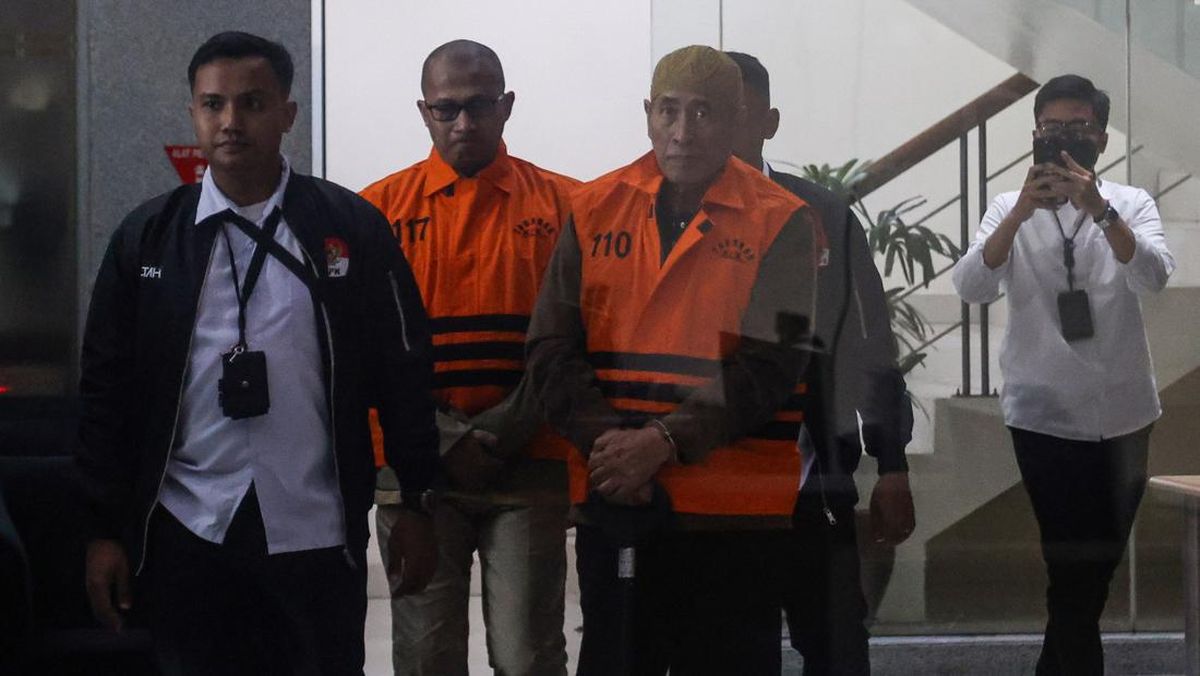
The Corruption Eradication Commission (KPK) is preparing to confront a second pre-trial motion filed by Asrul Azis Taba, the Commissioner of PT Raudah Eksati Utama and Chairman of the Association of Indonesian Hajj and Umrah Travel Agencies (Kesthuri), who stands as a suspect in the alleged corruption surrounding additional Hajj quotas for the years 2023-2024. This legal challenge, focusing on the legality of search procedures conducted by the anti-graft body, signals an intensified battle as the high-profile case progresses towards prosecution. The KPK, through its spokesperson Budi Prasetyo, has affirmed its readiness to face this judicial review, underscoring its confidence in the robustness of its investigative processes and legal foundations.
"The KPK will address this pre-trial process, respecting the authority of the panel of judges to scrutinize the legality of the investigators’ actions," stated Budi Prasetyo in a written message confirmed late Saturday, July 18, 2026. Prasetyo further elaborated that all arguments and evidence forming the basis of the search operations would be presented transparently during the court proceedings. The commission remains optimistic that its investigation, which has already been declared complete and advanced to the prosecution stage, rests on strong legal ground and is judicially accountable. This assertion comes as the case involves a staggering alleged state loss of Rp622 billion (approximately USD 40 million), highlighting the severe financial implications of the alleged malfeasance.
The KPK’s unwavering stance reflects its commitment to maintaining the integrity of its investigative methods, particularly when confronted with legal challenges from high-profile suspects. Prasetyo emphasized the professionalism and adherence to legal provisions throughout the entire investigation. "We assure that the entire series of investigative processes, including coercive measures such as searches, have been carried out professionally, in accordance with statutory regulations, and meet both material and formal aspects as stipulated in criminal procedural law," he affirmed. The commission has also called upon the public to closely monitor and oversee the ongoing legal proceedings, fostering transparency and public accountability in the fight against corruption.
The Latest Legal Challenge and Its Context
Asrul Azis Taba’s second pre-trial motion, filed at the South Jakarta District Court on Friday, July 17, 2026, specifically challenges the legality of the search operations conducted by the KPK. This development occurred just three days after the anti-graft agency announced the completion of its investigation into the alleged additional Hajj quota corruption case. The petition is registered under case number: 121/Pid.Pra/2026/PN JKT.Sel, with the inaugural hearing, dedicated to the reading of the petition, scheduled for Friday, July 24, 2026.
This second pre-trial motion follows a previous attempt by Asrul Azis Taba to challenge his designation as a suspect. On Monday, July 6, 2026, a sole judge at the South Jakarta District Court, I Ketut Darpawan, rejected Asrul’s initial pre-trial request. The judge ruled that the KPK had adhered to formal criminal procedural law during the suspect designation process. "Adjudicate: one, reject the Petitioner’s pre-trial motion," the judge declared while reading the verdict at the South Jakarta District Court. The repeated legal challenges underscore the suspect’s determination to dispute the KPK’s actions, even as the investigation has been finalized and moved to the next phase.
A Deeper Look into the Hajj Quota Corruption Case
The case revolves around allegations of corruption concerning additional Hajj quotas for the 2023-2024 period, a matter of significant public interest given the profound importance of the Hajj pilgrimage for Indonesian Muslims. Indonesia, home to the world’s largest Muslim population, faces an immense demand for Hajj, with waiting lists often extending for decades. The allocation and management of Hajj quotas, therefore, are highly sensitive and subject to intense scrutiny.
On Tuesday, July 14, 2026, the KPK officially announced the completion of its investigation into this complex case, identifying four individuals as suspects. Alongside Asrul Azis Taba, the prominent figures implicated include Yaqut Cholil Qoumas, who served as Indonesia’s Minister of Religious Affairs from 2019 to 2024; Ishfah Abidal Aziz, a special staff member to Yaqut; and Ismail Adham, the Operational Director of Maktour, a prominent Hajj and Umrah travel agency. The involvement of a former cabinet minister significantly elevates the profile and gravity of the case, signaling the KPK’s resolve to pursue corruption at the highest levels of government and public service.
The legal framework for the prosecution of this case draws upon several key statutes, including Article 2 paragraph (1) and/or Article 3 of the Law on the Eradication of Corruption Crimes (UU Tipikor) in conjunction with Article 55 paragraph (1) point 1 of the Criminal Code (KUHP). Additionally, the KPK may also invoke Article 603 or Article 604 of Law Number 1 of 2023 concerning the Criminal Code, in conjunction with Article 20 letter (c) of the Criminal Code Law. These articles primarily pertain to acts that cause financial losses to the state, embezzlement, and abuse of authority.
The alleged financial detriment to the state is substantial, calculated by the audit team of the Supreme Audit Agency (BPK RI) to be Rp622 billion. This figure represents a significant sum of public funds, underscoring the potential impact of the alleged corruption on public services and state finances. The involvement of BPK in determining the state loss provides a strong, independent basis for the KPK’s financial assessment, crucial for successful prosecution in corruption cases.
The Significance of Hajj Quotas in Indonesia
The Hajj pilgrimage holds immense spiritual and cultural significance for Indonesian Muslims, often representing a once-in-a-lifetime journey. The government, through the Ministry of Religious Affairs, plays a crucial role in managing the logistics, administration, and quota allocation for Indonesian pilgrims. The standard quota is determined through bilateral agreements with Saudi Arabia, but "additional quotas" can sometimes be granted, often under special circumstances or diplomatic negotiations. These additional quotas are highly sought after and can become a potential source of illicit gain if not managed transparently and equitably.
The alleged corruption in this case points to potential irregularities in the allocation or distribution of these valuable additional quotas. Such schemes can involve bribery, favoritism, or the misuse of authority to benefit certain travel agencies or individuals, ultimately at the expense of legitimate pilgrims and the state’s financial integrity. The role of Kesthuri, an association of Hajj and Umrah travel agencies, highlights the interface between government regulation and private sector operations in this critical sector. Allegations of corruption within this nexus can erode public trust in both governmental oversight and the private entities entrusted with facilitating religious duties.
Broader Implications and Public Scrutiny
The case against Asrul Azis Taba, Yaqut Cholil Qoumas, and others has far-reaching implications beyond the courtroom. It casts a spotlight on the perennial challenges of governance and corruption within the highly sensitive sector of Hajj management in Indonesia. Past cases of corruption related to Hajj funds and quotas have periodically emerged, leading to public outrage and demands for greater transparency and accountability. The current investigation by the KPK serves as a stark reminder of the continuous need for robust oversight mechanisms and ethical conduct in managing religious services.
For the KPK, successfully navigating this case, especially against a former minister, reinforces its role as a vital institution in Indonesia’s anti-corruption efforts. The commission’s determination to face pre-trial challenges demonstrates its confidence in its legal procedures and its commitment to pursuing justice regardless of the political or social standing of the suspects. The public, which often views Hajj corruption with particular disdain due to its exploitation of religious devotion, will be closely watching the trial’s outcome. A successful prosecution could restore a degree of public trust in the integrity of Hajj management and serve as a powerful deterrent against future abuses.
Moreover, the case could prompt a review of existing policies and procedures for allocating additional Hajj quotas, leading to reforms aimed at enhancing transparency, reducing discretionary powers, and minimizing opportunities for corruption. Civil society organizations and anti-corruption advocates are likely to amplify calls for structural changes to prevent similar incidents in the future.
Looking Ahead: The Path to Justice
With the investigation completed, the Public Prosecutor (JPU) of the KPK now has a maximum of 14 working days to prepare the indictment. Following this, the case will be handed over to the Corruption Court (Tipikor) for examination and adjudication. The upcoming pre-trial hearing on July 24, 2026, will be a critical juncture, testing the legality of the KPK’s search procedures. While a pre-trial motion typically focuses on procedural aspects rather than the merits of the case, a ruling against the KPK could potentially impact the admissibility of evidence, though the anti-graft body remains confident in its adherence to legal protocols.
The complex interplay of legal challenges, high-profile defendants, and significant alleged financial losses ensures that the Hajj quota corruption case will remain a prominent feature in Indonesia’s legal and political landscape for the foreseeable future. The KPK’s steadfast resolve, coupled with intense public and media scrutiny, underscores the ongoing battle against corruption and the pursuit of accountability for those who exploit public trust for personal gain, particularly in matters as sacred as the Hajj pilgrimage.
