

Leading video game developer EA Sports has unveiled its highly anticipated prediction for the FIFA World Cup 2026 final, forecasting a clash between Spain and Argentina, with La Roja ultimately emerging victorious. This prediction comes with significant weight, as EA Sports boasts a perfect record in foretelling the World Cup champions since 2010, a streak that has captivated football enthusiasts and analysts alike. The digital oracle’s pronouncement has intensified the excitement surrounding the final, scheduled for Monday, July 20, at 02:00 AM local time, and has sparked widespread discussion across social media platforms, further amplified by a concurring consensus from several prominent artificial intelligence chatbots.
A Legacy of Predictive Accuracy: EA Sports’ Unprecedented Streak
Since the FIFA World Cup 2010 in South Africa, EA Sports, through its flagship football simulation franchise – initially FIFA and now EA Sports FC – has undertaken a unique tradition of running a full tournament simulation to predict the eventual winner. What began as a marketing initiative has evolved into a remarkable testament to the accuracy of their game engine and underlying algorithms. The consistency of these predictions has been nothing short of astonishing, cementing EA Sports’ reputation as an unlikely, yet incredibly precise, football soothsayer.
The streak commenced in 2010 when EA Sports predicted Spain would lift the coveted trophy. In a tournament dominated by their tiki-taka style, Spain indeed triumphed over the Netherlands with a 1-0 victory in extra time, courtesy of an Andrés Iniesta goal. Four years later, for the 2014 World Cup in Brazil, EA Sports simulated a win for Germany. True to the prediction, the German national team, led by Mario Götze’s extra-time winner, defeated Argentina 1-0 in a hard-fought final.
The trend continued into the 2018 World Cup held in Russia. EA Sports’ simulation pointed to France as the champions, and Didier Deschamps’ youthful squad delivered, overcoming Croatia with a thrilling 4-2 victory in one of the most memorable finals in recent history. Most recently, for the 2022 World Cup in Qatar, the prediction machine once again proved its mettle by accurately foreseeing Argentina’s triumph. Lionel Messi famously led his nation to glory in a dramatic final against France, which ended 3-3 after extra time and was decided by a penalty shootout, etching Argentina’s name into history and extending EA Sports’ perfect record to four consecutive tournaments.
This flawless run has created a unique phenomenon where fans and pundits pay close attention to EA Sports’ pre-tournament simulations. The underlying technology, which processes vast amounts of player data, team statistics, tactical approaches, and incorporates advanced physics and artificial intelligence within its match engine, appears to replicate real-world football dynamics with uncanny precision.
The Road to the 2026 Final: Spain’s Journey and the Expanded Tournament Format
The FIFA World Cup 2026, co-hosted by the United States, Canada, and Mexico, marks a historic milestone as the first tournament to feature an expanded format with 48 participating nations, up from the traditional 32. This expansion has introduced new dynamics to the competition, with more teams vying for glory and a potentially more unpredictable group stage. The tournament, which spans several weeks across multiple host cities in North America, has been a spectacle of global football talent and intense competition.
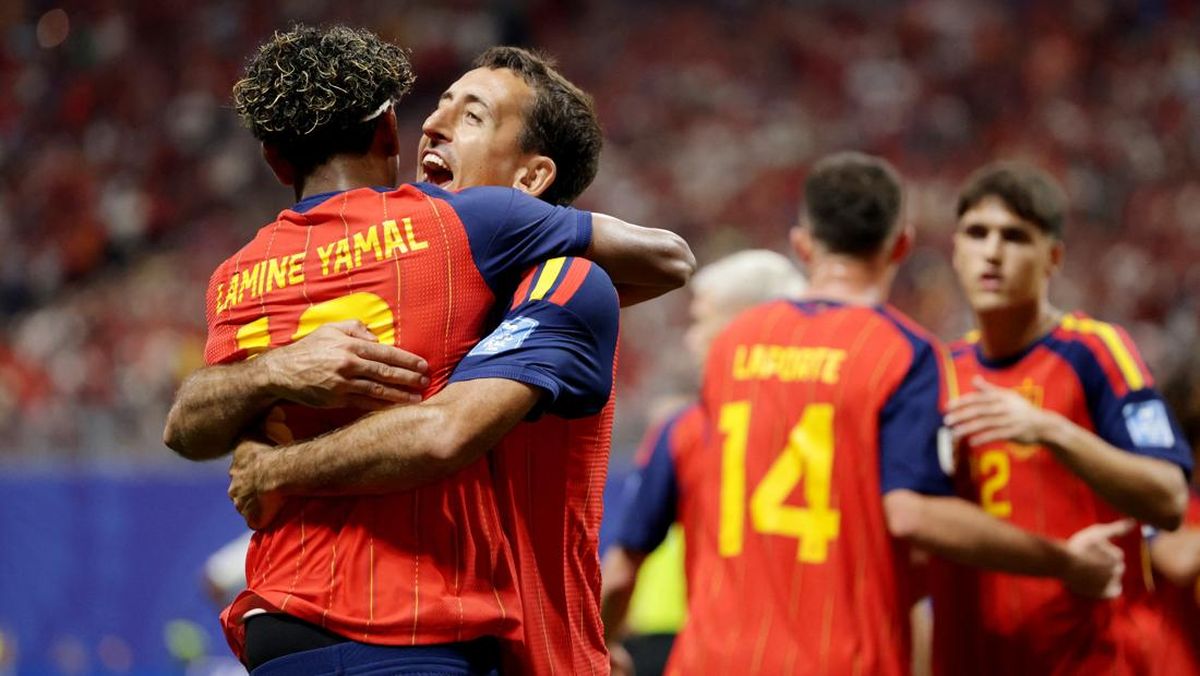
Spain’s path to the final, as simulated and confirmed by the game’s developer, saw them navigate a challenging knockout stage. Their semi-final victory, a decisive 2-0 win over perennial contenders France, was a critical moment that secured their spot in the championship match. This performance underscored their strength and tactical prowess within the simulated environment. While the specific path for Argentina to reach the final was not detailed in the initial reports, it is inferred that they, too, overcame a series of formidable opponents, showcasing their resilience and star power to set up a tantalizing clash with Spain. The final itself is set to be a momentous occasion, marking the culmination of weeks of intense football action.
Following Spain’s semi-final success, the official EA Sports FC account on X (formerly Twitter) shared a post they had made prior to the tournament, unequivocally predicting "La Roja" to claim the title. This timely repost served as a powerful reminder of their pre-tournament conviction and further fueled the narrative surrounding their predictive capabilities.
Beyond Gaming: AI Chatbots Echo the Spanish Triumph
The predictive power extends beyond the realm of gaming simulations. In a fascinating convergence of technology and sport, several leading artificial intelligence chatbots have also independently identified Spain as the most probable winner of the 2026 World Cup. When queried about the team with the highest probability of lifting the trophy on July 19 (the day prior to the final), four of the most popular AI platforms – ChatGPT, Claude AI, Google Gemini, and Microsoft Copilot – collectively pointed to Spain.
These AI models, trained on colossal datasets encompassing historical football matches, player statistics, team form, tactical analyses, and vast amounts of sports journalism, utilize sophisticated algorithms to identify patterns and probabilities. Their consensus on Spain suggests a strong analytical basis supporting the prediction, indicating that current team strengths, player attributes, and historical performance trends are aligning in favor of the Spanish side across various computational analyses. This dual endorsement from both a highly refined gaming simulation and advanced general-purpose AI models adds an unprecedented layer of intrigue and credibility to Spain’s projected victory.
Fan Reactions: A Mix of Belief, Skepticism, and Humour
The almost mythical accuracy of EA Sports’ predictions has generated a wide spectrum of reactions among football fans worldwide. Many are left in awe, believing implicitly in the power of the simulation. Comments such as, "I’m betting my entire savings on their win. You better not disappoint," illustrate the profound trust some fans place in the game’s ability to foretell the future. For these ardent believers, the prediction serves not just as a fun pre-tournament activity, but as a genuine indicator of the likely outcome, influencing everything from casual banter to serious betting decisions.
However, the perfect streak has also given rise to a humorous, yet persistent, conspiracy theory: that EA Sports’ game engine somehow "scripts" the actual real-world results. Comments like "EA needs to be investigated for game scripting" and "You guys need to be investigated. You know a little too much about game scripting" are common refrains. While largely made in jest, these reactions highlight the incredible difficulty of achieving such a precise prediction record and the human tendency to seek explanations, even fantastical ones, for seemingly impossible feats. This blend of genuine belief and playful skepticism adds another layer of engagement to the World Cup narrative, making the final outcome even more anticipated.
Implications and Broader Impact
The phenomenon of EA Sports’ World Cup predictions, now bolstered by AI consensus, carries several significant implications for the sports world, technology, and fan engagement:
- Influence on Betting Markets: While professional betting markets rely on complex algorithms and real-time data from numerous sources, such high-profile predictions from a historically accurate source like EA Sports can certainly influence public sentiment and potentially shift betting odds. The confidence expressed by fans in their "savings" demonstrates this direct impact.
- Validation of Gaming Simulations and AI: The consistent accuracy serves as a powerful validation for the sophisticated technology behind modern video game simulations. It showcases how far game engines have come in replicating complex real-world dynamics. Furthermore, the convergence with general AI chatbots underscores the growing capability of artificial intelligence to analyze vast sports data and derive meaningful insights, extending beyond simple statistics to complex predictive modeling.
- Marketing and Engagement for EA Sports and FIFA: For EA Sports, the prediction streak is an unparalleled marketing coup. It generates massive buzz, drives engagement with their FC franchise, and reinforces their brand as deeply intertwined with global football culture. For FIFA and the World Cup organizers, it adds another layer of excitement and a talking point that builds anticipation for the grand final.
- The Evolving Role of Data Analytics in Sports: This trend highlights the increasing reliance on data analytics and computational models in professional sports. From player scouting and performance analysis to tactical planning and injury prevention, data-driven insights are becoming indispensable. Predictive models, whether from gaming companies or dedicated sports analytics firms, are pushing the boundaries of what is considered possible in understanding and forecasting sporting events.
- The Unpredictability of Human Element: Despite the precision of algorithms and simulations, the beautiful game ultimately remains unpredictable. Factors such as individual moments of brilliance, unexpected injuries, referee decisions, psychological pressure, and sheer luck can dramatically alter outcomes. While technology can predict probabilities, it cannot fully account for the human element that makes football so compelling. The impending final between Spain and Argentina will be the ultimate test, where human performance will either align with or defy the digital prophecy.
Conclusion: A Final Showdown Steeped in Anticipation
As the FIFA World Cup 2026 draws to its thrilling conclusion, the stage is set for a monumental final between Spain and Argentina. The anticipation is palpable, not least because of the formidable predictive track record of EA Sports and the corroborating analysis from leading AI chatbots, all pointing towards a Spanish victory. Whether Spain can truly extend EA Sports’ flawless streak to five consecutive tournaments, or if Argentina can defy the digital odds to claim another historic title, remains to be seen. The clash promises to be a captivating spectacle of skill, strategy, and passion, where the world will watch to see if human drama can once again outshine the cold calculations of algorithms and simulations. The outcome on Monday, July 20, will not only crown a new world champion but also further cement or challenge the fascinating role of technology in sports predictions.
