JAKARTA — The international community is moving in lockstep with Indonesia’s ambitious regulatory landscape concerning consumable and wearable goods, as more than 80 countries formally signal their readiness to comply with the nation’s mandatory halal certification requirements. The development marks a significant milestone in global trade harmonization, signaling that international trade partners have adapted their domestic manufacturing and supply chain processes to align with Jakarta’s statutory decrees.
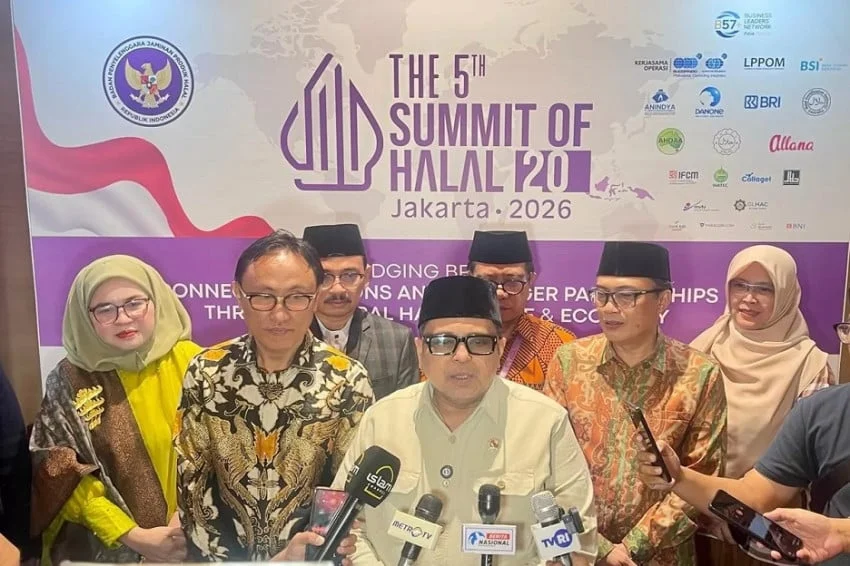
The official confirmation was delivered by the Head of the Halal Product Assurance Organizing Agency (BPJPH), Ahmad Haikal Hasan, following the formal conclusion of the prestigious 5th Summit of Halal 20 (H20) 2026, held in the nation’s capital. Speaking to members of the press corps after the high-level diplomatic and economic proceedings, Haikal underscored that the widespread global alignment is the direct result of years of sustained, meticulous outreach, intense diplomatic engagement, and transparent communication conducted by Indonesian authorities with international trade bodies and foreign halal certification agencies.
"Yes, over 80 countries have indeed prepared themselves to receive and implement this policy, with 48 of them attending the Halal 20 Indonesia Summit in person. We have successfully carried out comprehensive socialization campaigns across these jurisdictions," Haikal stated firmly when addressing inquiries regarding foreign ecosystem support for Indonesia’s mandatory halal implementation phase.
The transition toward strict halal compliance represents one of the most substantial regulatory overhauls in Southeast Asia’s largest economy, aimed at transforming the country into the epicentre of the global Islamic economy. As international trade routes increasingly factor in religious compliance, the realization that dozens of nations have adjusted their exporting protocols highlights the growing economic gravity of the halal market on the world stage.
Strategic Significance of the Halal 20 (H20) 2026 Summit
The 5th Summit of Halal 20 (H20) 2026 served as the premier diplomatic and technical crucible for addressing the complexities of cross-border halal compliance. Convened in Jakarta, the summit brought together policymakers, religious authorities, industrial magnates, and certification bodies from 48 nations. This international conclave functioned not merely as a dialogue platform, but as an operational arena where logistical hurdles, mutual recognition agreements (MRAs), and regulatory harmonization strategies were vigorously debated and finalized.
According to BPJPH, the summit provided an invaluable space to demystify Indonesia’s regulatory framework and alleviate anxieties held by foreign exporters. By engaging directly with international stakeholders, Indonesian officials demonstrated that the mandatory certification is designed to facilitate trade through transparency rather than erect protectionist barriers.
"This serves as one of the primary platforms and vehicles to socialize and broaden the global understanding regarding our mandatory halal timeline. It clearly indicates that the international community has accepted the policy, and the world is unequivocally prepared," Haikal elaborated.
The successful hosting of the H20 summit underscores Jakarta’s growing leadership in the global halal landscape. For decades, the international halal market operated in a fragmented manner, with disparate standards and unrecognized certifications issued across different continents. Indonesia’s push for a unified, legally backed standard provides a centralized anchor for global halal trade, compelling multinational corporations and small-to-medium enterprises (SMEs) alike to re-engineer their production lines to meet rigorous Indonesian specifications.
Background Context and Chronological Evolution of Indonesia’s Halal Mandate
The journey toward universal mandatory halal certification in Indonesia is anchored in structural legislative reform that began over a decade ago. The foundational architecture for this sweeping policy was established under Law No. 33 of 2014 concerning Halal Product Assurance (UU JPH). This landmark legislation fundamentally shifted halal certification from a voluntary, private-sector-led initiative overseen by clerical bodies into a mandatory, state-administered public service regulated by BPJPH, operating under the auspices of the Ministry of Religious Affairs.
Following the enactment of the 2014 law, the government instituted a carefully calibrated phased implementation timeline to allow domestic industries, international trade partners, and micro, small, and medium-sized enterprises (MSMEs) adequate time to adapt. The initial enforcement target began phasing in progressively starting October 17, 2019, with food and beverage products taking top priority.
Subsequent regulatory frameworks, including Government Regulation (PP) No. 39 of 2021, further detailed the operational procedures for halal product assurance, expanding the mandate’s scope well beyond simple foodstuffs. The comprehensive enforcement schedule was mapped out in distinct stages:
- October 17, 2024: The first major legal deadline mandated that food, beverages, traditional medicines, dietary supplements, cosmetics, and chemical products circulating within Indonesia must possess official halal certificates, alongside slaughtering services and slaughtered products.
- October 17, 2026: The ongoing implementation phase targets remaining product categories, including diverse consumer goods, non-food items, fashion accessories, and medical devices, cementing the comprehensive reach of the statutory mandate.
Throughout this chronological progression, BPJPH faced monumental logistical challenges, including building domestic auditor capacities, establishing domestic and international Halal Inspection Agencies (LPH), and negotiating Mutual Recognition Agreements (MRAs) with foreign certification bodies to ensure that imported goods faced streamlined verification processes.
Global Economic Implications and Trade Dynamics
The endorsement of Indonesia’s mandatory halal policy by more than 80 nations carries profound implications for global trade dynamics. As the world’s largest archipelagic state and home to the largest Muslim-majority population globally, Indonesia represents a colossal consumer market that commands substantial leverage in setting international trade standards.
Economic analysts point out that international compliance with Indonesia’s halal standards is no longer optional for foreign corporations wishing to tap into the lucrative Southeast Asian consumer base. Major exporting nations—including traditional agricultural powerhouses, advanced manufacturing economies, and neighboring ASEAN members—have actively sought bilateral coordination with BPJPH to prevent supply chain disruptions.
The transition has transformed halal certification from a niche religious observance into a mainstream benchmark for quality assurance, food safety, and ethical consumerism. Global multinational corporations that once viewed halal certification as an ancillary market requirement are now integrating halal compliance into their core operational strategies. This shift ensures traceability, hygiene, and consumer confidence, values that resonate strongly outside religious demographics as well.
However, challenges remain. Critics and industry associations have occasionally voiced concerns over potential non-tariff barriers, logistical bottlenecks in auditing foreign slaughterhouses, and the administrative capacity of BPJPH to process millions of applications seamlessly. In response, Indonesian authorities have continuously streamlined digital submission portals, enhanced transparency, and accelerated the mutual recognition of foreign halal certificates, provided the issuing bodies meet rigorous equivalence standards established by Jakarta.
Stakeholder Reactions and Institutional Preparedness
Industry groups, trade associations, and international diplomatic missions have largely welcomed the constructive dialogue facilitated by BPJPH. Representatives from participating nations at the H20 summit noted that proactive communication from Indonesian authorities has significantly mitigated anxieties surrounding market access restrictions.
Trade economists suggest that the readiness of over 80 countries demonstrates the effectiveness of Indonesia’s "soft diplomacy" approach within international trade corridors. Rather than imposing sudden edicts, BPJPH has spent years conducting bilateral technical meetings, workshops, and inspection tours across Europe, the Americas, the Middle East, and the Asia-Pacific region. These efforts have enabled foreign governments to establish domestic infrastructure capable of issuing halal certificates recognized directly by Jakarta.
Domestically, the Indonesian government remains unwavering in its commitment to execute the statutory mandates without exception. Haikal Hasan reiterated that the execution schedule will proceed precisely as outlined in national legislation, backed by cross-ministerial coordination involving the Ministry of Trade, the Ministry of Foreign Affairs, and the Indonesian Customs and Excise authority.
"The government’s stance is resolute. We are moving forward in accordance with the mandates stipulated by our laws and regulations, while simultaneously cultivating robust preparedness across all stakeholder levels," Haikal emphasized.
Future Outlook for the International Halal Ecosystem
Looking ahead, the successful conclusion of the 5th Summit of Halal 20 (H20) 2026 solidifies Indonesia’s position as the de facto capital of the global halal economy. The convergence of over 80 nations toward regulatory alignment paves the way for deeper economic integration among Islamic and non-Islamic trading partners alike.
As the implementation timeline progresses, BPJPH plans to intensify digital integration through blockchain-based traceability systems and automated verification protocols, reducing bureaucratic friction at ports of entry. These technological upgrades are expected to safeguard consumer trust while ensuring that compliant foreign goods enter the Indonesian market with minimal delay.
Ultimately, the broad international consensus achieved in Jakarta signals a maturing global marketplace where regulatory harmonization serves as a catalyst for economic growth. By bridging domestic religious mandates with international trade realities, Indonesia has successfully redefined the parameters of global commerce, setting a high benchmark for standard compliance in the decades to come.