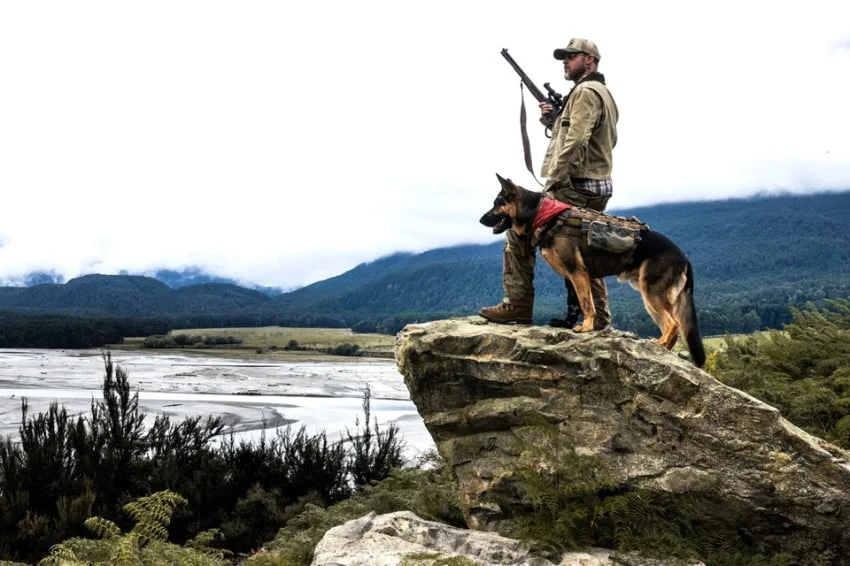
The survival thriller Heart of the Beast has officially cemented its status as a critical success, debuting with an impressive 89 percent approval rating on Rotten Tomatoes based on 61 professional critic reviews. The film, directed by the seasoned filmmaker David Ayer, marks a significant milestone in his directorial portfolio, representing his highest-rated project to date. While the star power of A-list actor Brad Pitt serves as the primary promotional draw, the cinematic consensus suggests that the film’s emotional resonance and technical execution are anchored by a remarkable performance from a canine lead.
A Narrative of Survival in the Alaskan Wilderness
Heart of the Beast follows the harrowing journey of James Belmont, a retired Special Forces operative portrayed by Brad Pitt, whose life takes a drastic turn when his aircraft crashes in the remote, unforgiving terrain of the Alaskan wilderness. Tasked with traversing 58 miles of hostile landscape to reach civilization, Belmont finds himself physically and psychologically pushed to his absolute limits. However, he is not alone; accompanying him is Odin, a retired military dog whose training and loyalty become the defining factors in Belmont’s survival.
The screenplay focuses heavily on the primal connection between man and animal, exploring themes of resilience, trauma, and the non-verbal communication that often develops in high-stakes survival scenarios. By stripping away the dialogue-heavy environments typical of Hollywood action films, the narrative relies on the chemistry between Pitt and his four-legged counterpart to drive the plot forward.
Critical Reception and the Emergence of an Unlikely Star
The critical response to the film has been overwhelmingly positive, with many reviewers highlighting the technical prowess required to capture such an intimate performance from an animal actor. Katie Walsh, a critic for the Los Angeles Times, offered high praise for the canine performance, asserting that Odin is the true heart of the production. According to Walsh, the dog’s ability to convey complex emotions through subtle physical cues often eclipses the human performance, creating a compelling dynamic that keeps the audience grounded despite the high-concept premise.
This sentiment is echoed across several major publications, where critics have noted that the film avoids the common pitfalls of "man-and-dog" movies, which frequently veer into sentimentality. Instead, Heart of the Beast maintains a gritty, grounded realism, largely attributed to the training and handling of the animals involved. The 89 percent Rotten Tomatoes score reflects this appreciation for the film’s craftsmanship, particularly in how Ayer manages the pacing and atmospheric tension of the Alaskan setting.
Behind the Scenes: The Four Faces of Odin
One of the most intriguing aspects of the film’s production is the fact that the character of Odin was not brought to life by a single animal, but by a carefully curated team of four German Shepherds. Director David Ayer has been transparent about the logistical complexities involved in filming in harsh, sub-zero conditions, which necessitated a rotation of specialized canine actors to ensure both safety and high-quality footage.
The lead canine performer, Uber, served as the primary face of Odin, handling the majority of the dramatic close-ups and emotional sequences. However, the production team utilized three other German Shepherds—Seeka, Ryker, and Hondo—to execute specific physical feats. For instance, the dogs were selected based on their individual proficiencies; one was specifically trained for high-altitude endurance, another for water-based sequences and swimming, and the third for high-intensity running and agility maneuvers.
This multi-animal approach allowed the production to maintain continuity without overworking any single dog, a move that has been praised by animal welfare advocates within the film industry. The result is a seamless performance that makes the character of Odin feel consistent, despite the complex choreography required behind the scenes.
David Ayer’s Career Trajectory and Directorial Evolution
The success of Heart of the Beast represents a pivotal moment for director David Ayer. Known for his work on gritty, urban-focused projects such as Training Day and Fury, Ayer has long been associated with high-octane action and morally complex characters. Heart of the Beast sees him pivoting toward a more minimalist, nature-focused aesthetic, marking a departure from his previous urban settings.
Data from film industry aggregators suggests that this shift has been met with significant approval. While his previous works have often been polarizing, the consistent praise for this film indicates that Ayer’s ability to manage small-scale character studies is just as effective as his command over large-scale action sequences. For Brad Pitt, the film adds another layer to his long-standing career, showing a willingness to engage in projects that require physical endurance and minimal dialogue, further diversifying his repertoire as both an actor and a producer.
Industry Implications and the Future of Animal Actors
The performance of Heart of the Beast is expected to have a ripple effect on how studios approach animal-centric narratives. In recent years, the use of CGI to create animals has become the industry standard due to the ease of control and cost-effectiveness. However, the critical and audience response to the practical, real-life performances in Heart of the Beast suggests that there is still a high demand for authenticity in filmmaking.
The success of these four German Shepherds may encourage future productions to prioritize authentic animal training over purely digital solutions, as the tangible connection between Pitt and the dogs is a central pillar of the film’s marketing and critical appeal. Furthermore, the film serves as a case study for the effective use of a "team" of animal actors to facilitate safe and realistic performance capture.
Chronology of Production and Release
The path to the film’s success was marked by meticulous planning and a rigorous production schedule:
- Pre-Production (Phase 1): Selection of the canine team and extensive training with handlers to prepare for the Alaskan landscape.
- Principal Photography: Filming took place over a four-month period, prioritizing the specific physical needs of the animals to navigate cold-weather environments.
- Post-Production: Integration of practical footage with sound design and minimal visual effects to maintain the film’s grounded atmosphere.
- Festival/Screening Circuit: Initial industry screenings resulted in positive word-of-mouth, building momentum leading up to the wide release.
- Rotten Tomatoes Milestone: Upon the release of 61 critical reviews, the 89 percent score confirmed the film’s status as a critical hit, solidifying its place in the 2024-2025 awards conversation for cinematography and technical achievement.
Conclusion: A Masterclass in Minimalist Storytelling
Heart of the Beast stands as a testament to the power of minimalist storytelling. By focusing on the bond between a man and his dog in the face of insurmountable odds, David Ayer has managed to create a film that feels both intimate and expansive. The critical acclaim for Odin’s performance serves as a reminder that in an age of high-budget CGI spectacles, the simple, visceral connection between a well-trained animal and a seasoned actor remains one of the most compelling elements of the cinematic experience.
As the film continues to garner attention, its legacy will likely be defined by the high bar it has set for animal-led performances and the successful evolution of David Ayer’s directorial style. Whether through the lens of a survival drama or as a showcase for animal talent, Heart of the Beast has secured its place as a standout entry in contemporary cinema, proving that sometimes, the most profound performances are those that require the fewest words.