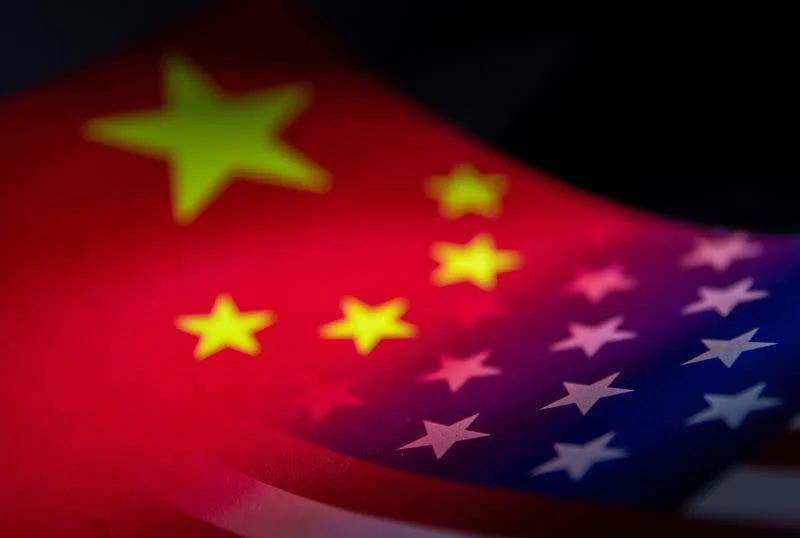
In a surprising yet significant diplomatic and economic pivot, the world’s two largest economies, the United States and China, have reached a major trade breakthrough. Amidst years of intense geopolitical rivalry, protectionist measures, and escalating trade barriers, Washington and Beijing have forged a collaborative pathway to ease ongoing trade tensions. The White House formally announced that China has committed to purchasing a minimum of 10 million metric tons of American coal annually, starting in 2027, with a mirrored volume commitment locked in for 2028. This bilateral arrangement signals a potential cooling period in a prolonged trade conflict that has heavily impacted global supply chains, energy markets, and financial sectors.
The strategic trade pact was officially negotiated and finalized under the auspices of the newly operational US-China Board of Trade. This institutional framework was established to serve as a high-level diplomatic and commercial conduit, ensuring that both superpowers maintain open channels for dialogue and economic negotiation. Beyond the massive coal purchase agreements, the two nations have agreed to significantly slash import tariffs on a wide array of non-sensitive commodities. This tariff reduction encompasses bilateral trade valued at USD 30 billion, demonstrating a tangible commitment to revitalizing commercial exchanges between the two global powerhouses.
Background Context of the US-China Trade Conflict
To fully understand the weight of this sudden rapprochement, one must examine the complex history of trade relations between Washington and Beijing over the past decade. The trade conflict escalated dramatically during the late 2010s, characterized by the imposition of sweeping tariffs on hundreds of billions of dollars worth of goods. What began as a dispute over intellectual property rights, forced technology transfers, and persistent trade imbalances quickly spiraled into a multifaceted economic war involving technology bans, export controls on critical minerals, and retaliatory tariffs.
Global markets have repeatedly reeled from the fallout of these hostilities, as supply chains were forced to decouple or significantly restructure. Energy markets, in particular, experienced extreme volatility. While the United States emerged as a dominant net exporter of energy—including liquefied natural gas and coal—due to its domestic shale revolution, Chinese energy importers had frequently diversified away from American commodities in favor of alternative suppliers, driven by political directives and punitive tariffs.
The introduction of the US-China Board of Trade and this recent agreement represent a strategic recalibration. Both governments appear to recognize the unsustainable nature of perpetual economic warfare, particularly as their respective domestic economies face inflationary pressures, complex post-pandemic recoveries, and structural transitions toward green energy.
Chronology of Recent Developments and the Path to the Agreement
The journey toward this unexpected trade thaw has been marked by a series of incremental diplomatic engagements, high-level ministerial visits, and extended negotiations.
Months prior to the announcement of the coal agreement, both nations engaged in intensive behind-the-scenes talks to address critical supply chain vulnerabilities. A notable milestone occurred when both governments agreed to extend a temporary trade truce, acknowledging their deep mutual dependencies. For instance, the United States has continued to heavily rely on China for critical rare earth elements—essential components for electric vehicle batteries, defense technology, and consumer electronics—while China has sought reliable agricultural and industrial export destinations to support its domestic production capacity.
The operational launch of the US-China Board of Trade served as the definitive turning point. Rather than addressing the most contentious technological and strategic sectors immediately, trade representatives opted for a pragmatic, phased approach. By focusing on non-sensitive commodities and mutual energy needs, both administrations could secure early wins that build political capital and trust. The culmination of these discussions resulted in the dual announcement regarding the multi-million-ton coal procurement schedule for 2027 and 2028, alongside the comprehensive USD 30 billion tariff reduction package.
Detailed Breakdown of the Tariff Reductions and Affected Sectors
The reduction of import tariffs covering USD 30 billion worth of goods is structured to benefit specific, commercially vital sectors in both domestic economies. The targeted approach aims to lower consumer costs and stimulate demand in areas that were previously bogged down by heavy protectionist levies.
According to the details released by trade officials, the priority sectors designated for preferential tariff treatment are divided symmetrically to address the export interests of both nations. For American exporters, the agreement opens up advantageous market access in China for:
- Agricultural products, including grains and feedstocks
- Seafood and marine exports
- Timber and forestry products
- Cosmetics and personal care items
- Advanced medical equipment and healthcare supplies
Conversely, the United States will ease import burdens on a variety of everyday consumer goods imported from China. These items include:
- Small household electrical appliances
- Children’s toys and games
- Seasonal and holiday decorations
- Safety equipment, specifically children’s car seats
By targeting everyday consumer goods and non-sensitive industrial materials, both governments are intentionally insulating average citizens from the worst effects of trade friction, while offering tangible relief to retailers and manufacturers struggling with margin compression.
Strategic Implications for the Global Energy Market
The commitment by China to import 10 million metric tons of American coal annually in 2027 and 2028 carries profound implications for global energy trade routes and commodity pricing. China remains the world’s largest consumer and producer of coal, heavily reliant on the fossil fuel to power its sprawling industrial base despite aggressive investments in renewable energy infrastructure.
While Beijing has increasingly sourced its coal from domestic production and regional suppliers such as Indonesia, Australia, and Mongolia, the re-entry of the United States into the Chinese import matrix reshapes trans-Pacific energy logistics. For American coal producers, primarily located in regions like the Powder River Basin and the Appalachian basin, this multi-year commitment guarantees long-term demand and provides financial predictability. It also reinforces the role of the United States as a primary global energy security guarantor, balancing its domestic climate policy goals with the pragmatic realities of international trade economics.
However, environmental analysts and energy market observers note an inherent irony in a multi-year fossil fuel agreement signed against the backdrop of global climate commitments. While governments worldwide pledge to accelerate the green energy transition, the sheer scale of global energy demand necessitates pragmatic, long-term procurement strategies for baseline power generation.
Official Responses and Stakeholder Reactions
Reaction from international markets, industry associations, and political analysts has been cautiously optimistic. Business advocacy groups in both nations have welcomed the breakthrough, emphasizing that any reduction in trade friction provides a much-needed boost to business confidence.
Representatives from American agricultural and energy exporting associations lauded the tariff adjustments and the long-term volume commitments, noting that predictability is the single most valuable asset in international trade. Industry leaders pointed out that protracted uncertainty had previously forced companies to delay capital investments and restructure supply chains at considerable expense.
On the other side of the Pacific, Chinese manufacturing and retail associations expressed satisfaction with the easing of tariff burdens on consumer goods. Analysts in Beijing noted that the agreement reflects a maturing diplomatic approach—one that demonstrates both nations’ capacity to compartmentalize strategic competition while pursuing mutually beneficial economic cooperation.
Broader Economic Impact and Future Outlook
The broader implications of this US-China trade breakthrough extend far beyond the specific tonnage of coal or the monetary value of tariff-exempted consumer goods. It establishes a potential template for how the world’s two largest superpowers can manage structural rivalries without descending into full-scale economic decoupling.
Economists suggest that if this arrangement holds and expands into other sectors, it could help tame global inflationary pressures, stabilize currency markets, and restore a degree of predictability to global supply chains. However, significant friction points remain untouched by this agreement. Critical technology sectors, semiconductor manufacturing, national security export controls, and maritime logistics continue to be heavily contested domains.
Ultimately, the sudden warmth in US-China trade relations demonstrates that economic gravity often pulls competing nations back toward the negotiating table. As the implementation dates for the coal procurement and tariff cuts approach in 2027, global markets will watch closely to see whether this diplomatic breakthrough represents a permanent shift toward constructive coexistence or merely a temporary ceasefire in an enduring geopolitical marathon.