
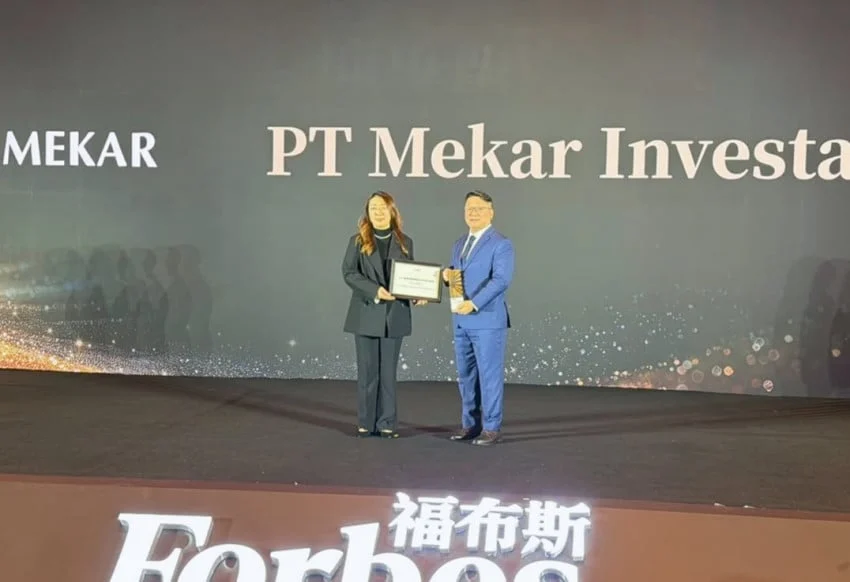
JAKARTA — In a strategic move set to reshape the landscape of cross-border green energy cooperation, Mekar Ecosystem—operating through PT Mekar Investama Teknologi—has officially joined forces with Hong Kong-based Future Fuel Limited. The formalization of this partnership took the form of a Memorandum of Understanding (MoU) signed on September 9, 2026, during the prestigious 11th Belt and Road Summit held in Hong Kong. This landmark agreement aims to establish a robust, integrated cross-border value chain for Sustainable Aviation Fuel (SAF), seamlessly bridging Indonesia’s abundant raw material feedstock capabilities with Hong Kong’s dynamic financial, innovation, and aviation ecosystems.
The collaboration underscores Mekar’s broader corporate expansion strategy, which centers on channeling capital, advanced technology, and productive assets into sustainable growth sectors. By tapping into the global aviation industry’s urgent mandate to achieve net-zero carbon emissions by 2050, the partnership positions both companies at the vanguard of the green transition in Southeast Asia and Greater China.
Strategic Scope of the Partnership
The newly minted MoU between Mekar Ecosystem and Future Fuel Limited outlines a comprehensive framework designed to address multiple facets of the Sustainable Aviation Fuel supply chain. Rather than focusing solely on raw material extraction or final distribution, the agreement adopts a holistic, end-to-end approach that encompasses feedstock collection, international trade, technological research and development, as well as cross-border infrastructure investment.
Key pillars of the cooperation include:
- Feedstock Procurement and Export: The initiative focuses heavily on the systematic collection, industrial processing, and export of high-grade lipids and green feedstocks originating from Indonesia. This includes harnessing domestic waste streams, such as used cooking oil (UCO) and other agricultural byproducts, which serve as crucial lower-carbon inputs for advanced biofuels.
- Certified Green Ethanol Trade: The partnership establishes secure trade corridors and reliable supply chains for certified green ethanol, ensuring that downstream processors receive compliant, high-purity inputs essential for meeting strict international aviation standards.
- Research and Development Innovation: A cornerstone of the technological agreement is the planned establishment of an Alcohol-to-Jet (AtJ) Research and Development Centre in Hong Kong. This facility will serve as a hub for scientific innovation, driving efficiency and cost-reductions in converting sustainable alcohol feedstocks into jet fuel.
- Infrastructure Development and Investment: The collaboration involves direct investments in dedicated SAF production facilities located in Hong Kong. Concurrently, it facilitates crucial technology transfers and operational support to bolster domestic SAF production infrastructure within Indonesia.
Background Context: The Global Push for Sustainable Aviation Fuel
The aviation sector accounts for roughly 2% of global energy-related carbon dioxide (CO2) emissions. While commercial aviation has expanded rapidly over the past few decades, decarbonizing the sector remains one of the most complex technological challenges in the modern economy. Unlike ground transportation, which is increasingly adopting electrification, long-haul aviation heavily relies on high-density liquid hydrocarbons. Consequently, Sustainable Aviation Fuel has emerged as the single most viable pathway to significantly reduce aviation emissions in the short-to-medium term.
International bodies, including the International Civil Aviation Organization (ICAO), have established ambitious frameworks like the Carbon Offsetting and Reduction Scheme for International Aviation (CORSIA), compelling airlines worldwide to progressively blend alternative fuels into their conventional fossil fuel supplies. Governments across Europe, North America, and parts of Asia have introduced stringent blending mandates and financial incentives to stimulate demand.
However, the primary bottleneck holding back the widespread adoption of SAF is not a lack of airline demand, but rather a severe global shortage of certified, scalable green feedstocks and processing infrastructure. Indonesia, with its vast agricultural footprint, expansive palm oil industry derivatives, and emerging biofuel initiatives, possesses immense potential to become a primary global supplier of biological feedstocks. By pairing Indonesia’s resource wealth with Hong Kong’s status as an international financial and technological nexus, the Mekar-Future Fuel partnership directly addresses this structural supply-chain deficit.
Leadership Perspectives and Corporate Governance
Speaking on the sidelines of the summit, Pandu Aditya Kristy, Chief Executive Officer of PT Mekar Investama Teknologi, emphasized the profound significance of the agreement during what he described as a transformative week for the company.

"We are deeply grateful for the various milestones Mekar has achieved throughout this series of events," stated Pandu. "Receiving recognition such as the TOP GRC Awards 2026 underscores our ongoing commitment to strengthening corporate governance, risk management, compliance, and long-term business sustainability. Meanwhile, our strategic partnership with Future Fuel Limited demonstrates our tangible resolve to translate those governance principles into the real sector, particularly through the development of Sustainable Aviation Fuel and broader sustainable energy initiatives."
Pandu noted that the expansion into the green energy sector aligns seamlessly with Mekar’s overarching mission to connect idle or underutilized capital with productive, high-impact assets. By executing this cross-border venture, the company aims to prove that ecosystem-based business models can successfully scale across international jurisdictions, generating long-term value for investors while simultaneously addressing global environmental imperatives.
Chronology of Events and Surrounding Developments
The announcement of the partnership in Hong Kong follows a broader wave of strategic clean-energy developments across the Indonesian archipelago. Throughout 2025 and 2026, energy conglomerates and technology firms alike have accelerated investments in biofuel infrastructure.
For instance, state-owned energy enterprises have concurrently pushed forward with domestic initiatives, such as developing SAF refineries utilizing used cooking oil at domestic processing units like the Cilacap refinery in Central Java. These parallel developments highlight a national awakening to the economic and environmental opportunities presented by the circular bioeconomy.
The 11th Belt and Road Summit provided an ideal geopolitical and economic backdrop for the signing ceremony. As an international platform that regularly convenes thousands of government officials, business leaders, and investors from across the globe, the summit in Hong Kong served as a catalytic environment for fostering high-value, green-infrastructure partnerships that transcend traditional regional boundaries.
Broader Economic and Environmental Implications
The strategic tie-up between Mekar Ecosystem and Future Fuel Limited carries far-reaching implications for multiple sectors:
- Economic Diversification for Indonesia: By integrating local agricultural and waste-management suppliers into high-value global supply chains, the partnership creates new, stable revenue streams for domestic producers and rural economies. It elevates Indonesia’s position from a mere exporter of raw commodities to an active participant in advanced green technology manufacturing and supply.
- Bolstering Hong Kong’s Green Finance Hub Status: For Hong Kong, the collaboration reinforces its strategic ambition to become Asia’s premier center for green finance and sustainable technology innovation. The establishment of the Alcohol-to-Jet R&D Centre and regional production facilities cements Hong Kong’s role as a vital bridge between mainland capital, international markets, and Southeast Asian resources.
- Acceleration of Global Aviation Decarbonization: By scaling up the production volumes of certified green ethanol and processed feedstocks, the partnership directly contributes to alleviating the supply crunches currently facing commercial airlines seeking to meet compliance targets under international climate accords.
Outlook and Future Steps
Following the formal execution of the Memorandum of Understanding, technical teams from both Mekar Ecosystem and Future Fuel Limited are slated to begin detailed feasibility studies regarding the establishment of the proposed R&D center and the logistics framework for feedstock exports. Stakeholders anticipate that initial operational milestones, including pilot-phase feedstock shipments and framework designs for the technology transfer protocols, will roll out over the course of the coming year.
As regulatory pressures mount and consumer demand for genuinely green travel intensifies, partnerships of this caliber will likely serve as the blueprint for future cross-border environmental cooperation. By successfully aligning corporate governance excellence with aggressive real-sector investments in renewable energy, Mekar Ecosystem and Future Fuel Limited have positioned themselves as key architects of tomorrow’s sustainable aviation infrastructure.
