
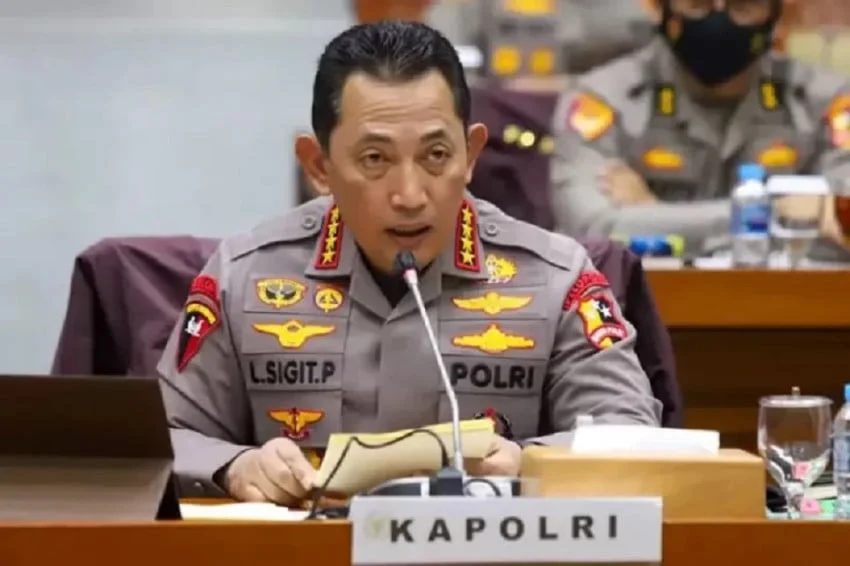
JAKARTA — The Indonesian textile and garment manufacturing sectors have long struggled under the suffocating weight of illicit trade practices, counterfeit goods, and black-market shipping lanes that bypass standard custom procedures. Recently, a significant shift in national enforcement strategy has emerged, drawing widespread praise from economic observers, labor unions, and industrial stakeholders alike. The Indonesian Public Institute (IPI) has officially lauded the uncompromising stance and proactive measures taken by the Chief of the Indonesian National Police (Kapolri), General Listyo Sigit Prabowo, in aggressively dismantling syndicates responsible for the rampant inflow of illegal textiles into the domestic market.
This institutional backing from law enforcement is widely viewed by economic analysts as a critical turning point. For decades, local manufacturers—ranging from large-scale spinning mills to small and medium enterprises (SMEs) producing traditional garments—have pointed to smuggled goods as the primary catalyst for declining profit margins, massive layoffs, and factory closures. With the National Police stepping up operations to intercept these contraband shipments at major ports and distribution hubs, economists and public policy experts argue that a renewed sense of optimism is finally taking root across the national industrial landscape.
The Structural Crisis of Domestic Textile Manufacturing
To understand the gravity of the ongoing crackdown, one must examine the deep-seated structural challenges that have plagued Indonesia’s textile sector. Historically, the domestic textile industry has served as one of the country’s largest employers, absorbing millions of workers across Java and other industrial centers. It contributes significantly to non-oil and gas manufacturing gross domestic product (GDP) and plays a vital role in national export revenues.
However, the sector has faced severe headwinds over the past ten to fifteen years. The proliferation of cheap, low-quality imported textiles—often entering the market illegally through corruption, misdeclaration of customs documents, and illegal transshipment ports—has systematically undercut the pricing models of legal Indonesian producers. Because illegal importers evade value-added taxes (VAT), income taxes, and import duties, they can sell foreign-made garments at fractions of the cost required to produce goods locally under compliant labor and environmental standards.
This unfair competition has triggered a domino effect. As domestic factories lose market share to black-market alternatives, revenues plummet, forcing management to cut operational costs. Consequently, hundreds of thousands of factory workers have faced sudden termination, unpaid leave, or reduced wages. The crisis not only threatens individual livelihoods but also weakens purchasing power in regions heavily dependent on manufacturing employment.
The Intervention of the National Police and Civil Society Reactions
Against this backdrop of industrial decline, the proactive involvement of the Indonesian National Police under the leadership of General Listyo Sigit Prabowo has been met with considerable relief and high expectations. Speaking in Jakarta on Wednesday, September 16, 2026, IPI Director and prominent political analyst Karyono Wibowo emphasized that the Police’s direct engagement in combatting illegal imports marks a departure from fragmented bureaucratic responses of the past.
"Impor ilegal telah lama menjadi faktor struktural yang secara konsisten menekan pertumbuhan industri dalam negeri. Keterlibatan Polri dalam mengatasi impor ilegal memberikan harapan baru bahwa negara serius memberikan perlindungan nyata kepada industri domestik," stated Karyono, reflecting on the historical vulnerability of domestic manufacturers to external shocks and illicit trade networks.
Karyono, a former student activist from the pivotal reform movement of 1998, underscored that the state’s presence must be felt through concrete actions that level the playing field for legal business entities. When law enforcement agencies actively target the financial backers, logistics coordinators, and distribution networks behind smuggled textile syndicates, it sends a powerful message that regulatory compliance is non-negotiable.

Simultaneously, experts have noted that this enforcement campaign aligns with broader government initiatives aimed at safeguarding employment and bolstering domestic economic resilience. The recent establishment of specialized task forces, such as the National Police’s Labor Desk (Desk Ketenagakerjaan Polri), highlights an integrated institutional approach to protecting both the rights of laborers and the viability of manufacturing enterprises. By bridging law enforcement with labor protection, the state aims to preemptively address social unrest caused by mass layoffs and factory shutdowns.
The Need for Sustained Public Oversight
While the initial raids, asset seizures, and interdiction operations have garnered widespread applause, observers like Karyono caution that long-term success relies heavily on sustained transparency and accountability. The fight against illicit trade is rarely a short-term campaign; it requires continuous monitoring to prevent corrupt networks from adapting, shifting routes, or finding new loopholes within customs and trade regulations.
Karyono emphasized the vital role of public oversight in maintaining the momentum of these law enforcement initiatives. In a healthy democratic society, civil society organizations, trade associations, and the media must act as constructive watchdogs. Ensuring that enforcement is applied fairly, transparently, and without selective targeting is essential to maintaining public trust in state institutions.
Furthermore, effective eradication of illegal textile imports cannot rest solely on the shoulders of the police force. It necessitates robust, seamless inter-agency cooperation among the Ministry of Trade, the Directorate General of Customs and Excise (Bea Cukai), the Ministry of Industry, and the judicial system. When customs regulations are strictly enforced at all entry points—ranging from major international sea ports to small, informal landing sites—the logistical backbone of smuggling rings is effectively broken.
Broader Economic Implications and Future Outlook
The implications of a successful crackdown on illegal textile imports extend far beyond the balance sheets of individual textile corporations. A revitalized domestic textile industry carries profound multiplier effects for the wider Indonesian economy.
First and foremost is job security. By stabilizing domestic production quotas, factories can retain their existing workforces and potentially expand hiring, thereby easing the burden on national unemployment statistics. Job security in the manufacturing sector translates directly into sustained consumer spending, supporting local retail, housing, and service industries.
Second, eliminating unfair competition from the black market encourages both local and foreign investors to pour capital back into modernization. For years, investors hesitated to upgrade machinery, adopt sustainable green technologies, or invest in workforce training programs because the flooded, unregulated market made long-term financial forecasting nearly impossible. With the state demonstrating a firm commitment to rule of law and fair trade practices, investors can plan with greater confidence.
Third, regulatory compliance ensures that government revenues from import duties and taxes are fully realized. Funds recovered through proper customs enforcement can be redirected toward public infrastructure, healthcare, and educational programs, further strengthening the national foundation.
As Indonesia navigates complex global economic dynamics, the security of its domestic industrial base remains a cornerstone of national sovereignty. The alignment of law enforcement agencies, public intellectuals, and industrial stakeholders in confronting the menace of illegal textiles represents a vital step forward. If the current momentum is maintained through rigorous oversight, inter-agency synergy, and unwavering political will, Indonesia’s textile sector may finally reclaim its status as a robust, competitive, and resilient pillar of the national economy.
