
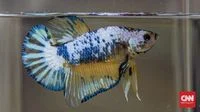
Determining the sex of a Betta splendens, commonly known as the Siamese fighting fish, is a fundamental skill for any hobbyist, breeder, or prospective owner. While casual observers often conflate the vibrant, flowing fins of the male with the species as a whole, the reality is that female bettas possess distinct physiological traits that require a trained eye to identify. Misidentifying the gender of these fish can lead to significant management challenges, particularly regarding social housing and breeding programs. Accurate sexing is not merely a matter of curiosity; it is a critical component of responsible aquarium stewardship.
The biological complexity of the Betta fish means that relying on a single visual cue—such as color or fin length—is frequently insufficient. Because selective breeding has produced a vast array of morphs, including short-finned males that mimic the profile of a female, owners must utilize a multi-faceted approach. By evaluating anatomical markers, behavioral tendencies, and developmental indicators, one can achieve a high degree of accuracy in sexing these popular aquatic pets.
The Anatomical Foundation: Identifying the Egg Spot
The most reliable, albeit sometimes subtle, indicator of a female Betta is the presence of an ovipositor, commonly referred to as an "egg spot." This is a small, whitish, or cream-colored protrusion located on the ventral surface of the fish, positioned precisely between the pectoral fins and the anal fin. In mature females, this organ is used for the deposition of eggs during the complex spawning process.
However, the visibility of the egg spot can be inconsistent. In juvenile specimens, the ovipositor may be underdeveloped and effectively invisible to the naked eye. Furthermore, environmental stressors—such as poor water quality or the presence of aggressive tank mates—can cause the fish to retract or hide this physical marker. Experts suggest that if a fish is suspected to be female but lacks a visible egg spot, the owner should wait until the fish matures or move it to a lower-stress environment to allow natural physical traits to become more pronounced.
Fin Morphology and Body Structure
Historically, the general rule of thumb dictated that males possess long, flowing fins, while females retain shorter, more modest fins. While this remains a helpful baseline, it is not an absolute rule. The advent of the "Plakat" betta—a strain selectively bred for shorter fins—has complicated this heuristic. A male Plakat can easily be mistaken for a female if one relies solely on fin length.
To differentiate more accurately, one must look at the overall body shape. Female Bettas generally exhibit a more robust, rounded, or "torpedo-shaped" body, particularly around the abdominal region. This roundedness is often accentuated when the female is carrying eggs. Conversely, males tend to be more slender and streamlined, even when well-fed. When observing a group of fish, the contrast in silhouette often becomes apparent; males appear more elongated and angular, while females maintain a softer, more rounded profile.
The Role of the Branchiostegal Membrane and Beard
Beneath the gill covers (opercula) lies the branchiostegal membrane, often referred to as the "beard." When a Betta flares, this membrane expands, creating an intimidating display. In males, the beard is notably larger, extending well beyond the gill cover and serving as a visual deterrent to rivals.
Females also possess a beard, but it is significantly smaller and often remains entirely concealed when the fish is at rest. Observing the fish during a flare—either at a mirror or another fish—provides a critical diagnostic opportunity. If the beard extends prominently and covers a large surface area under the throat, the specimen is almost certainly male.
Behavioral Indicators and Breeding Bars
The social behavior of Betta fish offers further clues. During the courtship process, a female ready to spawn will often display "breeding bars." These are vertical, light-colored stripes that appear along the flanks of the body. It is vital to distinguish these from "stress stripes," which are horizontal and generally indicate that the fish is suffering from poor water conditions, temperature fluctuations, or psychological distress.
While males can also display horizontal stress stripes, the appearance of vertical breeding bars is a physiological response specific to the female’s reproductive readiness. This behavioral marker, when combined with a visible egg spot, serves as a high-confidence indicator of the fish’s sex.
The Myth of Color as a Gender Determinant
A pervasive misconception in the aquarium trade is that males are invariably colorful while females are dull. In the modern era of selective breeding, this is demonstrably false. Female Bettas are now available in a staggering spectrum of colors, ranging from deep royal blues and vibrant reds to intricate iridescent patterns.
While it is true that male Bettas may exhibit more intense color saturation due to the hormonal influence of testosterone, color is not a reliable primary identifier. Many female lines are bred specifically for high-quality, vibrant pigmentation. Relying on color alone often leads to the erroneous assumption that a bright, short-finned fish is a male, when in fact it may be a high-quality female.
Aggression and Territoriality
The "Siamese fighting fish" moniker refers to the species’ inherent territoriality, but this trait is not exclusively masculine. While males are notoriously intolerant of one another and will fight to the death if confined in a small space, females also exhibit hierarchical and territorial behaviors.
In a "sorority" tank—a setup where multiple female Bettas are housed together—a clear hierarchy will emerge. The dominant female will often patrol the tank and display aggression toward subordinates. Because of this, one cannot assume that a non-aggressive fish is female or that an aggressive fish is male. Behavior should only be used as a secondary confirmation once physical characteristics have been analyzed.
Broader Implications for Aquarium Management
The importance of accurate sexing extends beyond mere classification; it is essential for the welfare of the animals. Housing a male and female together permanently is generally discouraged, as it places undue stress on the female and can lead to injury during failed spawning attempts. Furthermore, understanding the sex of the fish allows owners to tailor their care regimes—such as dietary adjustments for gravid females or more frequent water changes for territorial males.
Data from recent surveys in the ornamental fish industry indicate that interest in specialized Betta keeping is at an all-time high, with a 15% year-over-year increase in inquiries regarding breeding protocols. As the hobby grows, the demand for scientific accuracy in identifying specimens becomes paramount. Misidentification can lead to incompatible tank mates, failed breeding attempts, and unnecessary mortality.
Conclusion: A Multi-Point Assessment
To successfully identify the sex of a Betta fish, the hobbyist should avoid relying on a single feature. The best practice is to utilize a checklist approach:
- The Egg Spot: Look for the white spot near the ventral fins.
- Body Shape: Compare the roundness of the abdomen against the slender profile of other specimens.
- Fin Length: Assess the fin-to-body ratio, keeping in mind the Plakat variety.
- The Beard: Observe the size of the gill membrane during a flare.
- Behavioral Patterns: Monitor for the presence of vertical breeding bars.
By synthesizing these observations, the owner can move beyond guesswork. Whether the goal is to prevent fighting in a community tank or to successfully manage a breeding program, these physiological markers provide the necessary clarity for responsible and informed care. The Betta, with its complex biology and diverse morphological variations, remains one of the most fascinating subjects in the aquatic hobby, and understanding its sex is the first step toward true mastery of its care.
