
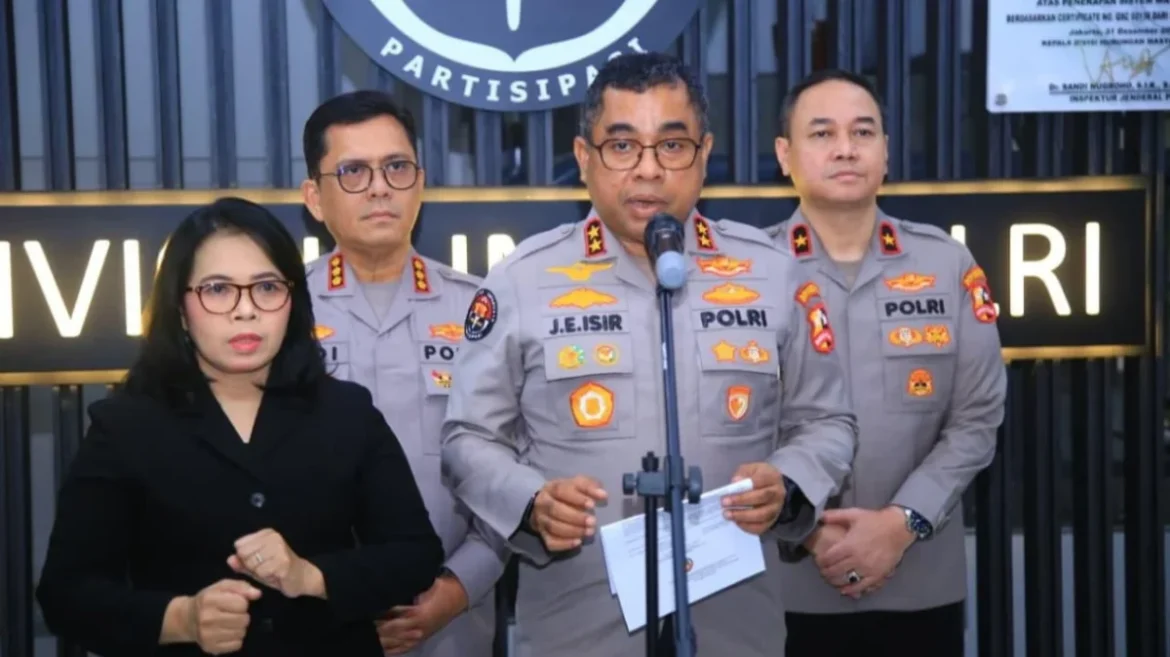
Jakarta, VIVA – The Indonesian National Police (Polri) has issued a definitive statement addressing the growing public debate surrounding the perceived involvement of its Community Police and Security Guardians (Bhayangkara Pembina Keamanan dan Ketertiban Masyarakat, or Bhabinkamtibmas) personnel in a collaborative effort with the Directorate General of Taxation (DJP). On Friday, July 24, 2026, Polri emphatically clarified that Bhabinkamtibmas officers possess no authority whatsoever to collect, assess, or demand taxes from the public, reiterating that such powers remain exclusively with the DJP. This announcement comes amid public discussions and concerns that the synergy might blur institutional lines and lead to potential overreach by police officers into tax matters, a highly sensitive area for the populace.
The controversy began to simmer in the preceding weeks, sparked by various reports and public discourse suggesting a more direct role for Bhabinkamtibmas in assisting the DJP with tax compliance efforts. While the initial intentions behind the inter-agency cooperation were likely aimed at enhancing state revenue collection through improved data exchange and local support, the lack of immediate, clear communication regarding the precise scope of Bhabinkamtibmas involvement led to widespread speculation. Social media platforms, in particular, became a fertile ground for misinterpretations, with some posts even implying that local police officers would be empowered to conduct tax inspections or enforce payments at the community level. This scenario naturally triggered anxiety among citizens, who value the distinct separation of duties between law enforcement and tax authorities. Historically, direct involvement of police in tax collection has often been viewed with caution, due to concerns about potential abuse of power or undue pressure on taxpayers. The public’s apprehension underscored the critical need for a clear and unambiguous clarification from the highest echelons of the police force.
Speaking from Jakarta, Inspector General Pol. Johnny Eddizon Isir, Head of the Polri Public Relations Division, robustly asserted that the cooperative framework between Polri and DJP fundamentally alters neither the primary duties of Bhabinkamtibmas nor the established legal mandate of the tax authority. He emphasized that all statutory powers related to taxation, including assessment, audit, collection, and enforcement, reside solely with the Directorate General of Taxation, as stipulated by prevailing Indonesian tax laws and regulations. "We unequivocally state that Bhabinkamtibmas officers are not tax officials and possess no authority to conduct tax compliance assessments, examinations, collections, or to solicit tax payments from the public. The authority in the field of taxation remains entirely with the Directorate General of Taxation in accordance with the provisions of the prevailing laws and regulations," Irjen Pol. Johnny Eddizon Isir stated, seeking to quell the rising tide of public unease.
The definitive statement from Polri is crucial for maintaining public trust and ensuring that the operational boundaries of different state institutions are clearly understood and respected. Bhabinkamtibmas personnel, numbering in the tens of thousands and deployed across nearly every village and sub-district in Indonesia, serve as the frontline representatives of the police force. Their primary role is deeply rooted in community policing principles: fostering security, order, and social cohesion at the grassroots level. They are tasked with building strong relationships with local communities, acting as mediators in minor disputes, gathering intelligence on security matters, and disseminating information related to public safety. They are often the first point of contact between citizens and the state, playing a vital role in crime prevention, conflict resolution, and promoting a sense of security. The very essence of their function relies on trust and approachability, qualities that could be severely eroded if they were perceived as agents of tax collection or enforcement.
Conversely, the Directorate General of Taxation (DJP), operating under the Ministry of Finance, holds the exclusive mandate for administering the nation’s tax system. This includes formulating tax policies, educating taxpayers, registering taxpayers, conducting audits, investigating tax crimes, and enforcing tax laws through various mechanisms such as issuance of tax assessment letters, collection notices, and where necessary, legal proceedings. The DJP employs a highly specialized workforce, equipped with specific expertise in tax law, accounting, and financial forensics. Their processes are governed by detailed legal frameworks, designed to ensure fairness, transparency, and accountability in tax administration. Any deviation from these established procedures, particularly involving non-tax personnel in core tax functions, could undermine the integrity of the tax system and potentially lead to legal challenges or public backlash.
Isir further elaborated that the involvement of Bhabinkamtibmas in the synergy with DJP is strictly limited to supporting inter-agency coordination through their core functions of community building, communication, and establishing information networks at the local level. "Bhabinkamtibmas functions to build partnerships with the community, gather information, and convey various information relevant to public interest. Therefore, synergy with other agencies must remain within the scope of Polri’s duties and authorities," he explained. This means Bhabinkamtibmas officers might, for instance, facilitate communication between DJP personnel and local communities regarding tax awareness programs, help disseminate general information about tax obligations, or provide logistical support to DJP officers during legitimate fieldwork, provided it aligns with their general community policing duties and does not involve direct tax enforcement.
The Polri spokesperson stressed the importance of preventing any misperception among the public regarding the presence of Bhabinkamtibmas in this collaborative initiative. "We want the public to understand that the presence of Bhabinkamtibmas in the context of this synergy is preventive and persuasive in nature. There is no authority for Bhabinkamtibmas to examine, assess, collect, or demand tax payments. We must ensure this synergy does not create a false perception in the community," Isir stated. This emphasis on "preventive and persuasive" roles, rather than enforcement, highlights a crucial distinction that was likely lost in the initial public discourse. Their role is to foster an environment conducive to voluntary compliance by improving communication and understanding, not to act as an extension of the DJP’s enforcement arm.
The legal frameworks governing Polri (Law No. 2 of 2002 on the Indonesian National Police) and DJP (under various tax laws and regulations) clearly delineate their respective powers and responsibilities. Polri’s mandate centers on maintaining public order and security, enforcing laws, and providing protection, while DJP’s mandate is specifically related to tax administration and revenue collection. This institutional autonomy and separation of powers are fundamental tenets of good governance in a democratic state. Any blurring of these lines without explicit legal amendments could lead to jurisdictional conflicts, inefficiency, and, more importantly, a erosion of public trust in both institutions. The clarification from Polri serves to reinforce these foundational principles, ensuring that inter-agency cooperation enhances rather than compromises the integrity of each body’s primary function.
This incident underscores a broader challenge in public administration: effectively communicating the nuances of inter-agency collaborations to a diverse populace. In an era of rapid information dissemination, especially through social media, incomplete or ambiguous messaging can quickly lead to widespread misunderstanding and distrust. For the DJP, which faces the ongoing challenge of broadening the tax base and improving compliance—a critical endeavor given the state’s reliance on tax revenue for national development projects, infrastructure, and public services—support from other government bodies is valuable. However, such support must be meticulously defined and communicated to avoid creating new obstacles. Indonesia, like many developing nations, continuously strives to optimize its tax collection efforts, with current tax ratios often below desired levels. Enhancing coordination between government agencies, therefore, presents an opportunity, but it must be handled with utmost care to avoid alienating the very citizens whose compliance is sought.
Looking ahead, this clarification by Polri sets an important precedent for future inter-agency collaborations. It highlights the necessity for meticulous planning, clear definition of roles, and proactive communication strategies whenever government bodies pool resources or expertise. While the principle of synergy and coordination among ministries and agencies is laudable and essential for national interests, its implementation must always adhere strictly to legal frameworks and avoid any overlap or confusion of authority. As Isir concluded, "The principle is that every institution has its own duties and authorities. Polri will continue to support synergy and coordination with ministries and agencies for the benefit of the community and the state, but the implementation must remain in accordance with legal provisions and not create overlapping authorities." This robust affirmation serves to reassure the public, protect the integrity of both Polri and DJP, and ensure that government efforts to enhance public services and revenue collection are pursued with clarity, legality, and an unwavering commitment to public trust.
