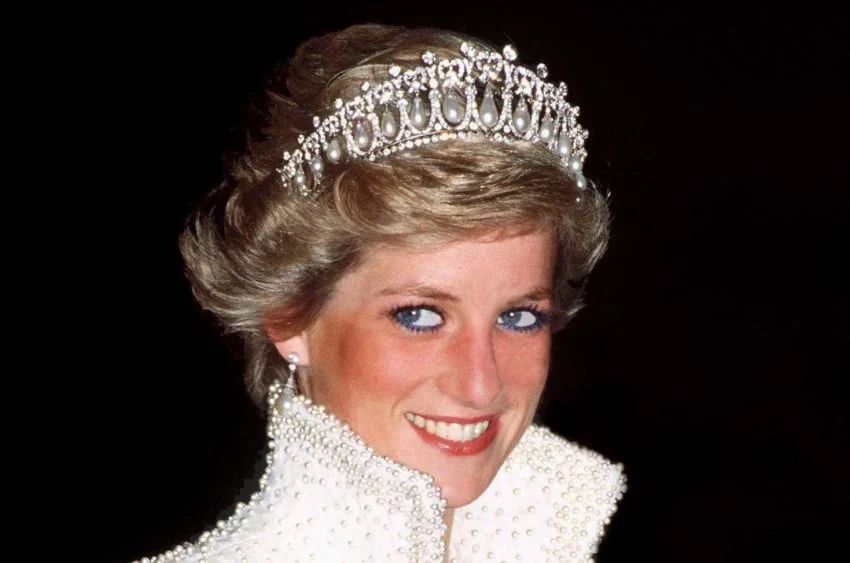
The release of an upcoming memoir authored by Earl Charles Spencer, the younger brother of the late Diana, Princess of Wales, has ignited a severe controversy within the British monarchy. The book, titled Swan Song and published by Penguin Random House, has brought long-buried trauma back to the surface, exposing intense familial friction and prompting a rare, pointed rebuke from Buckingham Palace. While only serialized excerpts have been made public through exclusive arrangements with the Daily Mail, the revelations have immediately reignited global debate regarding the tumultuous marriage between Diana and the then-Prince Charles, now King Charles III, as well as the events surrounding the tragic night of August 31, 1997.
The publication of these excerpts marks another chapter in the enduring public scrutiny faced by the House of Windsor. For decades, the narrative surrounding the death of Princess Diana has been scrutinized through documentaries, official inquests, and unauthorized biographies. However, the firsthand account of an immediate family member who was present during the agonizing hours following the fatal car crash in Paris introduces a deeply personal, albeit fiercely contested, dimension to the historical record.
The Explosive Claims Within Swan Song
At the heart of the controversy are two specific assertions made by Earl Spencer regarding the immediate aftermath of Princess Diana’s death. According to the serialized chapters, Spencer details his harrowing communications on the night of the crash and the days leading up to the historic state funeral.
The most contentious allegation centers on a telephone conversation Spencer reportedly had with Charles after the confirmation of Diana’s death in a Paris tunnel. Spencer recalls that the reactions of the then-Prince of Wales were far from sorrowful. Instead, Spencer alleges that Charles sounded "ecstatic—like a lottery winner."
In the text, Spencer attempts to contextualize this chilling observation through the lens of subsequent reflection. He writes that, upon looking back, his initial assumption was that Charles’s immediate psychological relief stemmed from the abrupt dissolution of a marriage that had long been a source of intense public scandal and personal entrapment. Spencer speculates that the sovereign-in-waiting may have privately perceived the tragedy as a mechanism that ultimately paved the way for him to openly pursue his long-term relationship with Camilla Parker Bowles, rather than focusing on the grief of losing the mother of his two young sons, Princes William and Harry.
A secondary claim highlights a tense debate between Spencer and Charles regarding the funeral arrangements. As preparations for the global broadcast of the funeral commenced, a fierce disagreement arose over whether Princes William, then 15, and Harry, then 12, should walk behind their mother’s coffin in the public procession. Spencer describes a moment where Charles allegedly exhibited volatile anger before abruptly pausing the conversation. This friction over the protocol of public mourning has long been a subject of public interest, but Spencer’s account brings fresh allegations of aggressive emotional outbursts during a period of national mourning.
Buckingham Palace Breaks Silence with a Rare Rebuke
In an unprecedented move, Buckingham Palace issued a formal response to the preliminary disclosures. While the institution maintains a strict policy of non-engagement regarding literary publications concerning the royal family, the severity of Spencer’s claims prompted a measured yet forceful rejoinder from the sovereign’s official spokespeople.
"Although as a matter of principle we do not comment on books, His Majesty recognizes that the anguish of losing a sibling can cloud reason, affect judgment, and influence memory in ways that others cannot comprehend, even years after the loss has occurred," the palace statement read.
Media analysts and constitutional experts have noted the psychological framing of the palace’s response. By attributing Spencer’s allegations to the cognitive toll of prolonged grief rather than denying the events outright, the palace avoided a protracted public mudslinging match while subtly discrediting the reliability of the memoir’s recollections. Representatives for Penguin Random House have confirmed the textual accuracy of the excerpts published by the Daily Mail, though CNN and other international outlets have reported that complete advance copies of the book were heavily restricted prior to the serialization release.
Historical Context: The Anatomy of a Royal Breakdown
To fully understand the gravity of Earl Spencer’s memoir, it is necessary to examine the historical trajectory of the marriage between Charles and Diana. Wed in a lavish ceremony at St. Paul’s Cathedral on July 29, 1981—an event watched by an estimated global television audience of 750 million people—the union quickly deteriorated beneath the intense glare of the British tabloid press.
By the late 1980s, both parties were living largely separate lives. The marriage became the subject of intense media speculation, culminating in public admissions of infidelity by both the Prince and Princess of Wales. In 1992, then-Prime Minister John Major officially announced the couple’s separation in the House of Commons. The formal divorce was finalized on August 28, 1996, roughly one year prior to Diana’s fatal accident.
During this period, public sympathy was deeply polarized. Diana famously characterized the marriage as crowded, famously stating in a 1995 BBC Panorama interview that "there were three of us in this marriage," alluding to Charles’s enduring relationship with Camilla Parker Bowles. Conversely, the inner circle of the royal family viewed Diana as unpredictable and prone to media manipulation, creating an environment of profound institutional distrust.
The shock of Diana’s death in Paris on August 31, 1997, triggered an unprecedented outpouring of public grief that threatened the stability of the monarchy itself. Queen Elizabeth II and senior royals initially remained at Balmoral Castle in Scotland, adhering to traditional protocols of private mourning, which the public and tabloid media interpreted as cold indifference. The subsequent public backlash forced the palace to alter its approach, culminating in the Queen’s live television broadcast addressing the nation and the lowering of the flag at Buckingham Palace.
Timeline of Key Events
The release of Swan Song situates itself within a meticulously documented historical timeline of the modern British monarchy:
- July 29, 1981: Prince Charles and Lady Diana Spencer are married at St. Paul’s Cathedral.
- June 21, 1982 & September 15, 1984: The births of Prince William and Prince Harry, respectively.
- December 9, 1992: Prime Minister John Major announces the formal separation of the Prince and Princess of Wales.
- November 20, 1995: Diana gives her landmark BBC Panorama interview, detailing her struggles within the royal family.
- August 28, 1996: The divorce of Charles and Diana is legally finalized.
- August 31, 1997: Princess Diana, along with Dodi Fayed and driver Henri Paul, dies following a high-speed car crash in the Pont de l’Alma tunnel in Paris.
- September 6, 1997: The state funeral of Princess Diana takes place at Westminster Abbey, featuring the iconic walk of Princes William and Harry behind the coffin, accompanied by Earl Spencer and Prince Philip.
- Current Era: The publication of Earl Spencer’s memoir brings renewed scrutiny to the institutional and personal dynamics of the late 1990s.
Broader Implications for the House of Windsor
The publication of Swan Song arrives at a sensitive juncture for the British royal family. King Charles III, who ascended the throne following the death of Queen Elizabeth II in September 2022, has continuously worked to modernize the institution, secure public approval, and streamline the monarchy during a period of significant generational transition.
Memoirs written by royal insiders have increasingly become a source of institutional vulnerability. The release of Prince Harry’s memoir, Spare, in January 2023 set a precedent for public disclosures regarding private family conflicts, physical altercations, and emotional neglect within the royal household. While Harry’s book targeted his father and his brother, Prince William, the intervention of Earl Spencer widens the generational scope of criticism, drawing upon grievances that date back to the late 20th century.
Public relations and constitutional experts suggest that while the revelations are unlikely to pose an immediate legal or systemic threat to the reign of King Charles III, they permanently alter the historical memory associated with the transition of power and the legacy of the late princess. The public appetite for internal royal narratives remains insatiable, ensuring that every published account—regardless of its disputed accuracy or emotional bias—is subjected to intense analysis across digital and broadcast platforms.
As Swan Song moves toward its official publication date, the broader impact on the family dynamic remains tense. Neither Prince William nor Prince Harry has issued a public statement regarding their uncle’s book, though media reports suggest that existing estrangements within the wider family may be further entrenched by the airing of these decades-old grievances. The palace, having delivered its definitive stance through its initial spokesperson statement, appears intent on ignoring further serialization, hoping that the news cycle will eventually bypass an era of the monarchy that it has spent nearly three decades attempting to reconcile.