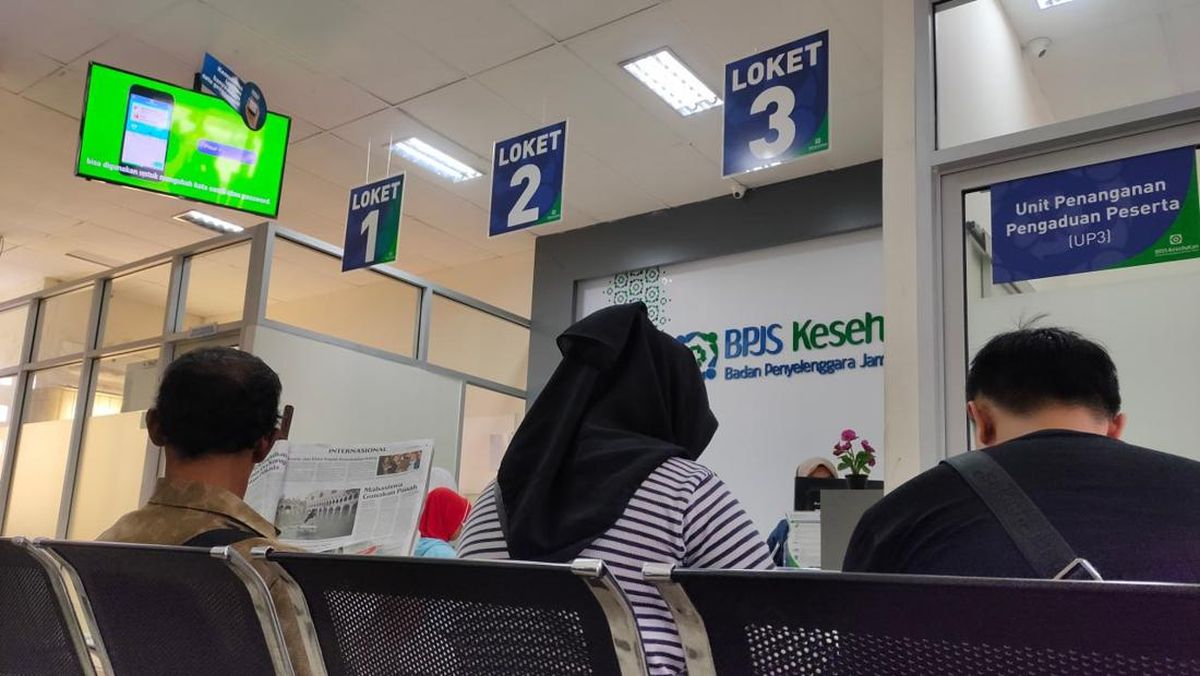
The presence of the Health Insurance Implementing Agency (BPJS Kesehatan) under the Contribution Assistance Recipient (PBI) scheme has long served as a vital social safety net for low-income and economically vulnerable communities in Indonesia. Designed to guarantee universal healthcare access for citizens who cannot afford independent premium payments, the PBI program ensures that financial constraints do not become a barrier to receiving necessary medical treatment. Funded directly by the state through the national budget (APBN) or regional budgets (APBD), this program covers millions of vulnerable Indonesians across the archipelago.
However, operational realities within social welfare administration frequently lead to complications. In numerous instances, beneficiaries discover that their BPJS PBI status has been unexpectedly deactivated or frozen. This sudden loss of coverage often creates panic, particularly when individuals require urgent medical attention or ongoing management for chronic illnesses. Fortunately, a deactivation status is not necessarily permanent. Beneficiaries who still meet the economic criteria set by the government retain the legal right to reactivate their membership, provided they adhere to the established administrative procedures and regulatory timelines. Understanding the root causes of deactivation, the legal framework governing reinstatement, and the step-by-step reactivation process is essential for affected individuals and their families to restore their healthcare rights smoothly.
Understanding BPJS PBI and the Mechanism of State Subsidies
To fully grasp why deactivations occur, it is important to understand the fundamental mechanics of the BPJS PBI program. Unlike independent participants (Mandiri) who pay monthly premiums based on their chosen service class, PBI participants pay nothing out of pocket. The Indonesian government shoulders the financial burden entirely. The Ministry of Social Affairs (Kemensos) holds the primary authority for determining who qualifies for this assistance, relying on official poverty databases and socioeconomic indicators.
The primary objective of the PBI scheme aligns with the broader national mandate of achieving Universal Health Coverage (UHC). By subsidizing healthcare for the poorest segments of society, the state aims to reduce out-of-pocket health expenditures, prevent impoverishment due to catastrophic medical emergencies, and improve overall public health outcomes. Yet, maintaining an accurate and dynamic database of tens of millions of beneficiaries is a monumental administrative challenge. Population dynamics, economic mobility, administrative errors, and policy shifts constantly interact, leading to frequent updates in the master beneficiary registry. Consequently, the government periodically cleanses and validates the data, which often results in the systematic deactivation of thousands of participant accounts deemed no longer eligible under current criteria.
Primary Causes Behind the Deactivation of BPJS PBI Status
The Ministry of Social Affairs enforces strict regulatory standards when auditing the social welfare database. According to official guidelines, at least four primary factors trigger the deactivation of a participant’s BPJS PBI status. Recognizing these causes helps beneficiaries determine whether their deactivation was a result of administrative error or a genuine change in their socioeconomic standing.
-
Shifts in National Socioeconomic Data
The most frequent cause of PBI deactivation is an update to the Integrated Social Welfare Data (DTKS), recently contextualized under the National Socioeconomic Single Data (DTSEN). Periodic surveys and field evaluations conducted by the Central Statistics Agency (BPS) and local social workers may indicate that a household’s economic situation has improved. If an individual or family is deemed to have risen above the poverty threshold, their PBI status is removed to allocate the finite state budget to those in greater need. -
Changes in Employment and Formal Sector Status
Another common trigger is a change in the participant’s employment status. If a previously unemployed individual or informal worker secures formal employment—such as becoming a company employee (Pekerja Penerima Upah – PPU)—their employer is legally mandated to register them in the corporate BPJS Kesehatan scheme. Consequently, the state-funded PBI status is automatically terminated to prevent overlapping government subsidies for the same individual. -
Regional Government Transfer and Funding Realignment
In some cases, the responsibility for funding a participant’s health coverage shifts from the central government to local municipal or provincial governments through the Regional Contribution Assistance (PBPU Pemda) scheme. While the healthcare safety net remains intact, the administrative transition can occasionally cause temporary gaps or status changes in the national database if regional integration lags behind central updates. -
Data Invalidity and Administrative Discrepancies
Data integrity issues are a persistent challenge in large-scale public programs. Deactivations frequently occur when audits reveal invalid identification numbers, such as duplicate National Identity Numbers (NIK), mismatched demographic data with the Directorate General of Civil Registration and Civil Status (Dukdukcapil), or outdated family cards. Furthermore, the system automatically deactivates accounts upon the recorded death of a participant.
Regulatory Framework and the Six-Month Reinstatement Window
For individuals who find their BPJS PBI status nonactive but firmly believe they still belong to the underprivileged category, Indonesian law provides a legal recourse for reinstatement. The regulatory foundation governing this process is rooted in the Regulation of the Minister of Social Affairs (Permensos) No. 21 of 2019 concerning Procedures for Data Changes and Handling Complaints Regarding Contribution Assistance Recipients.
Crucially, time is of the essence for those seeking reinstatement. Under the provisions of Permensos No. 21/2019, the window of opportunity to reactivate a deactivated BPJS PBI status is strictly limited to a maximum of six months from the date of deactivation. If this six-month grace period lapses without any appeal or corrective action, the participant must undergo the entire poverty verification process anew through their local village or sub-district authorities to re-enter the social welfare database from scratch. This strict timeline underscores the importance of regularly monitoring one’s health insurance status to prevent administrative disenfranchisement.
Step-by-Step Procedure to Reactivate Nonactive BPJS PBI
Navigating the bureaucratic steps to reactivate a suspended PBI account requires patience and strict adherence to official protocols. The reactivation procedure varies slightly depending on whether the situation involves routine administrative updates or an immediate medical emergency. Below is the comprehensive guide to restoring nonactive BPJS PBI status based on current operational standards.
Standard Administrative Reactivation Process
For participants who are not currently facing an acute medical emergency but wish to secure their future coverage, the administrative pathway involves coordination between local social offices and healthcare administrative channels.
First, beneficiaries must verify their current status through official digital channels, most notably the Mobile JKN application. By logging into the app using their NIK or BPJS card number, users can immediately view their membership status. If the status reads "Nonactive" or "Frozen," the user should prepare essential personal identification documents, including the National Identity Card (KTP-EL) and the Family Card (Kartu Keluarga).
Next, the participant must visit the local Social Service Office (Dinas Sosial) in their municipality or district. Officials at the Dinas Sosial will cross-reference the applicant’s data with the DTKS to determine if the deactivation was an administrative error or an intentional reclassification. If the applicant still meets the criteria for poverty and assistance, the Dinas Sosial will issue a formal recommendation letter requesting the reactivation of the BPJS PBI status. This recommendation is then forwarded to the local branch office of BPJS Kesehatan for final system updates.
Emergency Reactivation Procedure for Urgent Medical Needs
A different, expedited protocol applies when a deactivated participant requires immediate, life-saving medical care at a hospital or clinic. The state recognizes that illness does not wait for bureaucratic processing, leading to specific humanitarian safeguards within the system.
If an urgent medical situation arises, the participant or their family must immediately visit their designated First-Level Health Facility (FKTP)—such as a community health center (Puskesmas) or primary clinic—where they are formally registered. Upon explaining the urgent medical need and demonstrating ongoing economic hardship, the participant can request an official Letter Requesting Healthcare Services (Surat Keterangan Membutuhkan Layanan Kesehatan) from the FKTP.
Armed with this medical necessity letter, personal identification documents, and family cards, the applicant or an authorized family member must promptly visit the local Dinas Sosial office to fast-track the reinstatement recommendation. Once the Dinas Sosial endorses the document, the request is escalated to the BPJS Kesehatan branch office for emergency reactivation. This coordinated mechanism ensures that vulnerable citizens do not lose access to critical acute care due to administrative delays.
Leveraging Technology: Monitoring Status via Mobile JKN
Transparency and digital accessibility have become cornerstones of modern public administration in Indonesia. BPJS Kesehatan provides the Mobile JKN application as an indispensable tool for participants to monitor their coverage status in real-time, eliminating the need for long queues at physical branch offices just to check an account status.
To utilize this feature, users must download the Mobile JKN application from the Google Play Store or Apple App Store. New users are required to register using their NIK, BPJS card number, or registered email address, followed by a secure password creation. Once logged into the dashboard, the application displays comprehensive participant details, including membership type, active status, payment class (if applicable), and assigned health facilities.
Regularly checking the status via Mobile JKN allows beneficiaries to catch sudden deactivations early, well within the crucial six-month grace period stipulated by the Ministry of Social Affairs. If the app indicates an active status, the participant can utilize medical services seamlessly. If it reflects a nonactive status, the digital check serves as an immediate trigger to initiate the aforementioned reactivation procedures at the local Dinas Sosial.
Broader Implications and Systemic Challenges in Social Protection
The complexities surrounding the deactivation and reactivation of BPJS PBI highlight the ongoing challenges of managing large-scale social protection programs in a developing nation of over 270 million people. While digital integration and periodic data cleansing are necessary to prevent budget leakages and ensure that state funds reach the truly needy, administrative friction can inadvertently harm vulnerable populations.
Experts in public policy and social welfare emphasize the need for greater synchronization between civil registration databases (Dukcapil), the Ministry of Social Affairs, and BPJS Kesehatan. Minimizing data discrepancies at the grassroots level would significantly reduce unwarranted deactivations, sparing low-income citizens the stress of navigating bureaucratic hurdles while dealing with health crises. Furthermore, expanding public awareness campaigns regarding the six-month reinstatement rule and digital self-monitoring tools like Mobile JKN remains critical to empowering marginalized communities.
Ultimately, the BPJS PBI program stands as a cornerstone of Indonesia’s commitment to social justice and universal healthcare access. While administrative hurdles and policy adjustments will continue to test the system’s efficiency, the established legal pathways for reactivation ensure that safety nets remain resilient. By understanding the causes of deactivation and proactively engaging with local social services and digital applications, citizens can safeguard their healthcare rights and ensure continued access to essential medical services when they need them most.