
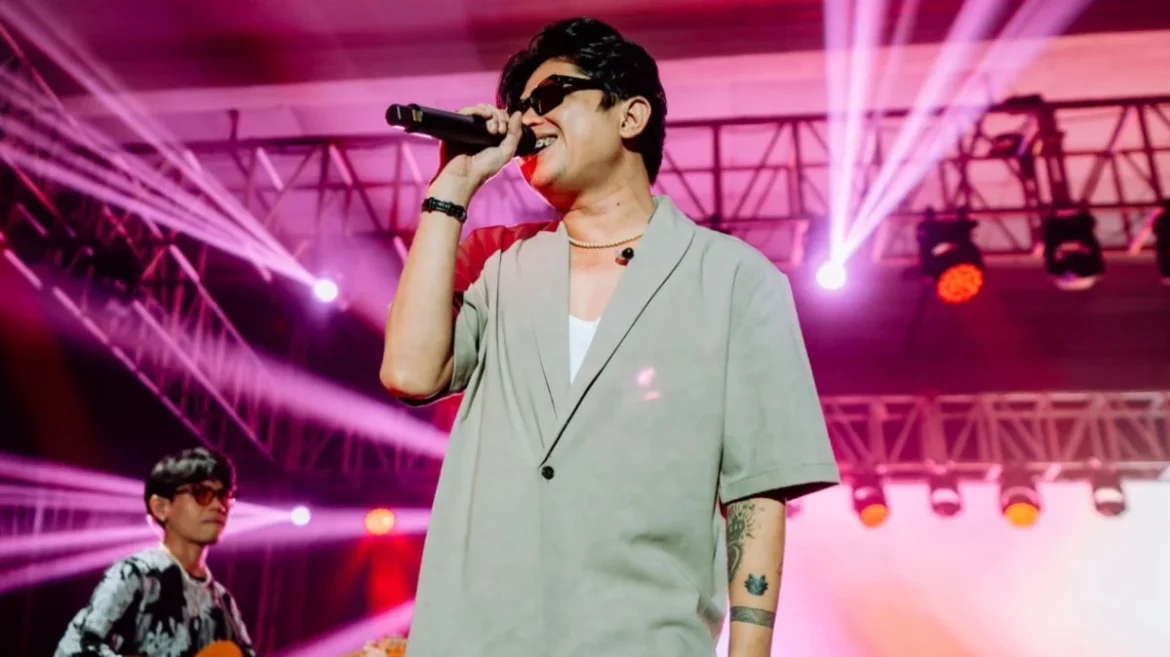
The digital landscape has once again turned its focus toward Uan, the lead vocalist of the popular Indonesian band Juicy Luicy, as a resurfaced video from a past live stream has ignited widespread controversy. In the clip, the musician is seen discussing women by categorizing them based on their names and using the derogatory slang term "bungkusable," a colloquialism that implies a woman is easily persuaded into casual sexual encounters or is perceived as sexually promiscuous. This incident has arrived at a precarious time for the band, which is already navigating public scrutiny regarding recent operational challenges.
The Anatomy of the Resurfaced Controversy
The footage in question originated from a social media live broadcast conducted by Uan some time ago. In the recording, the vocalist engages in a casual, seemingly lighthearted conversation where he lists various female names, assigning each a specific reputation based on his subjective observations. The term "bungkusable"—derived from the Indonesian word "bungkus" (to wrap or take away)—has been interpreted by critics as a form of objectification that reduces women to stereotypes based solely on their given names.
Throughout the video, Uan explicitly mentions names such as "Ica," "Fany," "Mayang," "Oca," and "Bella," among others, attributing specific behavioral traits to them. For instance, he claimed that a high percentage of men frequenting karaoke bars or nightlife venues would likely have had intimate encounters with women named "Ica." He further categorized individuals like "Natalie" and "Maudy" with sweeping generalizations regarding their private lives. The explicit nature of these labels, coupled with the casual delivery, has drawn sharp condemnation from netizens who argue that such rhetoric perpetuates misogyny and harms the reputations of individuals who share those names.
Chronology of Events and Context
The emergence of this video is not an isolated event but rather part of a broader wave of public interest surrounding the band. The timeline of this current controversy can be traced back to the following developments:
- Initial Operational Friction: The band Juicy Luicy recently faced significant public backlash following a scheduled performance in Batam that was canceled. This event left fans disappointed and sparked discussions regarding the band’s professional management and reliability.
- The "Digital Archeology" Phenomenon: Following the cancellation incident, public interest in the band members increased. As is common in the era of social media, users began reviewing past content associated with the artists. This process of "digital archeology" led to the rediscovery of the live stream video.
- Viral Resurgence: On Sunday, September 13, 2026, the video began trending across platforms like Instagram and X (formerly Twitter), leading to a surge in negative commentary and calls for accountability.
Professional and Ethical Implications
The incident raises significant questions regarding the intersection of personal expression and public accountability for celebrities. In the modern entertainment industry, public figures are often held to higher standards of discourse, particularly concerning gender equality and the prevention of harassment.
From a sociological perspective, the use of terminology like "bungkusable" is indicative of a culture that relies on gendered stereotyping. By categorizing women based on their names and perceived sexual availability, such rhetoric can normalize the objectification of women. Critics argue that even if the comments were intended as a joke, the platform held by a prominent musician gives these words a level of visibility that can normalize harmful attitudes among his audience, particularly younger fans.
Industry Standards and Public Relations
In the wake of this controversy, the management team behind Juicy Luicy has yet to issue an official, comprehensive statement addressing the specific content of the video. However, industry analysts suggest that silence in the face of such criticism can often exacerbate the damage to a public figure’s brand image.
Historically, artists involved in similar controversies have faced a spectrum of consequences, ranging from public apologies to the loss of brand endorsements and festival bookings. The music industry in Indonesia is increasingly sensitive to the values held by Gen Z and Millennial audiences, who prioritize social consciousness and ethical conduct. Consequently, the band’s ability to move past this incident will likely depend on how they address the concerns raised by their fanbase.
Data and Trends in Social Media Scrutiny
The speed at which this video went viral is a testament to the current state of "cancel culture" and the permanence of digital records. Data from social media analytics platforms indicate that content involving "influencer" or "artist" controversy typically peaks within 48 to 72 hours of initial discovery.
The reach of this specific incident is amplified by the existing tension between the band and their audience following the Batam incident. When a public figure’s reputation is already strained, minor past infractions are more likely to be weaponized by the public. This phenomenon creates a "cumulative effect," where the public’s frustration with a band’s professional failings spills over into an examination of their character, leading to a more intense and widespread backlash than would have occurred if the band were currently in good standing.
The Broader Impact on the Music Scene
The discourse surrounding Uan’s remarks highlights a growing trend in Indonesia’s entertainment sector: the demand for higher accountability. As the country’s digital landscape matures, fans are increasingly using their collective voice to challenge behavior that was once dismissed as "locker room talk" or "harmless banter."
For the music industry, this serves as a cautionary tale. Musicians and performers are being forced to navigate a landscape where every word spoken in a digital space—regardless of how long ago it was uttered—can be brought back to the surface. This necessitates a shift in how artists engage with their fans during live streams and interviews. The expectation is that public figures should demonstrate a level of maturity and respect that aligns with contemporary social values.
Looking Forward
As of September 2026, the situation remains fluid. The discourse continues to evolve on social media, with some fans defending the artist by citing the age of the video and the informal context, while a vocal majority demands an apology or a clarification of his current stance.
The incident serves as a significant hurdle for Juicy Luicy. While the band has achieved commercial success with hit songs and a loyal following, the reputation of the individual members is inextricably linked to the band’s collective image. Whether this incident will result in long-term professional consequences or be viewed as a temporary lapse in judgment remains to be seen.
Ultimately, the viral nature of this video underscores the fragility of public image in the digital age. For Uan and his contemporaries, the lesson is clear: in an era of total connectivity, the distinction between private thoughts and public speech has effectively dissolved. The challenge for the artist now is to determine whether a sincere acknowledgment of the harm caused by his past rhetoric is necessary to regain the trust of a public that is increasingly unwilling to overlook derogatory language, regardless of the artistic context.
As the narrative develops, the focus will likely shift toward how the management team handles the crisis. Effective crisis communication strategies usually involve transparency and a clear commitment to evolving beyond past mistakes. Whether Uan chooses to confront this head-on or allow the controversy to burn itself out will be the determining factor in how this chapter of his career is remembered by the public.
