
The cultural landscape of 2026 is witnessing an unprecedented phenomenon as Brazil firmly establishes itself at the epicenter of global pop culture, transforming fashion runways, music charts, cinematic platforms, and international tourism destinations. From the vibrant energy of its street culture to the widespread adoption of its national colors across the globe, the South American giant is experiencing a profound surge in international influence, commonly referred to as its "brasilidade" or Brazilian identity moment.
This widespread fascination is not merely a fleeting viral sensation, but rather the culmination of years of cultural momentum that began accelerating in the early 2020s. Today, the unmistakable palette of the Brazilian flag—radiant greens, bright yellows, and deep blues—has transcended geographical boundaries, becoming ubiquitous among global trendsetters, high-fashion houses, and everyday consumers alike. As the international community continues to embrace this vibrant aesthetic, experts and industry insiders are closely examining the socio-economic and geopolitical implications of Brazil’s expanding global soft power.
The Evolution and Anatomy of Brazilcore
The genesis of the current global craze can be traced back to the burgeoning popularity of "Brazilcore" around 2023. Initially emerging as a niche fashion movement, Brazilcore heavily incorporated the bright, saturated colors of the Brazilian flag and drew deep inspiration from the nation’s rich street culture, football heritage, and tropical aesthetic. What started as a localized trend soon gained monumental momentum, largely propelled by high-profile celebrity endorsements.
International superstars including Bad Bunny, Emily Ratajkowski, Hailey Bieber, Sabrina Carpenter, and Addison Rae were frequently spotted wearing Brazilcore-inspired apparel, instantly transmitting the look to millions of digital-native followers. Néli Pereira, a doctoral candidate in cultural studies at the University of Sao Paulo, notes that the aesthetic’s explosive rise was driven by a collective fatigue within the global fashion industry.
"The fashion industry had previously been dominated by monochromatic palettes, minimalist silhouettes, and a rather uniform style," Pereira explains. "Then, suddenly, there was this vibrant wave originating from Brazil that encouraged more self-expression, celebrated skin exposure, and reintroduced bold, unapologetic color into the mainstream wardrobe."
As the movement matured, Brazilcore evolved beyond a superficial fashion trend. It seamlessly integrated into broader lifestyle choices, encompassing music, dance, cinema, and sports. Major international retail giants, including Zara and H&M, capitalized on the momentum by launching dedicated apparel lines featuring green-and-yellow motifs alongside explicit typographic nods to iconic locations like Rio de Janeiro. Simultaneously, luxury fashion powerhouses such as Chanel, Jil Sander, and Schiaparelli began incorporating subtle yet unmistakable references to Brazil’s national palette in their high-end collections, signaling the aesthetic’s validation by the highest tiers of the design world.
Tourism Surges and the Economics of Exploration
The cultural fascination with Brazil has translated directly into historic milestones within the nation’s tourism sector. Official data indicates that foreign visitor arrivals shattered previous records, with more than 9 million international tourists visiting the country over the past year—representing a staggering 37 percent increase compared to 2024 figures.
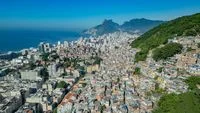
This influx of global travelers has fundamentally shifted local economies and tourism patterns. In Rio de Janeiro, guided excursions into the favela of Rocinha have become a sought-after experience for foreign visitors, many of whom intentionally dress in full Brazilcore attire to document their journeys. A prominent fixture of this modern tourism wave is the ubiquitous use of drone videography, with visitors capturing sweeping aerial footage of Rio’s dramatic urban landscapes to share across social media platforms.
"If you visit a favela today and do not capture a drone video of the landscape, it almost feels as though you never truly arrived," observes Eduardo Maristany, a tourist visiting from Barcelona, highlighting the deep intersection between modern travel culture and digital validation.
Music, Cinema, and Entertainment Hegemony
Beyond fashion and tourism, Brazilian arts and entertainment have secured unprecedented visibility on the global stage. The international appetite for Brazilian rhythm and storytelling has reached fever pitch, driven by strategic high-profile events and visionary creators.
A significant catalyst for this cultural dominance has been a series of historic, massive-scale concerts hosted on Rio de Janeiro’s legendary Copacabana Beach. In a monumental display of public entertainment, global icons Madonna, Lady Gaga, and Shakira staged unprecedented free concerts on the beachfront in 2024, 2025, and 2026, respectively. According to data provided by the Rio de Janeiro city government, each of these monumental events drew staggering crowds of at least one million spectators, cementing Copacabana as the undisputed global capital of live mass entertainment.
Concurrently, mainstream musicians have actively integrated Brazilian elements into their global personas. Pop superstar Bruno Mars delighted millions when he shared digital content featuring himself dancing energetically to the syncopated rhythms of Brazilian funk while posing alongside the nation’s ubiquitous caramel-colored street dogs—a visual trope that instantly resonated with local audiences and spawned international memes.
In the realm of audio-visual media, Brazilian funk—championed globally by boundary-pushing artists like Anitta—has become a staple of international playlists. Meanwhile, the domestic film industry has garnered critical acclaim at prestigious global festivals, with acclaimed cinematic works such as I’m Still Here and The Secret Agent capturing the attention of international critics and academy voters alike.
The Digital Ecosystem and Social Media Catalysts
The velocity and scale of Brazil’s cultural export in 2026 would be incomplete without examining the underlying mechanics of digital connectivity. With a domestic population exceeding 200 million people, Brazil boasts one of the most digitally engaged and hyper-connected populations in the world.
Eduardo Lorenzi, Operations Director for TikTok in Latin America, emphasizes the unique cultural dynamics of Brazilian internet users. According to Lorenzi, Brazilian digital communities possess a distinctive capacity for collective interaction, rapidly transforming local occurrences, humor, and cultural markers into viral memes that effortlessly breach linguistic and international borders.
"Digital culture in Brazil moves at an extraordinary pace," Lorenzi notes. "Content created locally does not just stay within national borders; it undergoes rapid translation into global internet vernacular, driven by an inherently participatory online culture."
Critical Perspectives and Future Outlook
Despite the overwhelmingly positive economic and cultural outcomes of this global spotlight, industry analysts and cultural observers maintain a pragmatic view regarding the longevity of the trend.
Néli Pereira cautions that the current saturation of Brazilian motifs could face structural disruptions, particularly on the domestic political front. She suggests that upcoming political cycles and the potential resurgence of polarization could alter how national symbols are perceived, potentially stripping the green-and-yellow palette of its current association with universal joy and festivity.
Echoing similar sentiments of caution, French comedian Paul Cabannes, who resides and works in Sao Paulo, points out that the sheer volume of foreign creators producing hyper-focused content about Brazil risks creating formulaic fatigue among digital consumers.
Nevertheless, geopolitical and cultural strategists largely agree that the current wave of international attention has significantly bolstered Brazil’s "soft power." By successfully exporting its vibrant lifestyle, artistic output, and aesthetic identity, Brazil has positioned itself not merely as a geographic destination, but as a defining architect of contemporary global culture in 2026.
